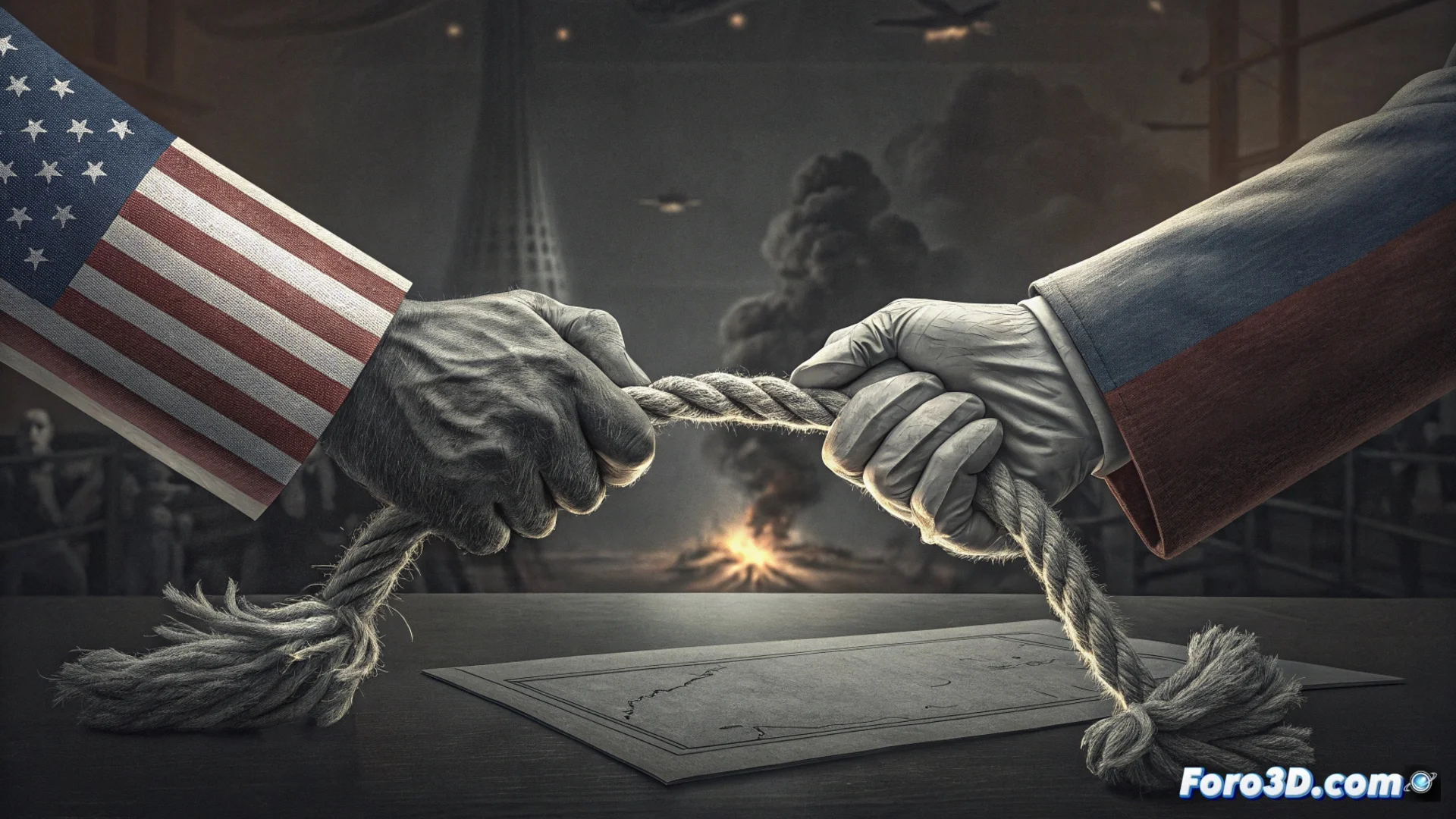
The last nuclear brake is deactivated: what’s next for global security?
Think of two giants who agreed not to accumulate more weapons and to watch each other. Now, that pact has been broken. The New START treaty, which capped the nuclear warheads of the United States and Russia, has come to an end. It's like the device that prevented an uncontrolled race to have more armament suddenly stopping working. 🌍⚠️
A fading trust mechanism
This agreement went beyond just setting maximum numbers. It was a verification system for compliance, which included on-site inspections and data sharing. Imagine it's like having access to check the other's garage and confirm they don't keep prohibited vehicles. Without this forced transparency, suspicion increases. Every action by the other side is perceived as a potential threat, and the pressure to respond by stockpiling more weapons "just in case" intensifies. 🧐
What is lost with the treaty:- Mutual verification: Inspections and data monitoring that reduced uncertainty.
- Quantifiable limits: Clear ceilings for strategic missiles, launchers, and warheads.
- Predictability: A framework that made each side's capabilities more predictable for the other.
Without rules, the logic returns to the dangerous idea that whoever has more weapons has more power.
A historic vacuum in arms control
Although it may seem like a Cold War issue, this was the last major pact in force between the two main nuclear powers. Other previous agreements, like the Intermediate-Range Nuclear Forces Treaty, had already disappeared. The world is left, for the first time in decades, without an agreed framework to manage the most destructive arsenals. This represents a worrying step back toward an unrestricted competition dynamic. 📜➡️🗑️
Immediate consequences of this vacuum:- Strategic uncertainty: Increases the risk of misinterpreting the adversary's movements.
- Pressure to modernize: Both sides may feel the need to accelerate programs to improve their arsenals.
- Lack of dialogue: A crucial formal and technical communication channel in times of crisis is lost.
The only way forward
The scenario is serious, but it's key to maintain perspective. Diplomacy, although it often seems slow or even stalled, remains the fundamental tool to resolve this impasse. The international community must pressure for negotiations to resume and for a new framework to be established that restores stability. The hope is that a new control mechanism is found before the situation deteriorates further. 🤝✨