The preliminary hearings against former Filipino president Rodrigo Duterte at the International Criminal Court have concluded. Accused of crimes against humanity for the war on drugs, the case advances as victims' families seek justice. This large-scale judicial process highlights the need for advanced techniques to document and present complex evidence to the court.
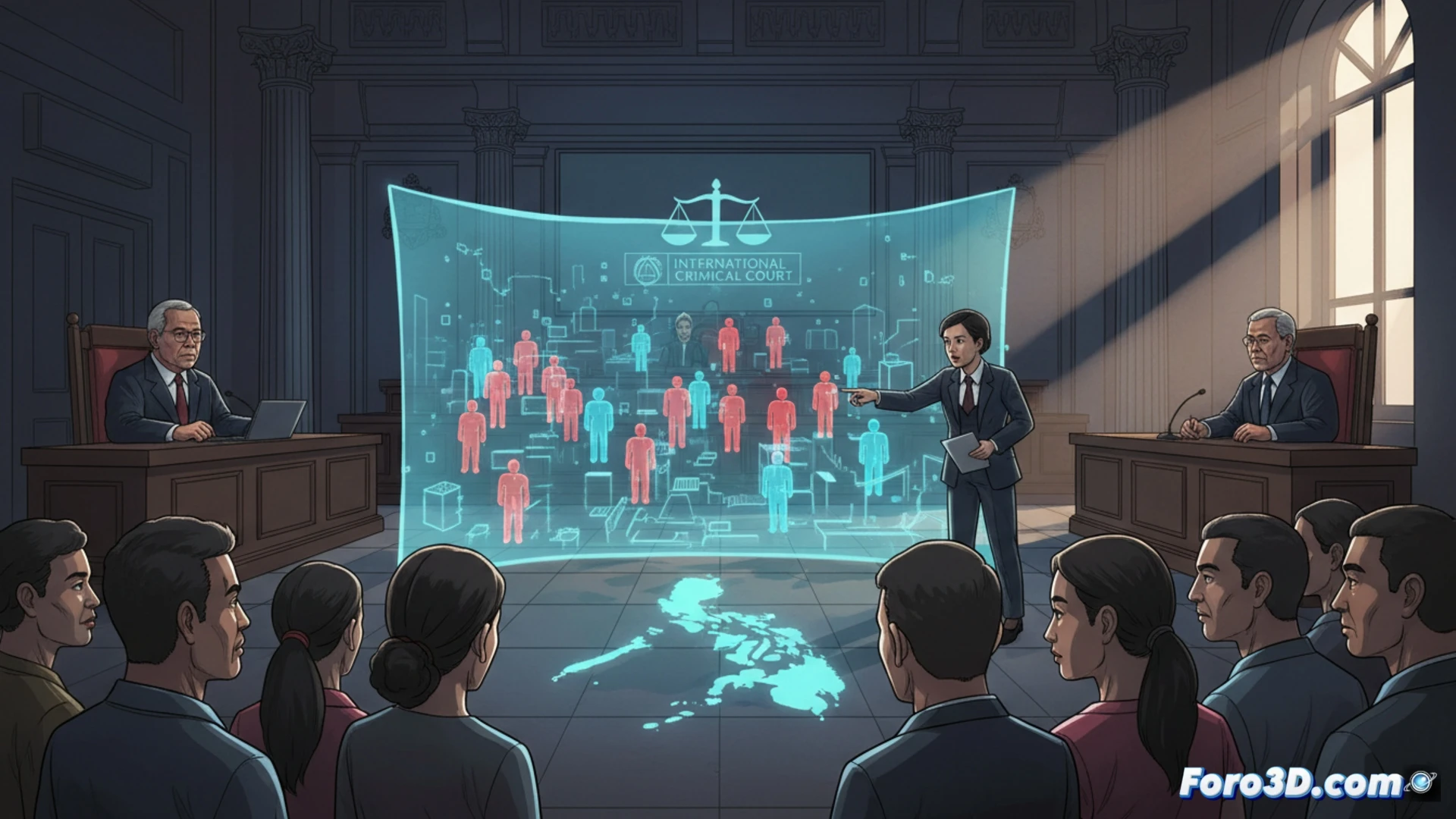
3D Reconstruction: From Data to the Courtroom Scene 🧩
In cases with thousands of incidents, like this one, traditional forensic documentation can be insufficient. 3D recreation of environments, generated from forensic photography, geolocation data, and ballistic reports, allows contextualizing testimonies and evidence. This visualization provides judges with a tool to understand the spatial and temporal dynamics of the investigated events, transforming technical data into a clear visual narrative.
When a Render is Worth More Than a Thousand Statements ⚖️
It's curious to think that, while lawyers debate legal points, a 3D model can be the most eloquent witness. It doesn't argue, doesn't contradict itself, and always maintains the same version of the facts, no matter how much it's examined. In a trial of this magnitude, having a digital scenario that doesn't forget details is almost like having an auxiliary judge made of polygons and textures. Justice, in the end, is also built with vertices.