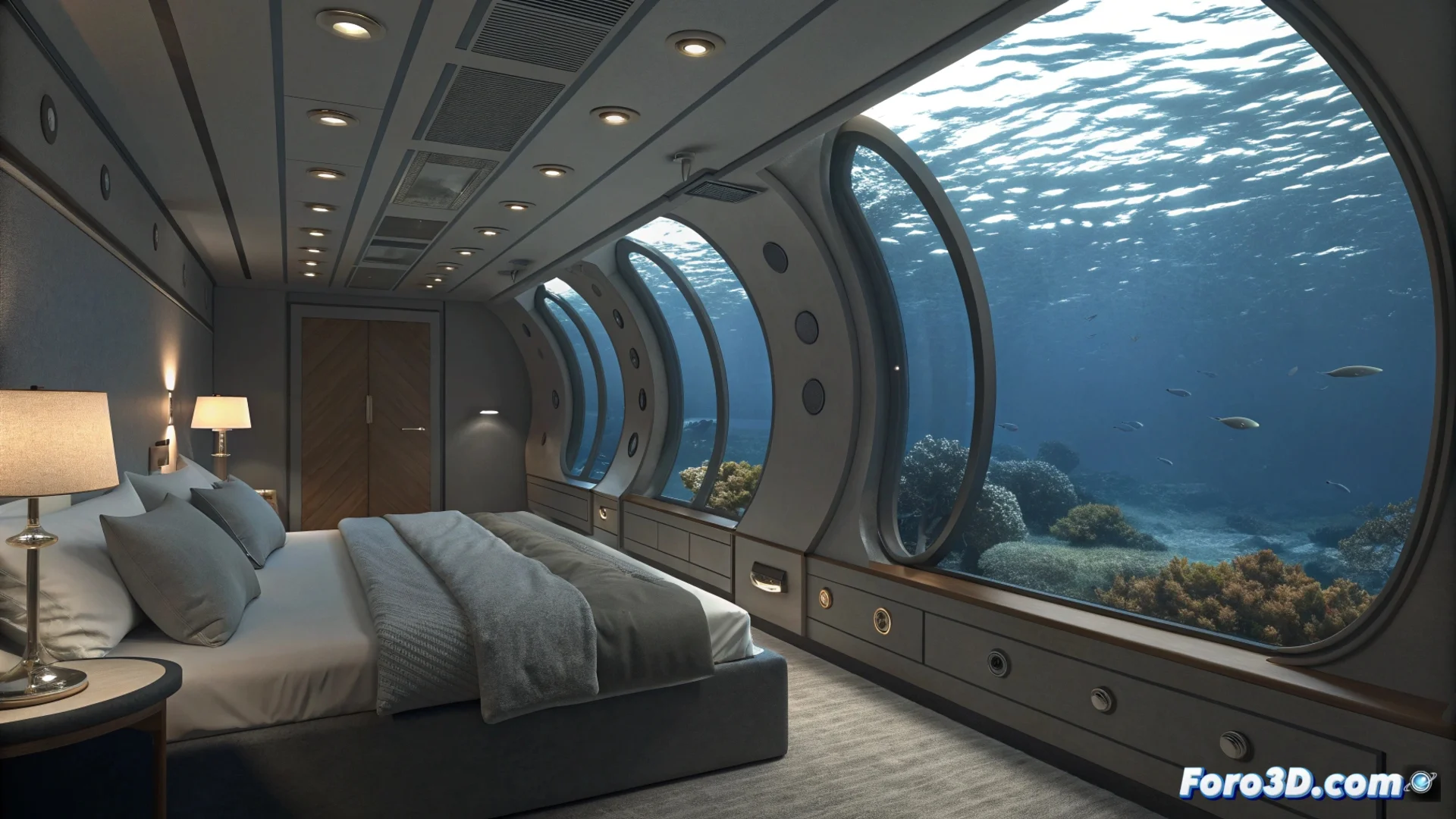
South Korean Chief of Naval Staff Designs Submarines Thinking of His Children
Admiral Kang Hoon-sik, the highest authority of the South Korean Navy's General Staff, has revealed an unconventional design philosophy for the fleet's next submarines. His fundamental premise is to imagine that his own children will travel inside those vessels, shifting the priority from purely technical parameters to the human well-being of the crew. 🧠
A Vision That Transcends the Purely Military
This personal approach seeks to move away from exclusively warlike or engineering criteria. Instead, it places at the center the people who inhabit and operate the machine for weeks or months. The underlying idea is that taking care of the crew is as crucial as developing the most advanced technology. A less hostile environment can completely transform how a long underwater mission is perceived.
Key Objectives of the New Paradigm:- Prioritize crew well-being from a family and human perspective.
- Substantially improve living conditions during prolonged dives.
- Increase operational effectiveness by optimizing the psychological state of the sailors.
"We aspire to create submarines that resemble a five-star hotel." - Philosophy of Admiral Kang Hoon-sik.
Operational Comfort as a Strategic Advantage
The analogy with a luxury hotel does not aim to incorporate superfluous elements, but to redefine basic comfort. It involves designing more ergonomic and livable internal spaces, with superior ventilation systems, lighting that simulates circadian cycles, and truly restorative rest areas. The ultimate goal is for the crew to better face isolation and constant pressure.
Specific Areas for Improvement:- Interior design with greater attention to ergonomics and personal space.
- Environmental systems that renew air and optimally control humidity.
- Common areas and recreation spaces that allow disconnection and recovery.
The Human Factor as the Backbone
This philosophy recognizes that, in complex and high-stress operations, the human factor is decisive. A sailor who rests well and perceives that their environment cares for them will maintain a higher morale and sharper concentration. Perhaps future generations of the South Korean Navy will not have to choose between their bunk and their watch shift, although what there is for dinner will continue to be a topic of discussion in the general staff. ⚓