The Hammer that Defies Time: The Renaissance of Traditional Forging in Japan
Can you imagine a craft with centuries of history regaining its value today? In Japanese workshops where sparks fly, this happens with every precise strike. It is a tangible response to an increasingly digital world. 🔥
Forging Bonds, Not Just Metal
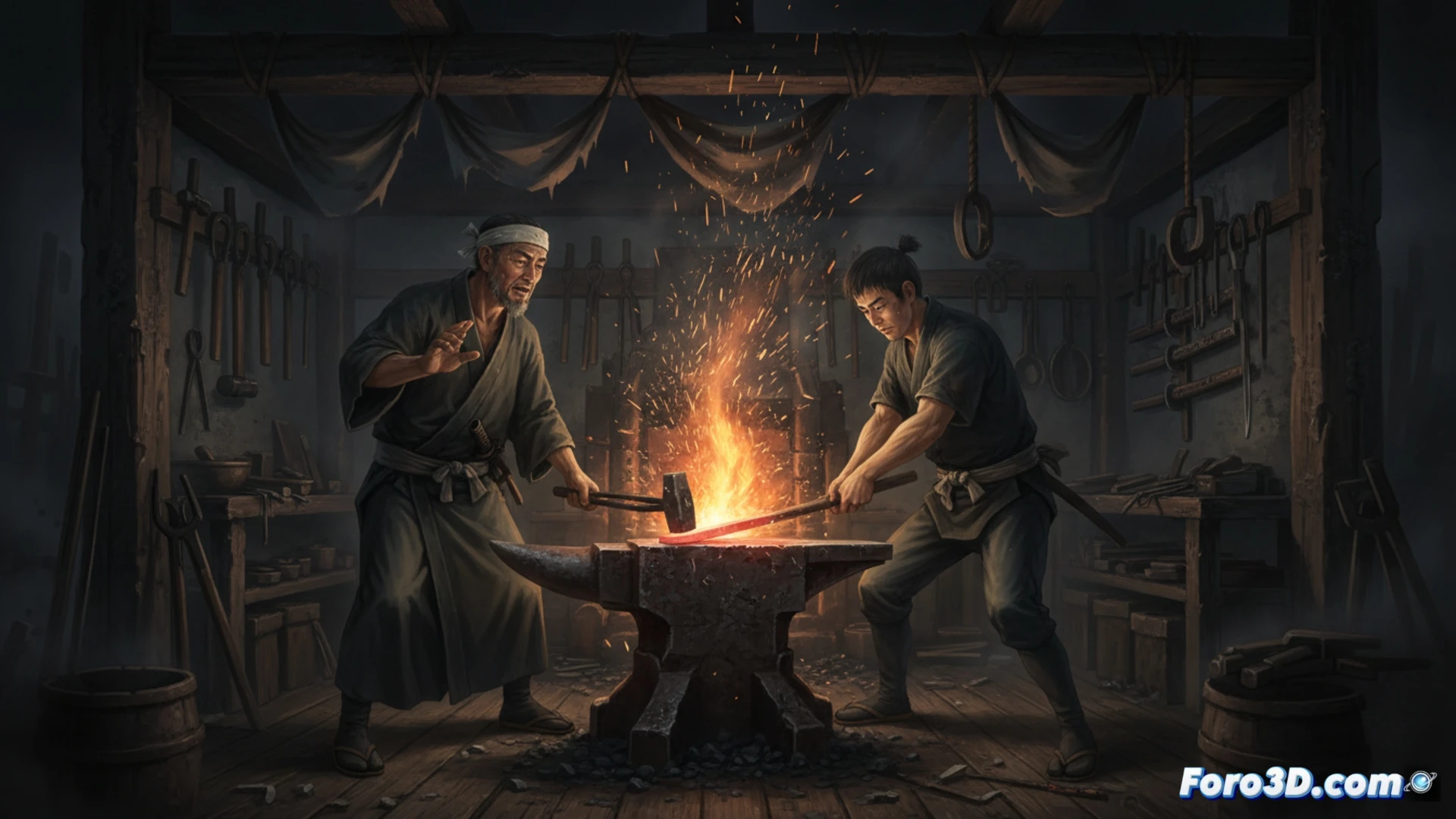
Akihira Kawasaki and his apprentice do not just shape incandescent steel. Their work builds a direct bridge between eras. Nowadays, many yearn for physical objects with narrative and handmade essence. It is similar to choosing a paper book over an electronic one: the tactile sensation, its presence, and the history it holds are unrepeatable. 🛠️
The Pillars of This Resurgence:- Tangible Connection: People seek to perceive authenticity and a clear origin in what they acquire.
- Handmade Narrative: Each piece tells the story of its creators and the unique process behind it.
- Digital Contrast: The saturation of the virtual amplifies the desire for physical experiences and objects.
"Technology did not come to replace everything, but to remind us of the value of what is made with patience and mastery."
The Science Behind the Art: Fire and Cadence
Success does not depend solely on the power of the strike. The exact temperature and constant rhythm are fundamental. The steel requires a specific cherry red color. If it is too cold, it fractures; if it is too hot, it deteriorates. It is a meticulous choreography between the flame, the anvil, and the hammer. Every tool made preserves the unrepeatable imprint of that precise moment, something mass production can never match. ⚙️
Key Factors in Forging:- Thermal Control: Achieving and maintaining the ideal heat point is an essential skill.
- Rhythm and Precision: The sequence of strikes defines the integrity and final shape of the metal.
- Unique Imprint: The manual nature imparts variations and character impossible to clone industrially.
A Revealing Cultural Counterpoint
It is paradoxical that in the pioneering nation of robotics, the oldest manual work gains its own space. This phenomenon suggests that technical progress does not necessarily eliminate traditions, but sometimes revalues them. In the end, even the legendary samurai depended on an exceptional sword, forged with this same timeless knowledge. The hammer continues to sound, defying time. ⏳