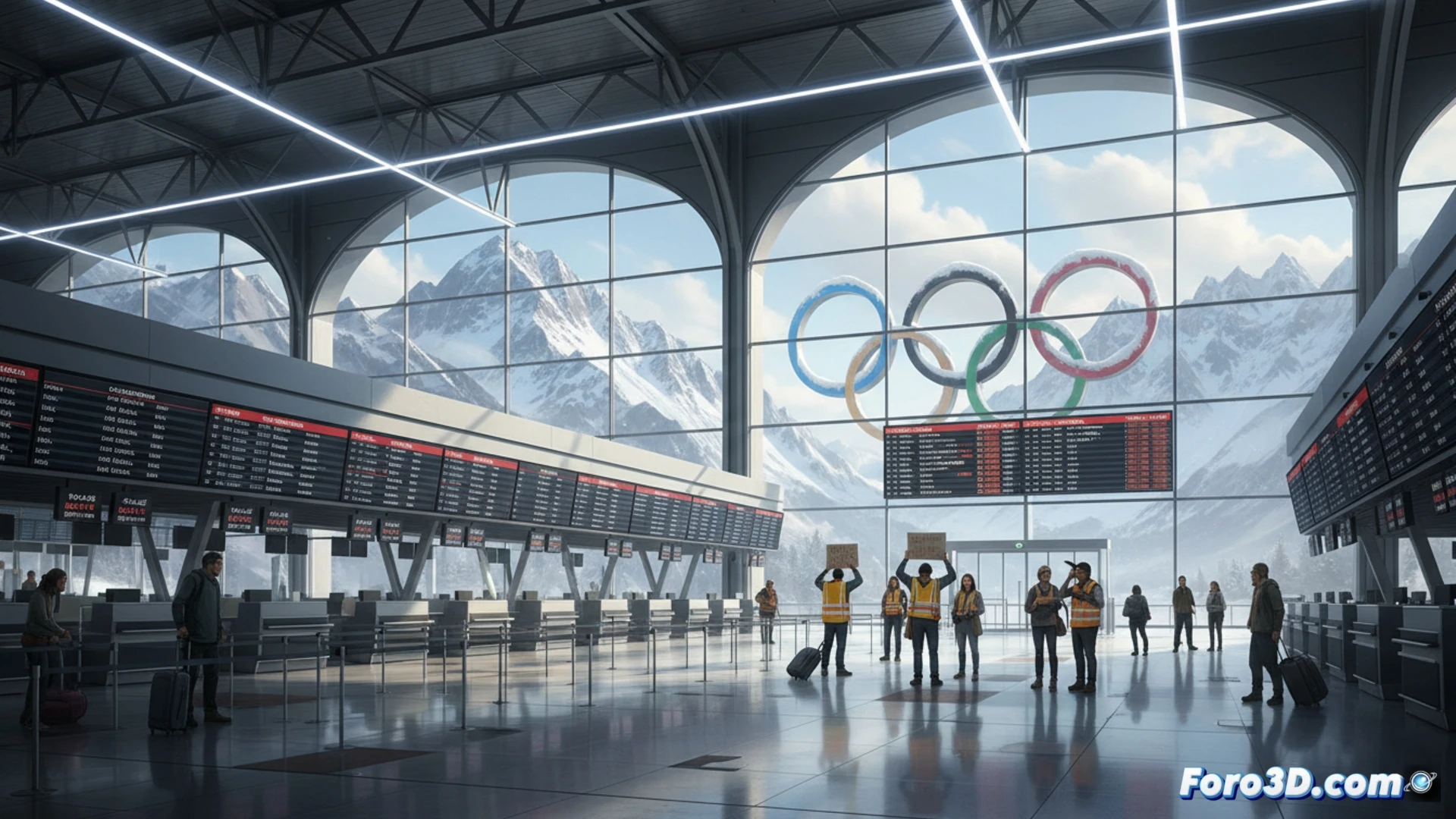
The guarantor suggests moving air strikes away from the Milan Cortina 2026 Olympic Games
The entity that oversees labor strikes in essential public services has published an official opinion on the protests announced in the air sector to coincide with the 2026 Winter Olympic and Paralympic Games. Its central proposal is to shift these actions to other airfields in the country, thereby avoiding disruption to the normal development of the sporting event. This stance seeks to reconcile the right to strike with the obligation to ensure that athletes and visitors can travel without major obstacles. ✈️
An opinion addressed to multiple labor organizations
The recommendation issued by the Guarantor specifically addresses the calls to strike presented by several unions for four specific dates in February 2026: the days 6, 13, 20, and 27. The body argues that, while the right to protest is fundamental, exercising it at the airports of Milan and Cortina d’Ampezzo during the event would cause excessive damage. For this reason, it expressly requests the organizers to move their protests to other national air transport hubs.
Key points of the opinion:- It refers to strikes called by several unions in the air sector.
- The specified dates are four consecutive Wednesdays in February 2026.
- The harm is considered disproportionate if the strike affects the Olympic airports.
- The request is for geographical reallocation, not cancellation.
“Exercising the right to strike at the Milan and Cortina airports during the Games could cause disproportionate harm.”
Protecting the Olympic event is the priority
The Guarantor's stance is based on the regulations governing strikes in essential services, which empower it to intervene and moderate the impact of protests in situations of exceptional relevance. The Olympic Games fit this scenario, given their global projection and the massive influx of people they attract. The measure does not prohibit the strike itself, but proposes a change of location to minimize interruptions in Olympic logistics.
Legal bases and objectives:- The essential services strike law is applied.
- The Games are an event of special public relevance.
- The objective is to minimize disruptions, not eliminate the conflict.
- It seeks to guarantee the mobility of athletes, teams, and spectators.
A forced balance between rights and global events
In short, while athletes seek medals on tracks and stadiums, travelers might face their own test of endurance at air terminals other than those planned. This forced geographical solidarity is presented as the solution to safeguard a planetary-scale event without curtailing a fundamental labor right. The opinion sets a precedent on how to handle social protests during major events. 🏅