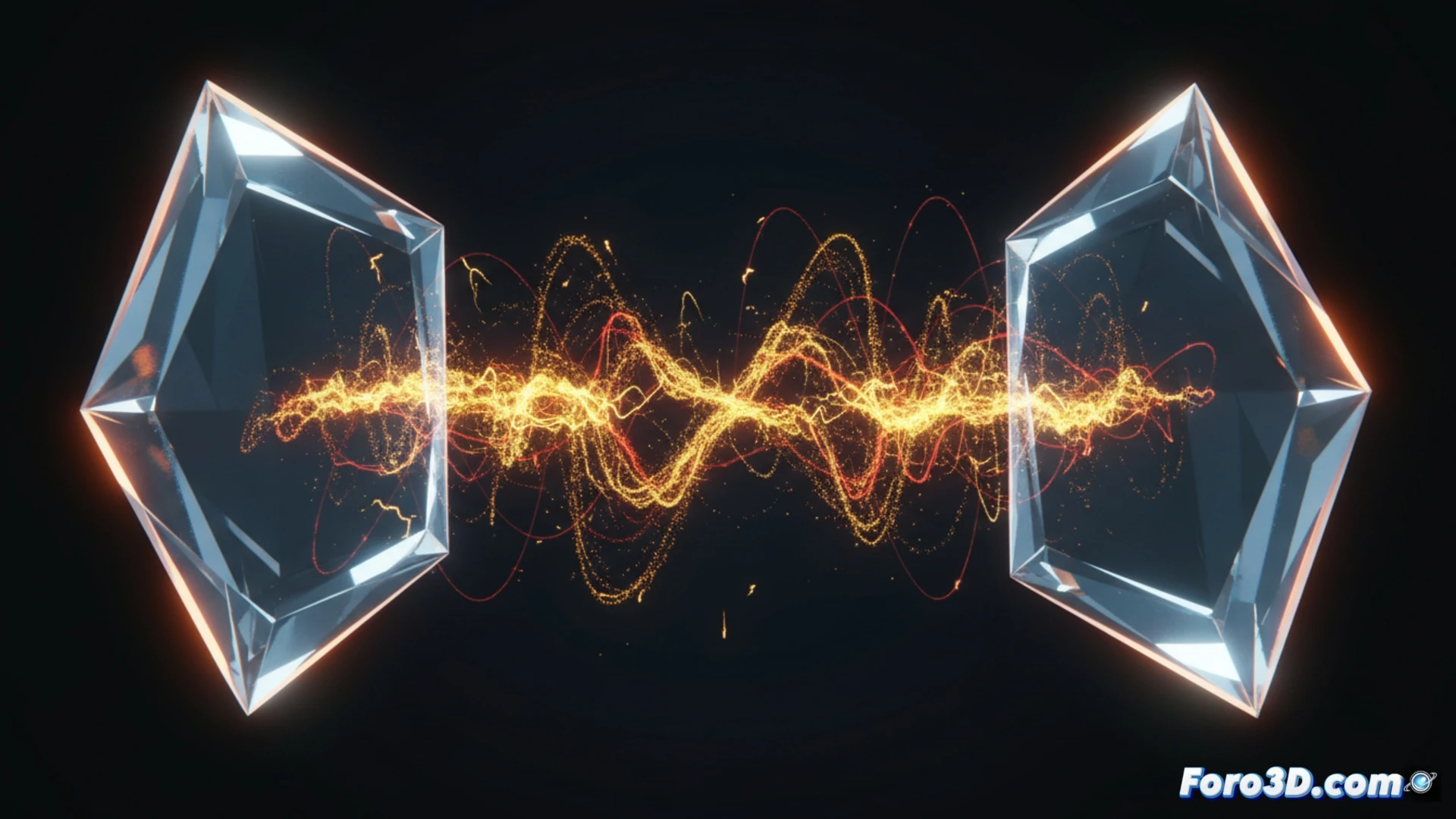
The Ghost Friction That Slows Down Your Technology
Imagine two extremely polished ice plates sliding against each other. At first glance, the movement seems unopposed. However, at the atomic scale, an imperceptible resistance constantly dissipates energy. Physicists call this effect non-contact friction or electronic friction, an intriguing process that occurs without the objects touching. 👻
The Quantum Mechanism Behind the Rub
How can something that doesn't contact slow things down? The answer lies in fundamental particles. As two materials approach, their outer layers of electrons begin to perceive each other's presence and influence one another. It's similar to trying to move one magnet next to another: you experience an opposing force, even though they don't collide. This interaction between surface electric charges produces heat and slows down the sliding, wasting valuable energy.
Key characteristics of this phenomenon:- It occurs at nanometric distances, where quantum forces are dominant.
- It transforms kinetic energy into heat, even though the surfaces are separated.
- Its intensity depends on the electronic properties of the materials involved.
Electronic friction represents a fundamental limit to efficiency in microscale systems.
Impact on the Technology We Use
This ghost rub poses a significant obstacle to advancing future devices. In MEMS (microelectromechanical) systems found in phones, such as motion sensors, these tiny losses compromise their performance and precision. Therefore, scientists are researching how to modify materials at the quantum level, altering their composition to reduce or completely eliminate this effect, pursuing optimal operation.
Areas where controlling it is crucial:- Gyroscopes and accelerometers in smartphones and wearables.
- Components of micro and nano robotics.
- Latest-generation hard drives with ultra-precise read heads.
Towards a Future with Less Friction
So, when you notice your mobile device heating up slightly, consider that maybe its subatomic particles are arguing because of this friction. Current science is trying to act as the ideal mediator in that conflict, designing materials and configurations that minimize this energy waste. Understanding and mastering these interactions is essential for building the next generation of efficient and durable technology. ⚛️