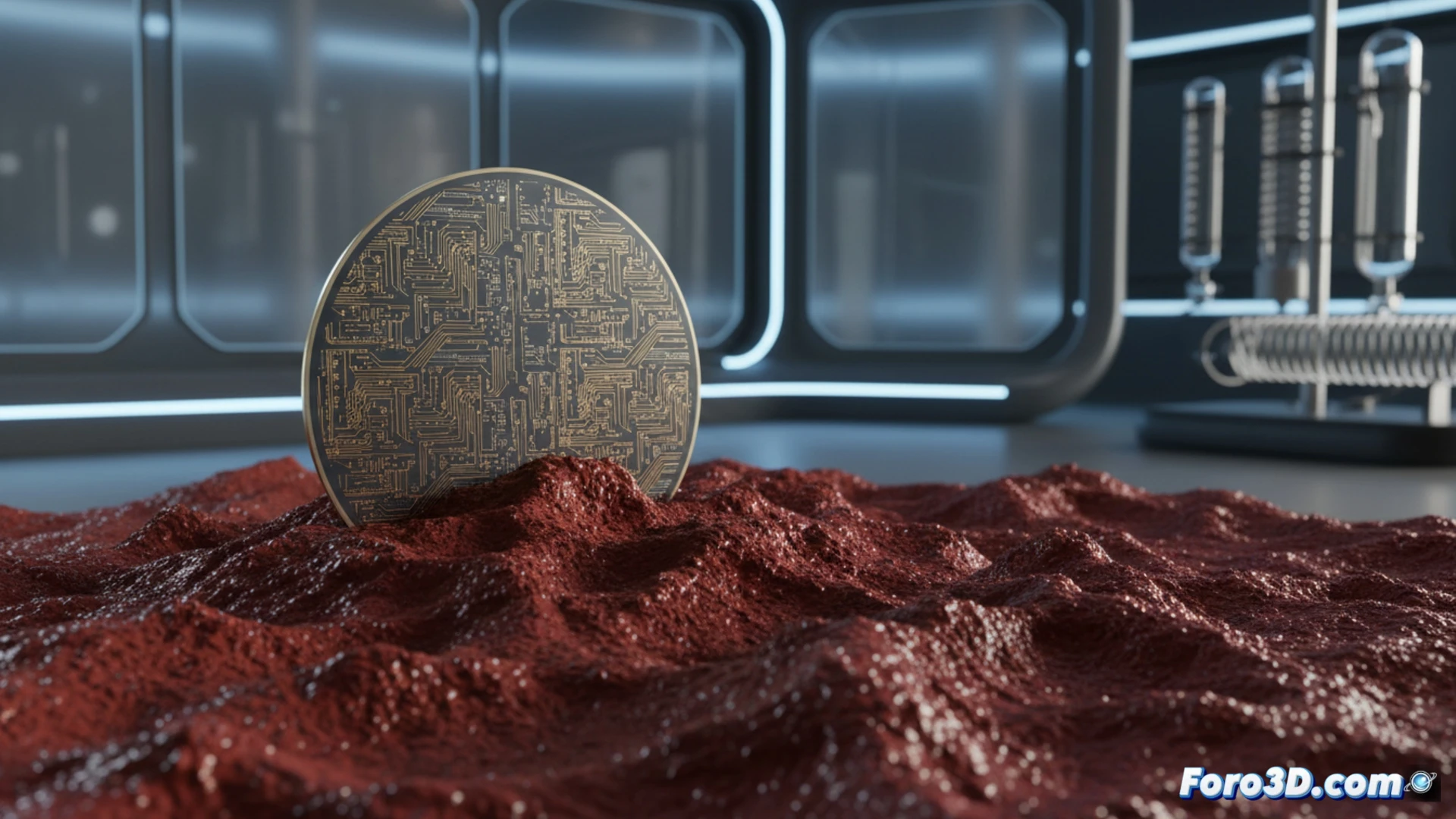
The future of chips could depend on an industrial waste
What if the raw material for building tomorrow's processors wasn't in exotic mines, but in an industrial waste we already generate? 🧠 This is the premise of a strategy that the United States is promoting to strengthen its semiconductor manufacturing. Its bet focuses on red mud, a byproduct of aluminum production that could hide a technological treasure.
Transform an environmental problem into a strategic opportunity
This reddish sludge is the result of refining bauxite to obtain aluminum. For years, its accumulation has represented an ecological challenge. However, recent research reveals that it is full of rare earths and other valuable metals, such as scandium and yttrium, critical components for manufacturing cutting-edge chips. The goal is to devise efficient and sustainable methods to extract these elements, thereby establishing a domestic supply chain and reducing the need to import them.
Key advantages of this approach:- Reduce dependence: Create an internal source of essential materials for electronics and defense.
- Solve an environmental liability: Give valuable use to a waste that otherwise requires costly management.
- Drive innovation: Develop new, cleaner extraction and refining techniques.
A waste from heavy industry becomes the pillar for the most advanced industry. It's a twist that redefines the concept of resource.
The curious connection between the old and the new
The paradox is remarkable: what is left over from a traditional industry could sustain the most cutting-edge technology. This initiative not only seeks to obtain raw materials, but also to process them with less impact. A beneficial cycle is pursued: cleaning the environment while building a strategic industrial base for the digital future, powering everything from phones to artificial intelligence systems.
Potential impact on the technology industry:- Supply security: Less vulnerability to geopolitical fluctuations in the rare earths market.
- Sustainability: Integrate circular economy principles into the manufacturing of critical components.
- Competitiveness: Strengthen the US position in the global race for semiconductor manufacturing.
Reevaluate what we consider waste
The next time you see something apparently insignificant, like a pile of sludge, remember that inside it could be the foundations of the next digital revolution. This project demonstrates that innovation sometimes consists of looking differently at what we already have. Never underestimate the hidden potential in a good idea... or in well-managed waste. 💡