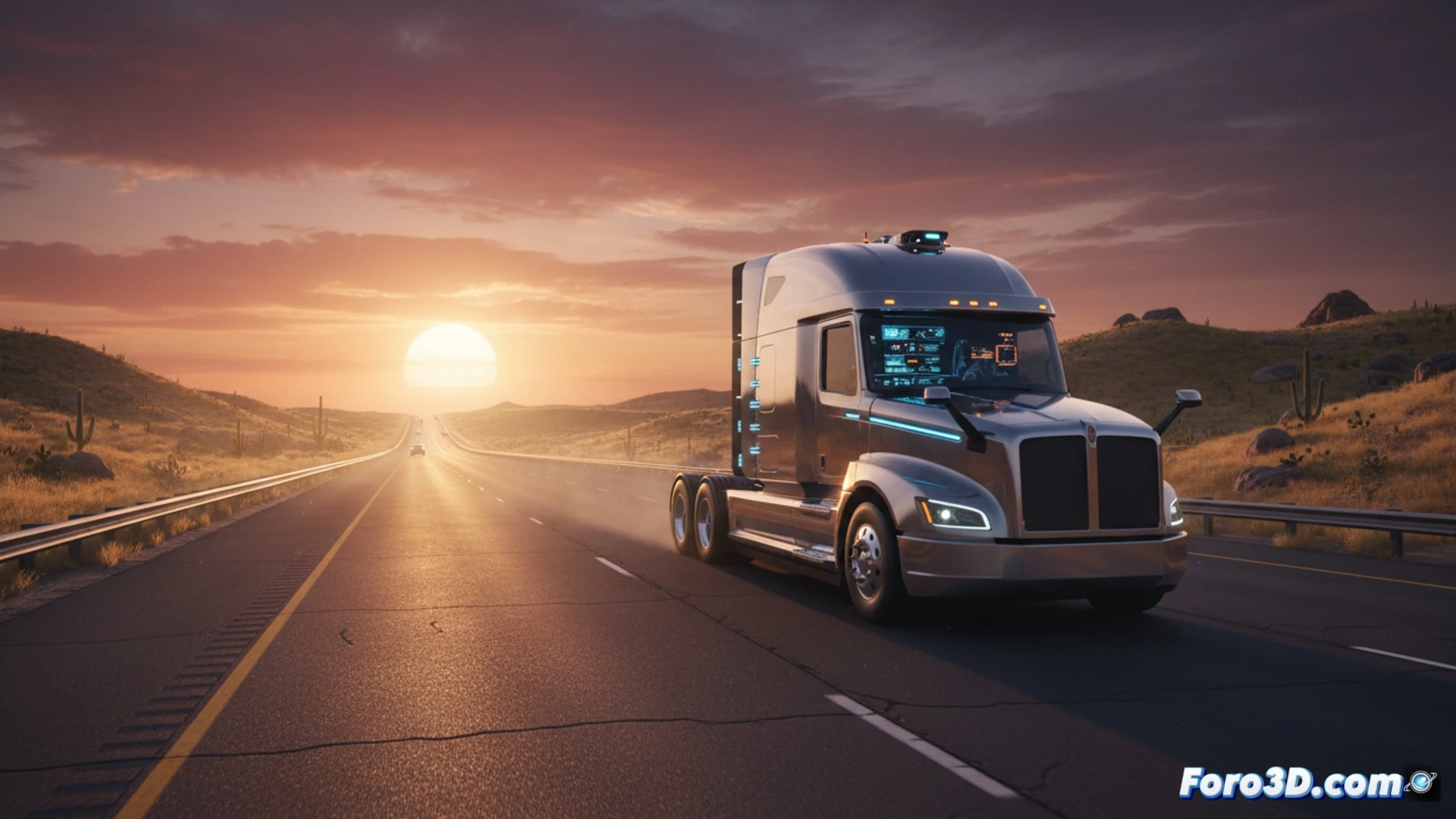
The future is already here: autonomous trucks that triple their routes with a simple update
Think about the last time you saw a truck on the road. Now imagine looking at the cabin and seeing no one driving. This is no longer a movie concept. Tech companies, including Aurora, created by former Google self-driving car project engineers, are deploying this reality. Their latest advancement is compelling: a simple software patch has enabled them to expand their driverless operations to three times more roads in the southern United States. 🚚
The artificial intelligence evolving behind the wheel
What is the mechanism behind this leap? The software acts as the vehicle's cognitive core. This update does not add trivial functions; it equates to that digital brain completing a massive and intensive training. It has processed and learned from a huge amount of new traffic scenarios, allowing it to interpret erratic movements of other cars, complex lane changes, and dangerous merges with greater precision. It is the pure essence of a machine learning system refining itself with real-world data.
Keys to autonomous operation:- The system processes millions of variables in real time to make decisions.
- Learns from every kilometer traveled, continuously improving its responses.
- Its main goal is to predict and react to the unpredictable behavior of the environment.
The future of transportation is not only electric, but also has very good digital reflexes.
The strategic approach: defined and repetitive routes
A crucial fact often overlooked is that these trucks do not operate randomly. They operate on fixed routes that have been meticulously analyzed, usually connecting logistics hubs, ports, and distribution centers. It is similar to mastering the path from home to work perfectly: a known route executed with maximum efficiency, without fatigue and available 24 hours a day. Focusing on these repetitive routes is the fundamental strategy to ensure safety and scale the technology in a controlled manner before a massive rollout.
Advantages of operating on specific corridors:- Allows mapping every curve, sign, and exit with extreme detail.
- Reduces uncertainty when facing a more predictable environment.
- Facilitates integration with existing logistics infrastructure.
A landscape of smart highways
The presence of these silent giants on our roads will become increasingly common. It is likely that the next package you receive traveled in a trailer guided by an algorithm that was updated, not by a driver who rested. This transformation indicates that the next evolution in freight mobility combines absolute operational efficiency with a reaction capacity born from code. The transportation landscape is being redefined toward autonomy. 🤖