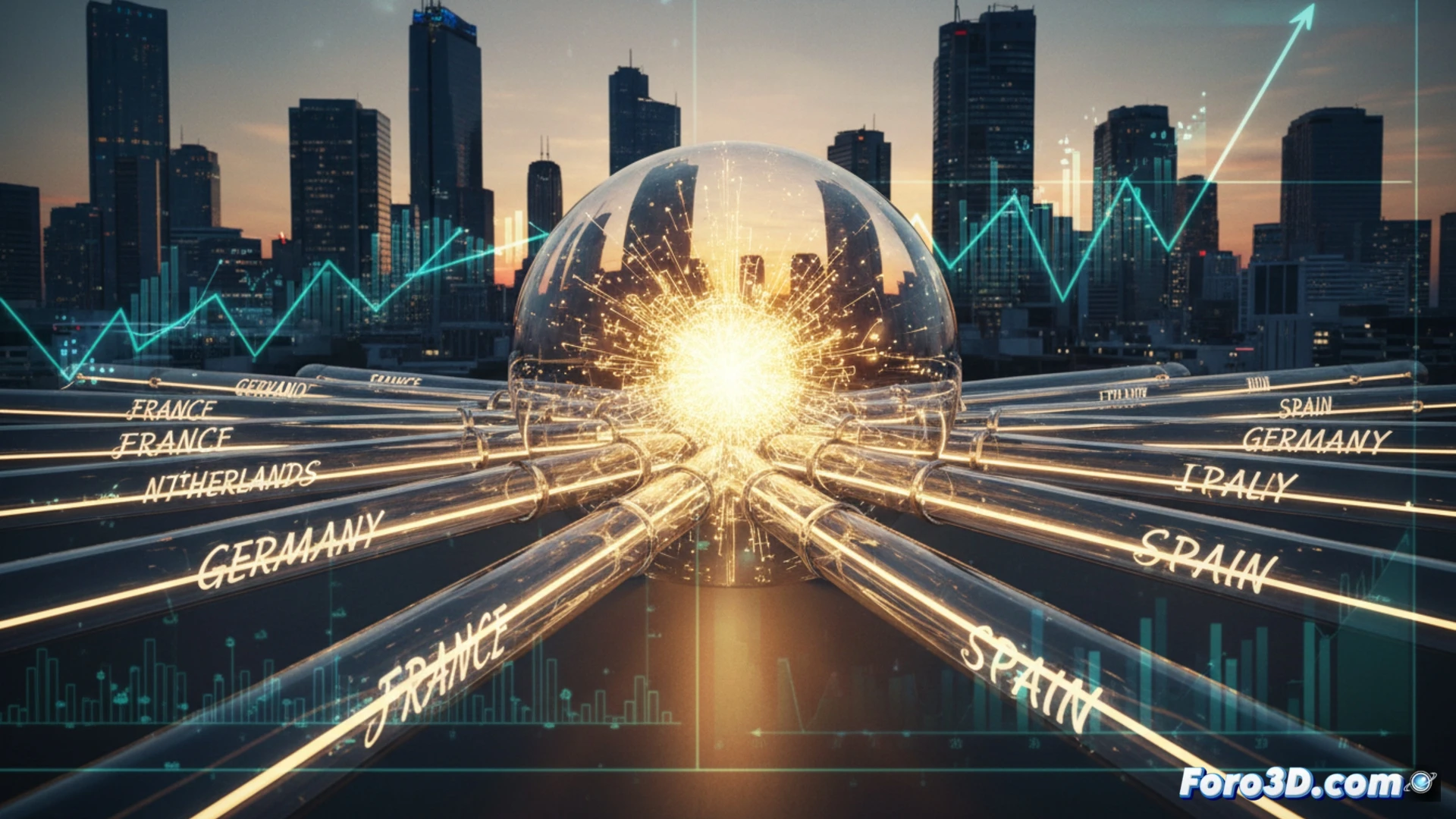
The European Union Needs to Reform Its Capital Markets to Compete
The top official of the European Commission, Ursula von der Leyen, has stated that the EU must transform its financial systems to position itself better on the global stage. She emphasizes that the current model is excessively fragmented and convoluted, which complicates businesses, particularly small and medium-sized enterprises, from obtaining funding. To expand and foster innovation, Europe requires a stronger and more fluid single capital market. 💶
Reduce Complexity to Attract More Investment
Von der Leyen's proposal focuses on simplifying the rules and reducing administrative procedures faced by investors and companies. A more transparent and cohesive regulatory framework could attract more private capital to infrastructure initiatives and sustainable technologies. The goal is to build an ecosystem where resources circulate with fewer obstacles between Union countries. 🔄
Key objectives of the simplification:- Align and unify financial regulations across different member states.
- Facilitate access to financing for ecological and digital transition projects.
- Create more direct channels for private capital to invest within community borders.
For money to circulate in Europe, it is first essential to untangle the web of rules that blocks it.
A Foundation for Strategic Autonomy
This transformation is seen as an essential element to consolidate the continent's strategic autonomy. By having a more unified and robust financial system, the EU would reduce its dependence on external markets to fund its shift toward a green and digital economy. Achieving unanimous agreement among the twenty-seven member countries will be the next major political challenge. 🏛️
Expected benefits of an integrated market:- Greater resilience against external financial crises.
- Strengthening Europe's capacity to finance its own strategic priorities.
- Boost to innovation and economic growth from within the bloc.
The Political Path Ahead
It seems that Brussels finally recognizes the urgency to act. Consensus among the capitals will be decisive to materialize this vision. Achieving the flow of money requires, above all, unleashing the potential that today is hindered by a regulatory tangle. The success of this reform would mark a turning point in Europe's ability to define its own economic destiny. ⚖️