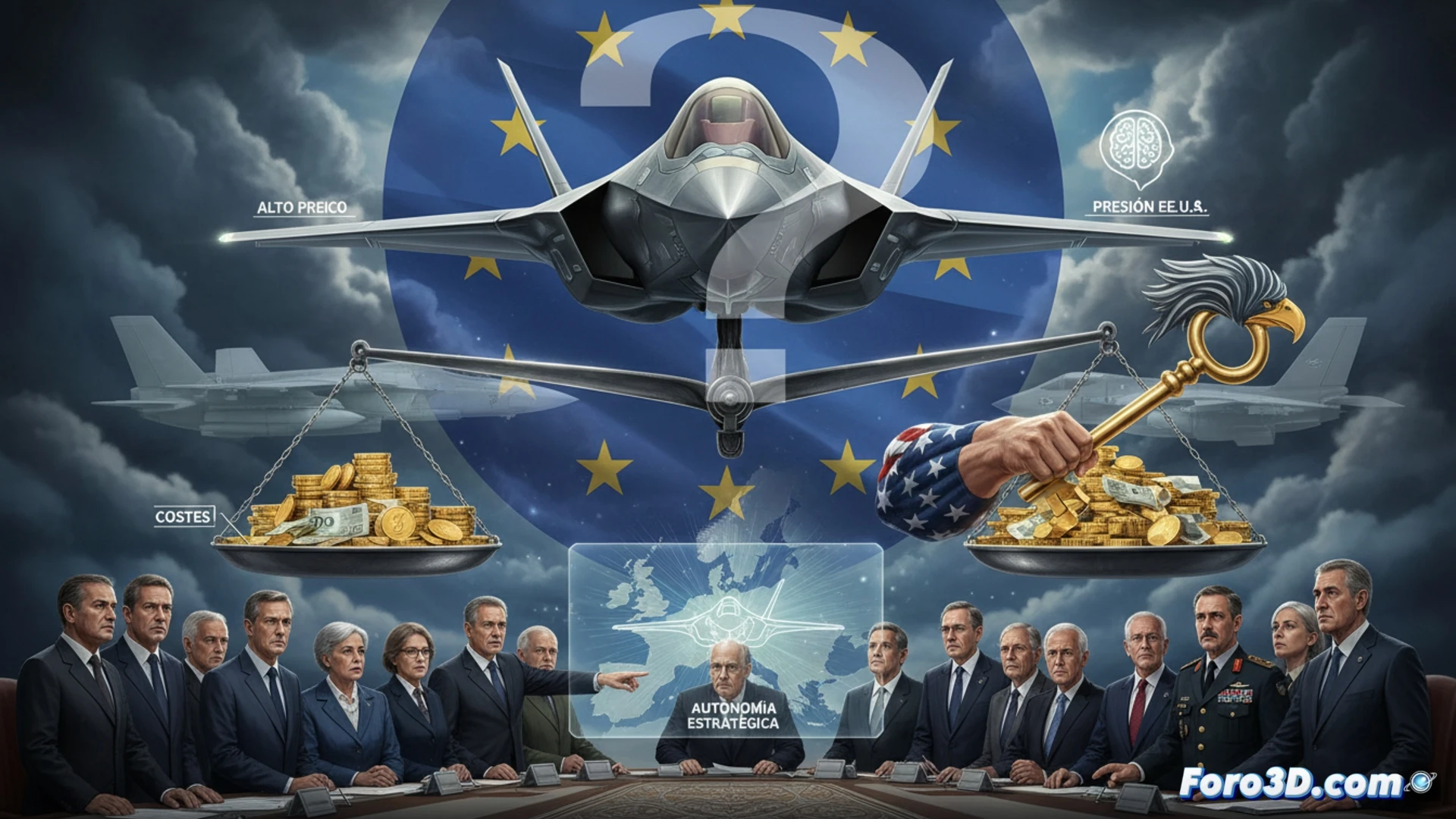
The possible acquisition of F-35 fighters by several European Union countries is at a complex point. Hungary's withdrawal from the agreement and doubts in other capitals reflect a larger problem. Concerns about the total cost of the program, pressure from Washington, and internal debates on European strategic autonomy clash with the need to modernize air fleets.
Technological Integration and Logistical Dependence ⚙️
The F-35 is not just an airplane; it is a system of systems that requires deep integration into the user's command and control network. Its acquisition implies long-term dependence on US logistics and technological support, controlled through the ALIS/ODIN program. This limits countries' ability to perform maintenance or modifications independently, a critical point for the strategic autonomy advocated by the EU.
The "F-35 Club": Membership with Conditions (and Bill) 💸
It seems that joining the exclusive F-35 club has fine print. First, you pay an enormous entry fee. Then, you accept that all updates and technical support come from a single provider, who is also your geopolitical ally. And finally, you assume that if one day you want to paint a little European flag on the fuselage, you will need written permission. It is the modern definition of lease with option to dependence.