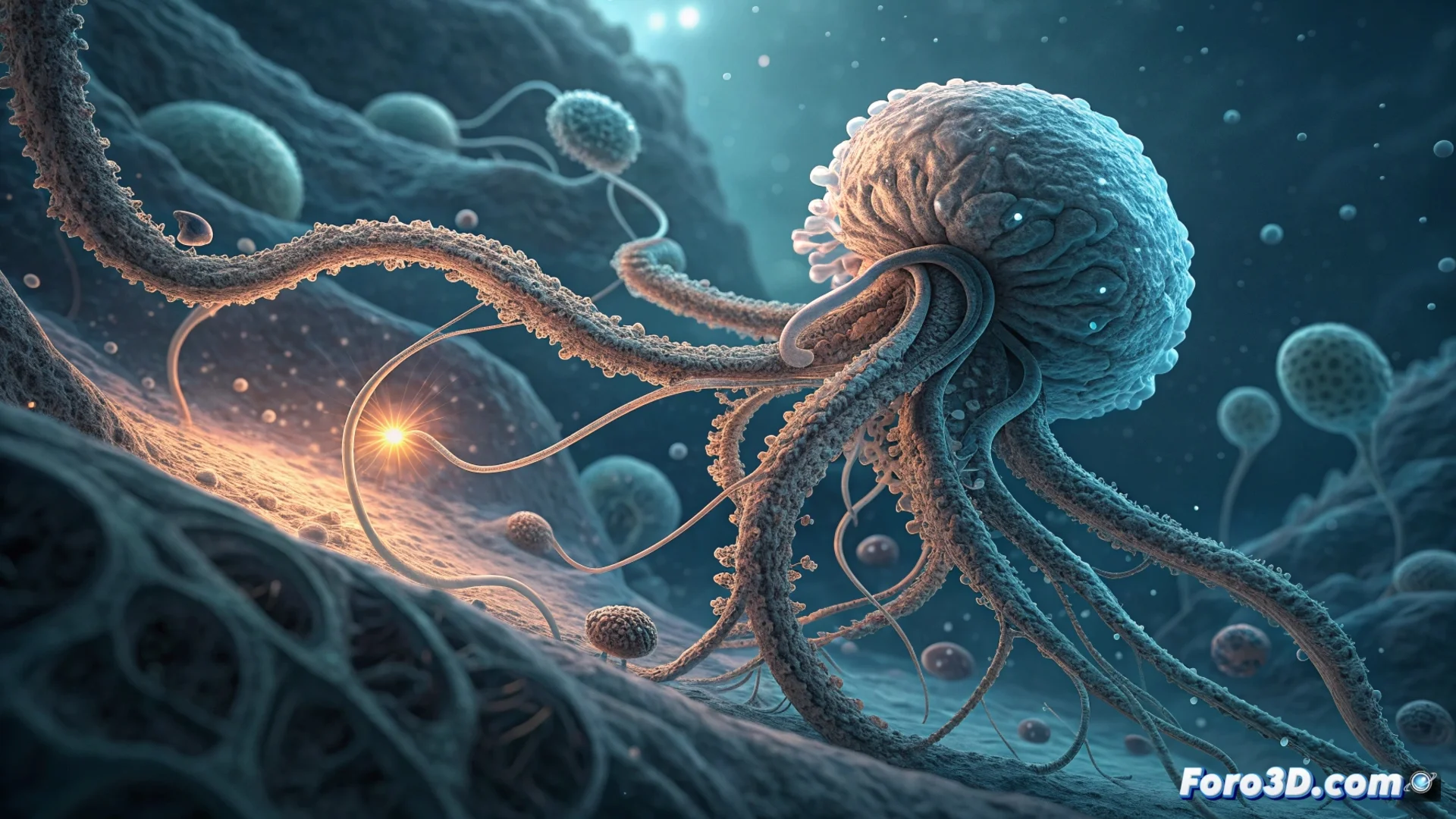
The code of life: how cephalopods edit their RNA to adapt
Think of DNA as an organism's definitive instruction manual. Some marine animals, like octopuses and squids, have developed an astonishing ability: they can rewrite the working notes after consulting that manual. Instead of following genetic orders to the letter, they extensively modify messenger RNA, which is the temporary copy cells use to produce proteins. It's comparable to changing the ingredients of a recipe while cooking, adjusting the final result to the immediate environment. 🧬
The advantage of modifying the genetic messenger
This strategy gives them exceptional biological plasticity. Their fundamental DNA sequence remains the same, but by altering the RNA they can generate a diverse repertoire of proteins as the situation requires. It's a powerful mechanism for adapting quickly, without needing to wait for slow mutations in the main genome. Imagine having a basic vehicle that you can instantly reconfigure to travel through the desert or the mountains.
Key benefits of this editing:- Immediate response: Allows adjusting physiology to sudden environmental changes in real time.
- Protein versatility: A single gene can give rise to multiple functional protein variants.
- Genomic stability: The original DNA is preserved, avoiding permanent errors in the book of life.
RNA editing is like a live software update for the organism, while DNA evolution would be a much slower hardware update.
A case study in extreme conditions
A fascinating example is observed in octopuses inhabiting polar waters. Glacial temperatures critically slow down signal transmission in their nervous system. How do they solve this problem? They massively edit RNA within their neurons. This process generates specialized proteins that compensate for the thermal mismatch, allowing their brain to operate at optimal speed. It's a hotfix for surviving in a hostile habitat. ❄️
Characteristics of this phenomenon in polar octopuses:- The editing is specifically concentrated in nervous tissue.
- The resulting proteins optimize the conduction of electrical impulses in the cold.
- It represents a key evolutionary advantage for colonizing extreme environments.
Masters of bio-editing
Therefore, when you observe a cephalopod, remember that you are in the presence of a reprogramming expert at the molecular level. While we struggle to update the operating system of our devices, these creatures have been executing survival patches in their own executable code for millions of years. Their ability to copy, paste, and modify genetic information on the fly redefines our understanding of adaptability in nature. 🐙