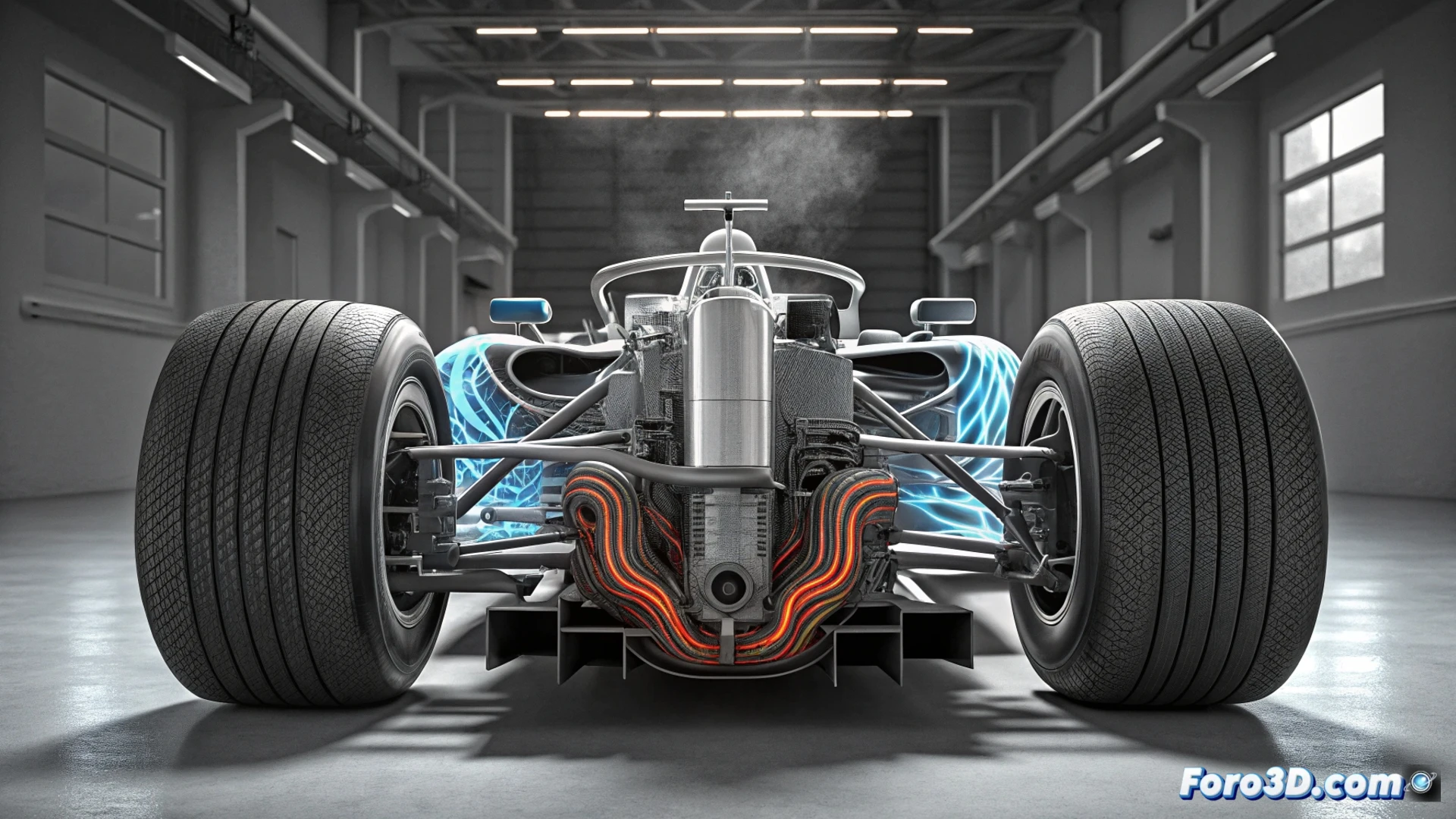
The Challenge of Taming the Aston Martin F1 Vibrations
Think of an annoying tremor in your car, but multiplied by the extreme speed of a Formula 1. 🏎️💨 That's what Fernando Alonso's Aston Martin is facing. Its Honda AMR26 power unit, although a powerful unit, releases a huge amount of heat and produces oscillations that cause the car to overheat and its efficiency to decline. It's similar to when your mobile phone overheats while using a demanding app, but in an environment where every fraction of a second is decisive.
The Systemic Challenge: Beyond the Power Unit
The difficulty does not lie solely in the engine. If it beats strongly but irregularly, the entire system surrounding it suffers. The chassis, the electronics, and the aerodynamics absorb that stress. The main goal for the engineers is to reconceive the rear section of the vehicle to optimize how heat is dissipated and to mechanically isolate those vibrations. It's a puzzle of precision engineering, where altering the route of a single cable can modify the airflow that cools the brake discs.
Critical Points to Resolve:- Integral Cooling: Manage the excess heat generated by the Honda engine's power.
- Vibration Isolation: Prevent engine oscillations from disturbing the chassis and aerodynamics behavior.
- Component Integration: Achieve harmony among all rear systems without penalizing weight or complexity.
"I would do the 'homework' that Adrian Newey assigns me." - Fernando Alonso's reflection on the search for technical solutions.
The Search for Perfect Synergy
In this context arises the reference to the design legend, Adrian Newey. Although he is not part of the Aston Martin team, Alonso has expressed that he would follow his instructions to the letter. It's comparable to receiving notes from the best teacher for the most complex exam. 💡 The key fundamental lies in achieving technical synergy: a high-power engine block demands a structure that can harness that energy and, at the same time, contain its side effects, like a dance couple in perfect coordination.
Key Factors for Success:- Chassis-Engine Harmony: The frame's behavior must complement the power unit's characteristics.
- Global Analysis: Evaluate how each change in one area affects the car's overall performance.
- External Expertise: Consider the knowledge of iconic figures like Newey to find innovative solutions.
Conclusion: Teamwork Defines Progress
Often, even in the highest category of motorsport, the most significant advances do not come from an isolated revolutionary part. The true qualitative leap arises from ensuring that all existing elements stop interfering with each other and begin to collaborate cohesively. It's a principle that, interestingly, also applies to the human teams that design and drive these incredible single-seaters. 🤝 The Aston Martin challenge is a reminder that technical excellence is, above all, an exercise in integration and balance.