A study in the journal Science has analyzed tumors from nearly 500 felines, creating a cat oncogenome. The research reveals that carcinogenic mutations in these animals are very similar to those in humans, in genes such as TP53 or PIK3CA. This positions the domestic cat as a relevant model for understanding spontaneous cancer.
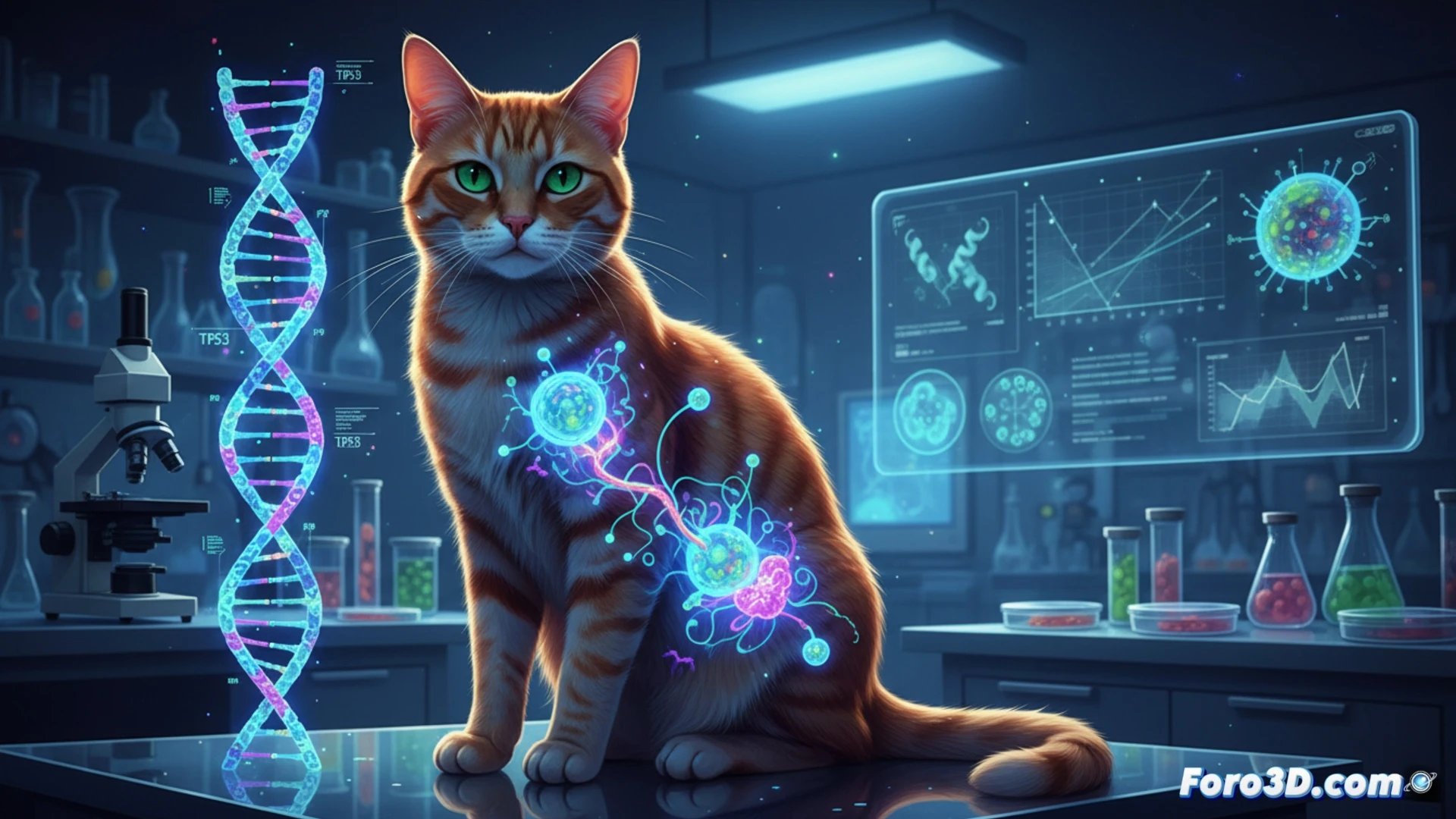
Sequencing and Genomic Parallels in Oncology 🧪
The work was based on genomic sequencing of feline tumors, identifying specific mutational signatures. The parallels with alterations in key human genes suggest shared tumor development pathways. This genetic map allows exploration of targeted therapies that, by acting on common molecular targets, could be effective in both species, accelerating translational research.
Your Feline is a Four-Legged Clinical Patient 😼
So your kitty, besides being an expert at knocking objects off the table, is now a high-standing biomedical model. It shares with you not only the sofa, but also very specific oncogenic mutations. The next time it visits the vet, think that its check-up might be contributing valuable data to human medicine. Science advances, sometimes purring.