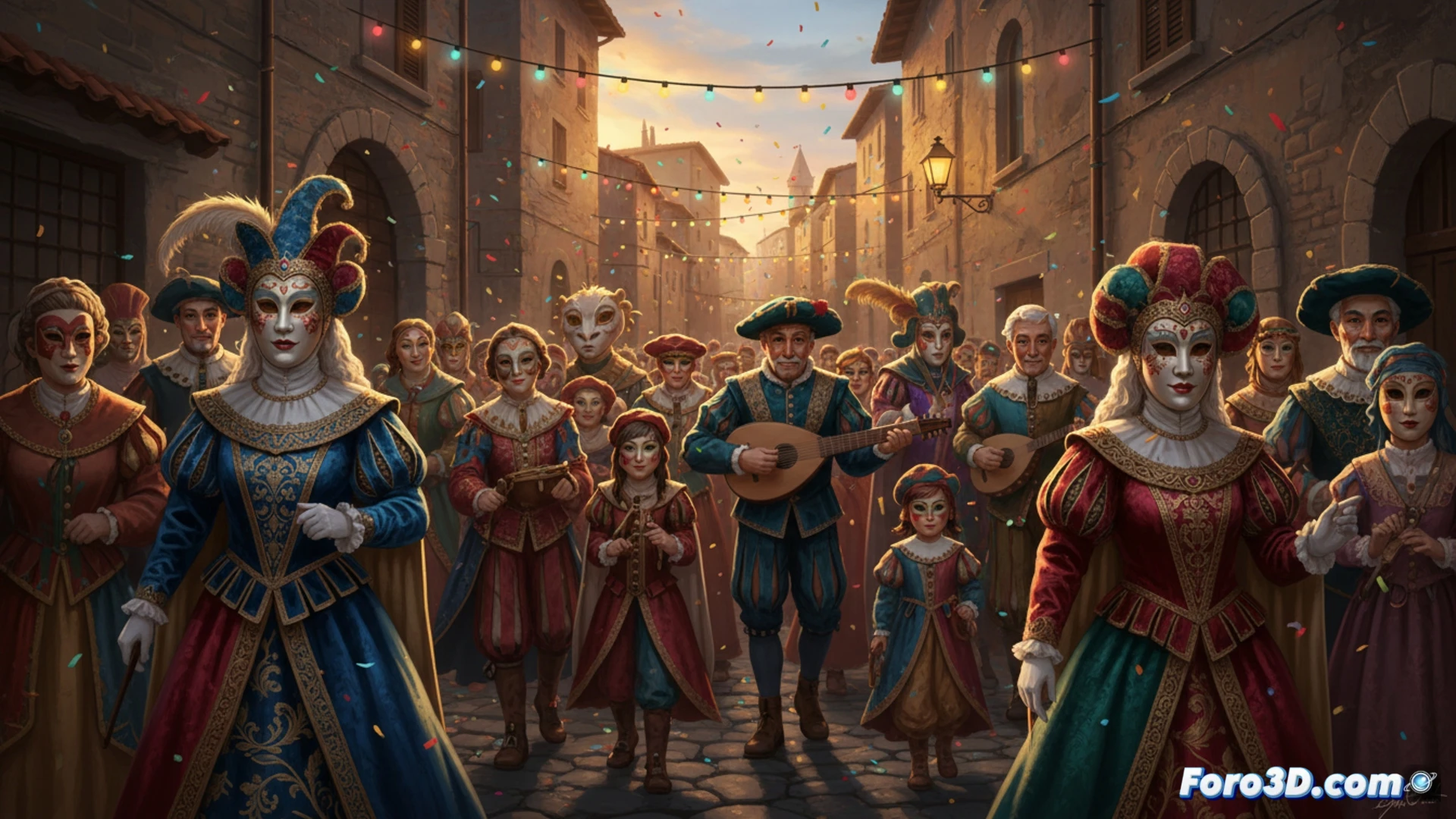
The Carnival of Le Marche: a tradition that narrates community stories
In the Italian region of Le Marche, the carnival represents much more than a simple celebration; it functions as a narrative mechanism that allows communities to tell their own story. This festival fuses ancestral masks, vibrant parades, and cultural activities to manifest a deep local identity. Thus, residents not only have fun, but also share their legacy and establish a bridge with the generations that preceded them, making this tradition a dynamic social phenomenon. 🎭
Masks as carriers of collective memory
Each costume and each mask worn in these carnivals incorporates symbols with meaning that allude to myths, historical professions, or key events from each locality. Dedicated artisans craft these elements over long periods, applying methods passed down from parents to children. In this way, by donning the attire, the person not only seeks entertainment, but literally carries with them and displays a part of the shared memory of their land.
Key elements of traditional costumes:- Local symbology: Direct references to popular legends and events that marked the town.
- Craftsmanship technique: Meticulous creation processes that can last several months.
- Family transmission: Knowledge passed from one generation to the next, preserving the craft.
A healthy neighborly competition disguised as tradition unites communities, whether designing a giant costume or debating if this year's allegorical float surpasses that of the rival town.
The organization: a catalyst for social cohesion
Beyond its historical value, preparing the carnival requires neighbors, groups, and local authorities to work together. This cycle of planning and carrying out the festivities stimulates collaboration and renews the sense of belonging to the place. For numerous towns, it is the activity that mobilizes the most people annually, generating a perfect setting for making new friends and consolidating existing ones.
Social impact of the celebration:- Practical cooperation: Neighbors, associations, and town halls must coordinate efforts to organize the events.
- Revitalization of community feeling: The process itself strengthens bonds and local pride.
- Annual meeting point: It acts as the event that gathers the largest number of residents, fostering interaction.
Conclusion: a legacy that endures in the present
The carnival in Le Marche demonstrates how a festive tradition can be the perfect vehicle for preserving history and, at the same time, weaving the current social fabric. It is not a static museum, but a living practice where the past is interpreted, dressed, and shared, ensuring that community identity continues to evolve without losing its roots. The true magic lies in how it turns memory into a collective and vibrant experience. ✨