In ancient Egypt, death was not an end, but a complex journey. The elite prepared for it with a practical resource: the Book of the Dead. This set of spells and prayers, inscribed on papyrus, functioned as a personalized guide to navigate the underworld. Its objective was clear: provide instructions to overcome demons, avoid lakes of fire, and successfully reach eternal life. It was a custom-made document that reflected the specific resources and fears of its owner.
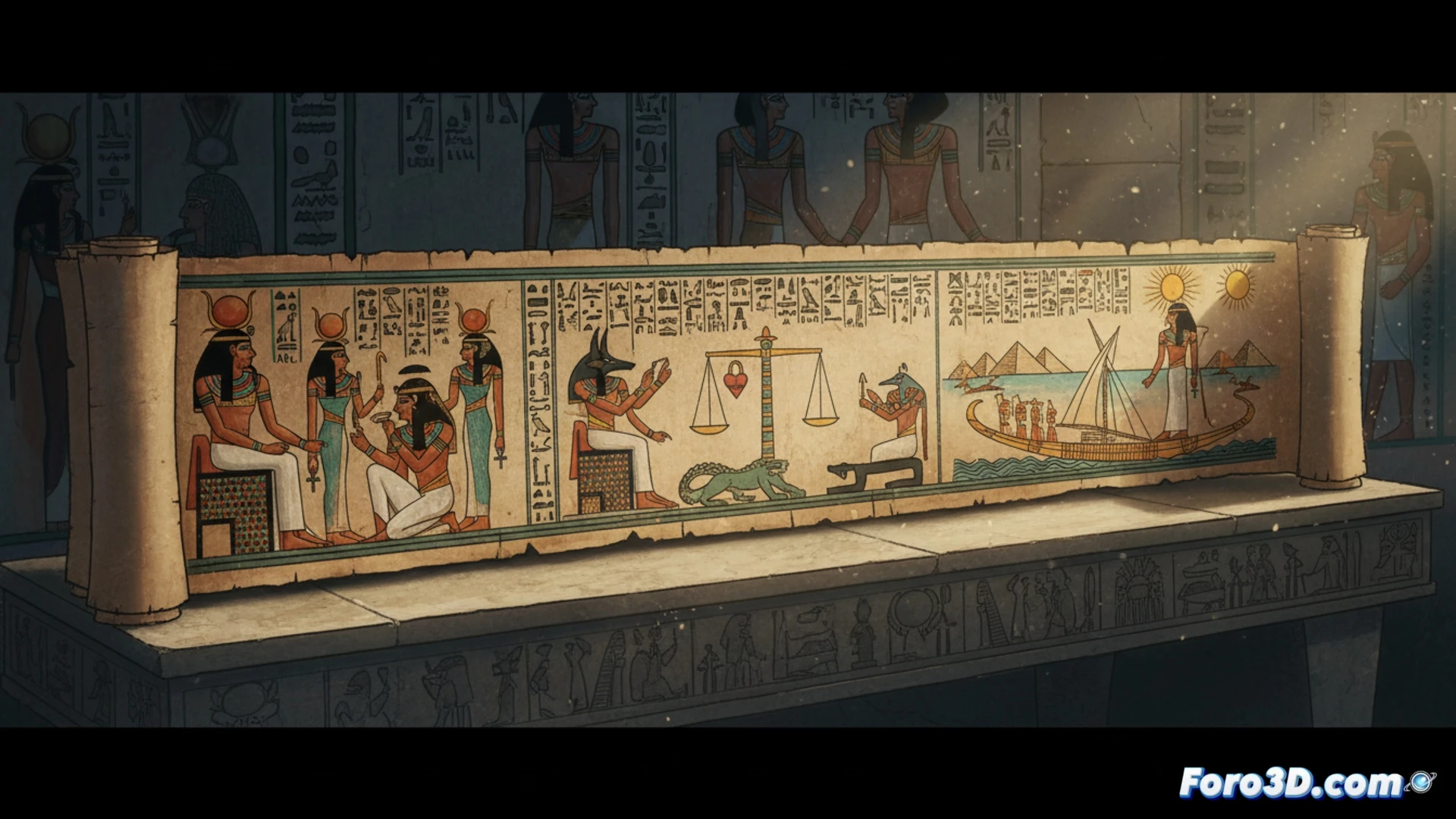
A compilation of spells: modularity and customization on papyrus ⚙️
Technically, the Book of the Dead was not a fixed text, but a modular compendium. Scribes selected and combined spells or chapters from a broad corpus, according to the client's needs and budget. This customization is similar to developing software with modular libraries: only the modules necessary for the use case are integrated. The source code, written in hieroglyphs or hieratic, was executed through oral recitation, a type of command interface. The effectiveness depended on the precision of the script and the correct implementation of the associated rituals.
The ultimate DLC: microtransactions for eternity 💎
If you think about it, the system had a clear pay-for-features model. The basic version included spells to avoid walking upside down in the afterlife. But if you wanted to avoid being devoured by Ammit, the devourer of hearts, you needed chapter 125, a clear premium. And the option to have the papyrus illustrated with full-color vignettes was, without a doubt, the high-resolution textures pack. An approach where your afterlife depended, to a large extent, on how much you had invested in the pre-sale. Something like an early access to immortality, with reviews that, luckily, you couldn't read.