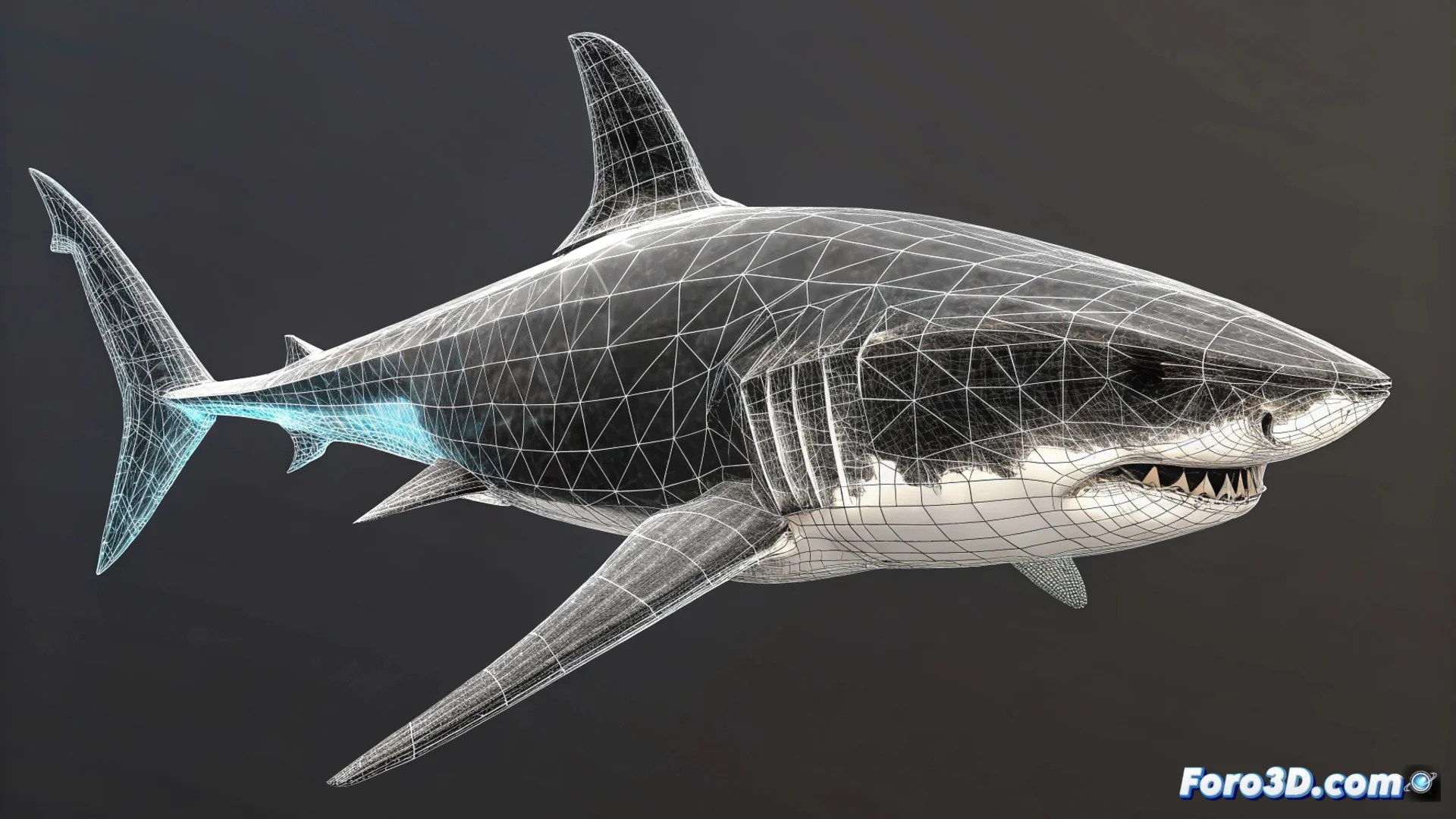
Techniques for Animating a Shark in 3ds Max
Bringing a shark to life in 3ds Max requires precisely simulating its movement through the water. The key lies in combining a main trajectory with secondary movements that mimic natural propulsion 🦈.
Establishing the Basic Swimming Path
The first step is to define where the fish will move. Use the Path Constraint modifier to link the model to a curved spline, which generates the base of its journey. Then, it is essential to incorporate undulations to the body and tail fin. You can achieve this with modifiers like Bend or Wave, or even with an expression controller that synchronizes the tail flapping with progress along the path.
Key Elements for the Base Animation:- Use Path Constraint to guide the model's global displacement.
- Add cyclic deformations to the body with bending or waving modifiers.
- Link the tail movement to progress along the trajectory for greater realism.
A convincingly animated shark doesn't just swim; it floats lazily before suddenly accelerating.
Refining with a Bone System
For detailed control, structure a hierarchy of Bones along the model. A main bone directs the torso, while smaller bone chains govern the tail and fins. Apply the Skin modifier to the shark and carefully assign weights so the mesh deforms credibly. Animating these bones with smooth, repetitive rotations produces the characteristic serpentine movement.
Improvements with Inverse Kinematics and Variation:- Implement IK in the tail chain so it acts as a cohesive unit.
- Add Noise controllers in the Track View to move pectoral fins or create subtle nodding.
- Adjust the interpolation smoothness in the animation curves to avoid robotic-looking movement.
Conclusion for an Organic Result
Realistic animation in 3ds Max is built in layers. Start with a path, add the bone structure with Skin, and finish with IK and noise details. This workflow allows capturing the essence of underwater swimming, where controlled imperfection brings the necessary vitality. Remember to observe real references to inspire those rhythm changes between slowness and sudden acceleration.