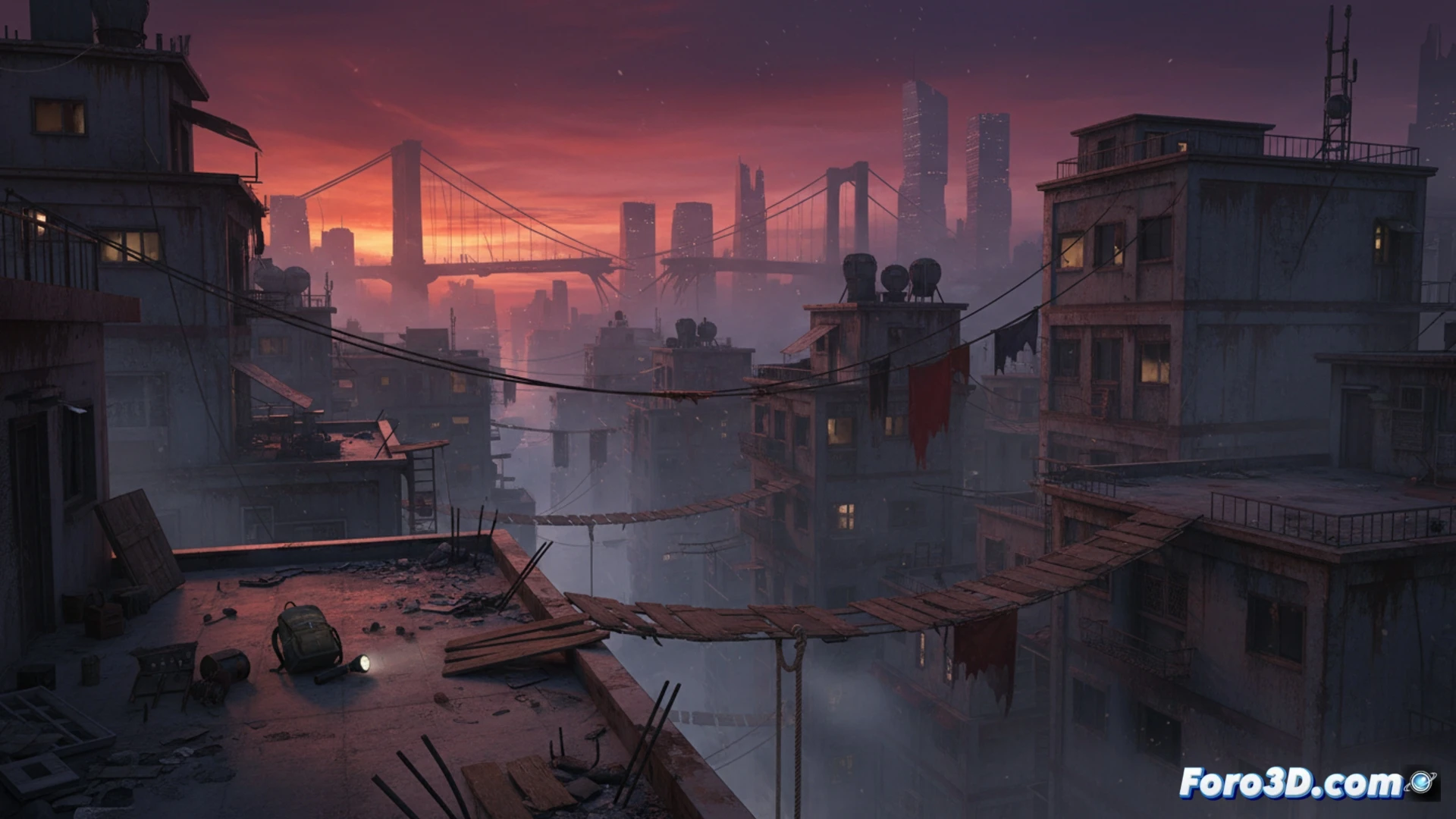
Techland's C-Engine Powers Dying Light 2: Stay Human
The technology that makes it possible to live the adventure of Dying Light 2: Stay Human is the C-Engine, a proprietary creation of Techland studio. This technical core was built with a clear objective: to handle an open world where the passage of time changes everything. 🎮
The Heart of a Changing World
The architecture of the C-Engine prioritizes two fundamental aspects. First, it must render a huge metropolis with a great viewing distance, essential for the parkour system to feel uninterrupted. Second, and most importantly, it governs a dynamic day-night cycle that not only alters the visual aspect but also how enemies behave and the survival rules. The city is not the same place when the sun sets. 😨
Key Pillars of the Engine:- Manage an extensive vertical environment for agile and fluid movement.
- Implement a day/night cycle that transforms gameplay and atmosphere.
- Process physical interaction with the world and detailed hordes of infected.
The engine sets the world's rules, transforming a safe space into a nightmare when darkness falls.
Lighting and Atmosphere that Tell a Story
To differentiate both periods, the engine employs a dynamic global illumination system and various atmospheric effects. This is not just visual embellishment; it defines the gaming experience. Daylight allows for relatively calm exploration, while night activates the most feared dangers. The C-Engine ensures this transition is both visually impactful and meaningfully gameplay-oriented. 🌇➡️🌃
How the Game Was Built
To develop this title, Techland's team used the internal editor of their engine, combining it with specialized external software. This workflow allowed for creating the game's assets and sound experience.
Tools Used in Development:- Modeling and Sculpting: Applications like 3ds Max, Blender, and ZBrush were used to shape and detail the models.
- Texturing: Substance 3D Painter was key for painting and aging surfaces, endowing the world with realism.
- Interactive Audio: Wwise was integrated to design a soundtrack and sound effects that react to the day/night cycle and player actions.
The Final Result
So, the next time you admire a sunset in the game or feel panic upon hearing a growl in the darkness, remember that it's the C-Engine working together with artistic talent. They set up those lights and shadows that define every moment of your adventure in Dying Light 2. 🙌