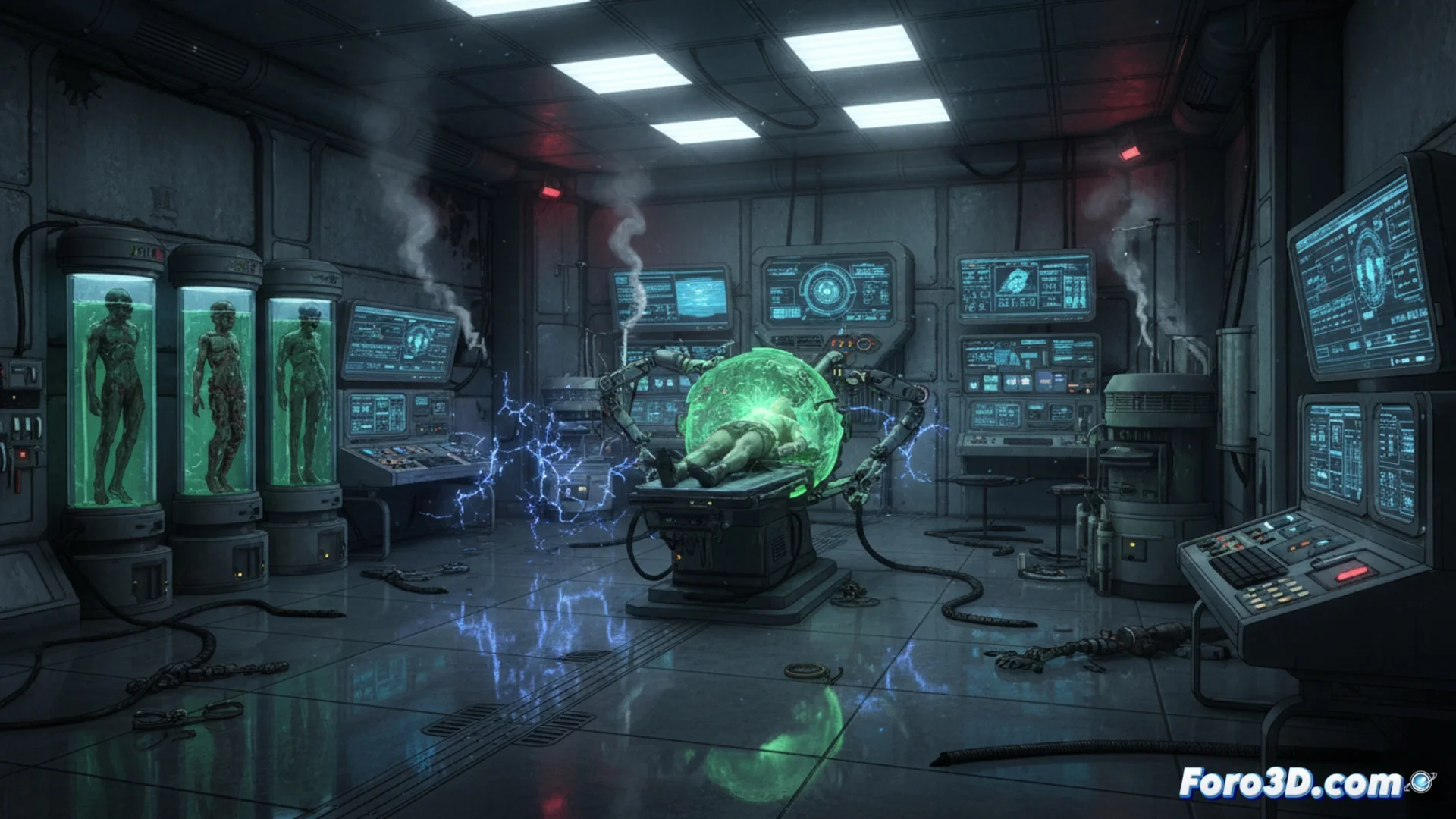
System Shock remake blends retro aesthetics and modern graphics
The studio Nightdive Studios chose Unreal Engine 4 to rebuild the cult classic. This graphics engine allowed them to blend a retrofuturistic atmosphere with the latest technical capabilities. The goal was clear: preserve the visual soul of the original game while implementing advanced lighting and effects systems. The result is a title that respects its legacy but is enjoyed with contemporary standards. 🎮
A hybrid visual identity: pixel art over 3D worlds
The artistic approach is based on a deliberate fusion. Textures with a pixelated style are applied over highly detailed three-dimensional scenarios. Elements like interface screens or certain panels retain this low resolution intentionally. This generates a powerful visual contrast with dynamic lighting, screen-based reflections, and complex particle effects that the engine can process. This combination completely defines the project's identity.
Pillars of the graphical fusion:- Pixelated textures: Overlaid on detailed 3D models to evoke the feel of the 90s.
- Modern lighting: Dynamic lighting and screen-based reflections are used to add realism.
- Visual effects: Advanced particle systems coexist with the retro style of interface elements.
The original SHODAN would approve this mix of old and new, though it would probably find a security flaw in the pixel rendering.
The workflow for designing the Citadel Station
To model the levels and characters, the development team likely used software like Blender and Maya. The stylized texturing process was carried out with tools like Substance Painter, while specialized programs like Aseprite were used to create pixel art assets. This specific workflow was key to producing resources that work in a modern engine but convey the nostalgia of a bygone era.
Key tools in production:- 3D modeling: Blender and Maya to build the station's architecture and models.
- Stylized texturing: Substance Painter to apply the pixelated look and materials.
- Pixel art creation: Aseprite to design interface elements and low-resolution textures.
Conclusion: a bridge between two eras
The System Shock remake demonstrates that it is possible to honor classic aesthetics without giving up technical advances. The choice of Unreal Engine 4 and a workflow with specific tools allowed this balance. It's not just about improving graphics, but about reinterpreting a visual identity for a new generation, keeping its eerie and futuristic essence intact. 🤖