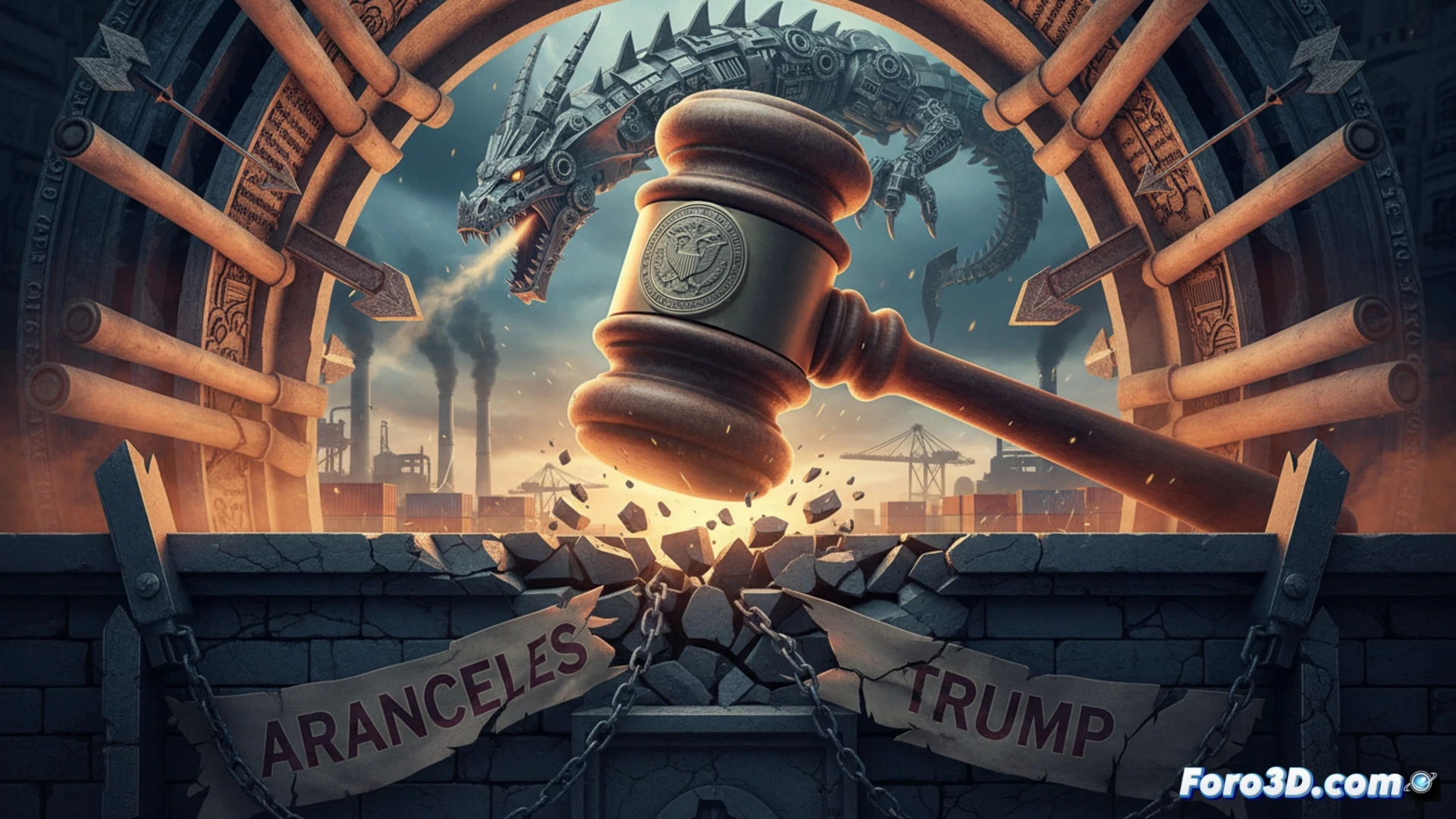
The U.S. Supreme Court has ruled, by a 6-3 vote, that some tariffs imposed by Donald Trump using a 1977 economic emergency law (IEEPA) are illegal. This ruling does not affect other duties, such as those on steel and aluminum. The Trump administration has already announced its intention to impose new general tariffs, so the scenario of trade tensions remains.
The IEEPA: an economic sudo that the Court has disabled 🔓
The International Emergency Economic Powers Act (IEEPA) functioned like a high-privilege command in the trade system. Designed for genuine national emergencies, like a sudo in Linux, it granted broad powers to the executive. The Court has ruled that its use to impose general tariffs exceeded its intended scope, invalidating that specific execution. The ruling sets a precedent on the limits of this legal tool, but does not alter the core of trade policy.
Consolation for importers: their refund is in process ⏳
Billions in tariffs now declared illegal raise the issue of refunds. This process will be slow, complex, and likely resolved between the government and large importing companies. Consumers who paid higher prices for affected products can sit and wait. It's like if in a canceled traffic fine, the refund went to the car rental company, not the driver who paid it on the receipt. A technical relief, not one that reaches the pocket.