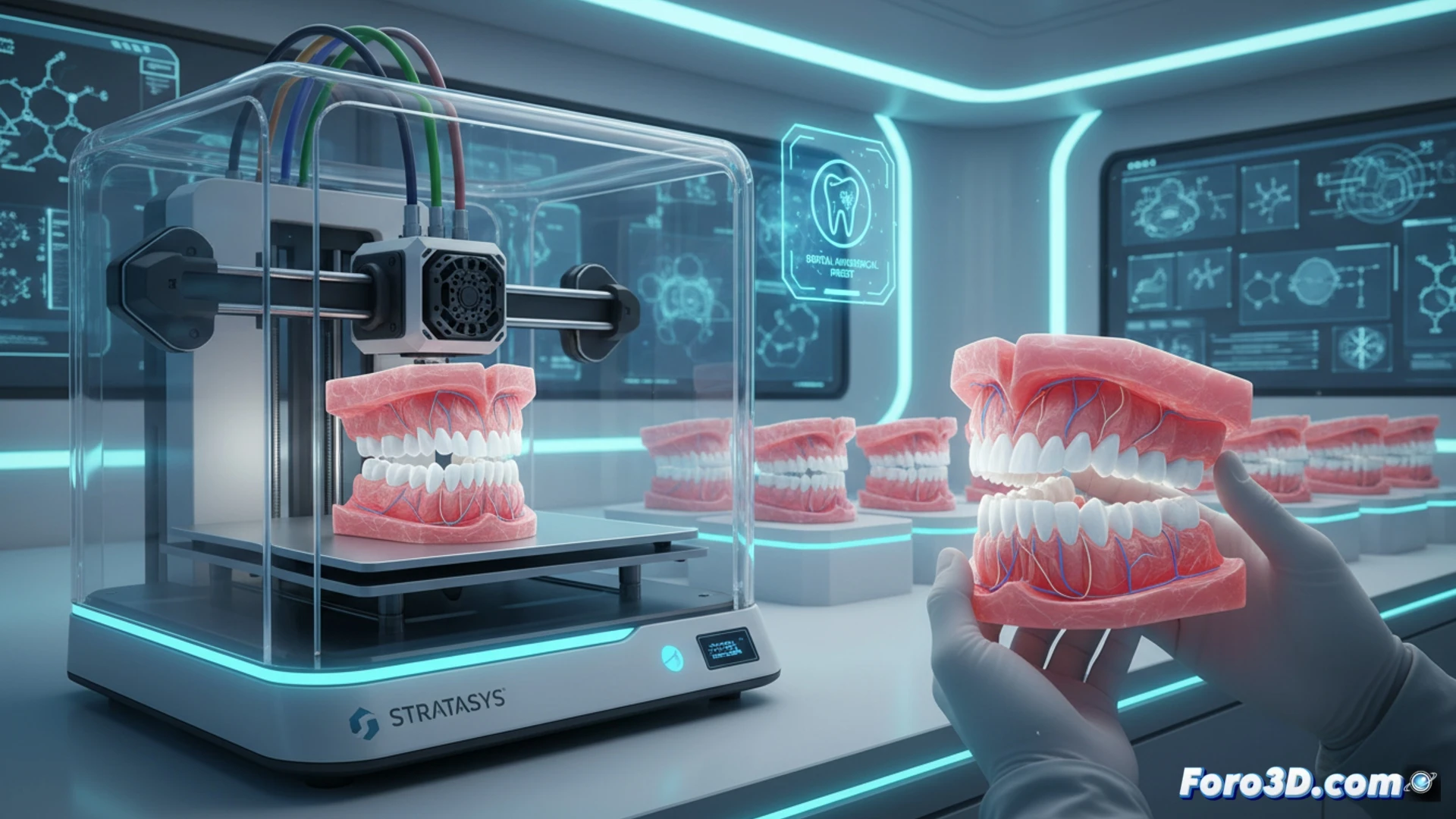
Stratasys has launched a new setup for its multimaterial 3D printers, focused on dental anatomical models. Designed for education and clinical training, this synthetic solution proposes a standardized alternative to traditional methods that use cadavers. The goal is to overcome limitations of cost, variability, and ethical considerations, offering a reproducible resource for educational institutions and device manufacturers.
Biomechanical precision and customization from CBCT 🔬
The preset allows combining materials with distinct properties to replicate the mechanical response of structures such as alveolar bone, teeth, and gums. This facilitates realistic simulations of procedures, from oral surgery to implant placement. Additionally, the platform enables creating customized models from CBCT scans of specific patients, opening the door to training with real clinical cases before the intervention.
Goodbye to plastic teeth and donors with cavities 😁
Finally, students can make mistakes with a patient who doesn't complain, doesn't really bleed, and most importantly, doesn't have a medical history to review. No more searching for the least deteriorated tooth in a cadaver or practicing with those plastic models that feel like biting a brick. Now the fidelity is so high that it almost feels bad to make a bad cut, even though the patient will keep smiling impassively, made from photopolymers.