What began as a project to connect remote areas has evolved. Starlink, SpaceX's service, has been deployed in conflict and crisis zones, from Ukraine to Sudan, serving both civilians and military operations. This capability gives Elon Musk direct influence over the flow of information in sensitive scenarios, a power that sparks debates about his role and the need for alternatives.
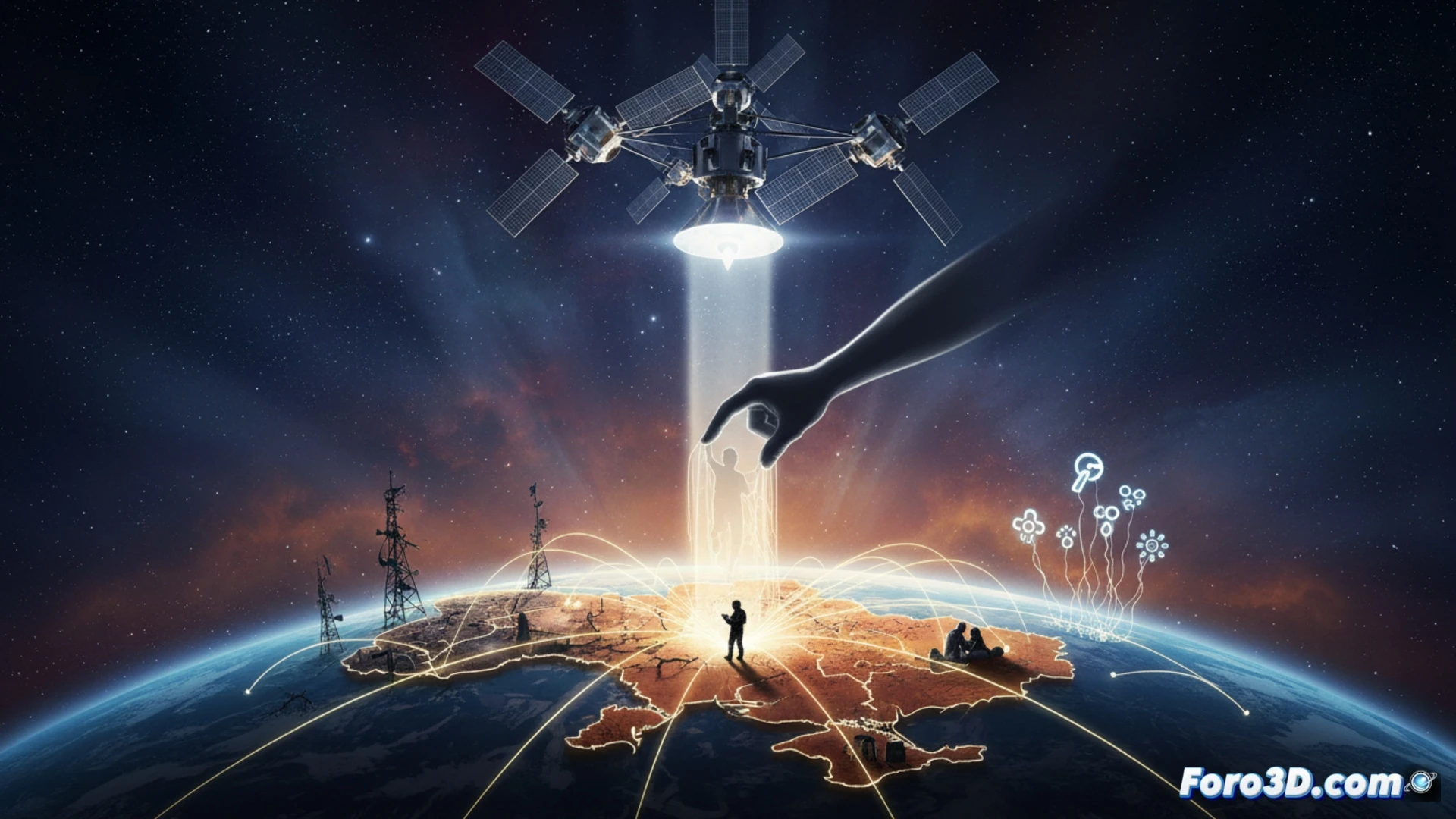
The technical architecture behind global connectivity 📡
The system operates with a constellation of thousands of satellites in low Earth orbit (LEO), which communicate with each other and with ground stations. This reduces latency compared to geostationary satellites. Users employ a flat antenna (dishy) that self-orients. The advantage in crises is its rapid deployment: only a power source and clear view of the sky are needed, without vulnerable terrestrial infrastructure.
The world's most expensive kill switch 🎮
It's curious to think that the ability to tweet or coordinate an operation in certain regions can now depend on the mood of a tech mogul. We've gone from depending on the whims of a local telecom operator to depending on those of a guy with rockets. 21st-century digital sovereignty seems to boil down to who has the remote control of the largest satellite constellation. One step forward, two steps toward a science fiction script.