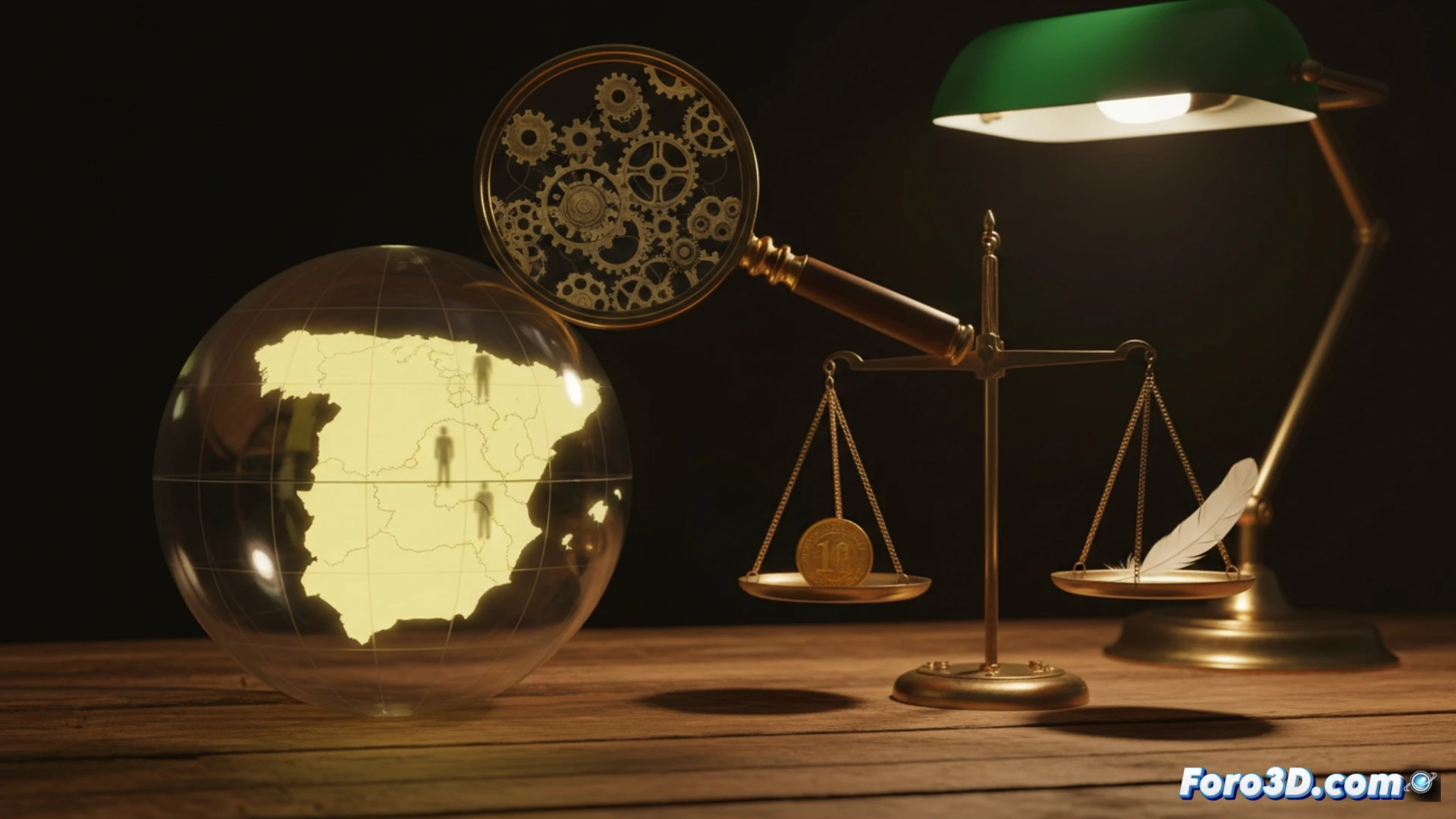
Spain and the Curious Method for Measuring Corruption
Have you ever wondered how it is determined which country is the most corrupt? 📊 Eye-catching headlines often appear, but the reality behind the data is usually more complex and less categorical than it seems. Let's analyze what these reports really measure and why it is key to understand their methodology.
The Thermometer of Perception
There is no official and universal classification, similar to a sports league. The most cited reports, such as that of Transparency International, are based on perceiving the level of corruption. It is similar to asking a group of acquaintances for the best restaurant: you get subjective impressions, not a fact measurable with a ruler. These indexes collect the opinions of experts and executives on how they see bribes or public funds being handled.
What do these indexes evaluate?:- They are based on surveys and expert assessments, not on accounting judicial statistics.
- They measure the perception of corruption in the public and political sector.
- Their result is a qualitative snapshot, not an absolute quantitative diagnosis.
Political and social reality rarely fits into a "world champion" label.
Spain's Real Position in the Global Context
An aspect that is often overlooked is that Spain, in recent years, does not rank among the worst-rated countries. On the contrary, it usually ranks in the mid-to-high part of a list of nearly two hundred nations, far ahead of those with serious structural challenges. A headline pointing to it as "the most corrupt" probably misinterprets an isolated data point or, directly, seeks sensationalism. The humor that sometimes surrounds this topic is, in itself, an indication that there is a collective awareness about it.
Keys to interpreting the news:- The rankings measure perception, not real corruption itself.
- Spain holds intermediate positions worldwide, not extreme ones.
- A single data point does not define a complex and multifaceted reality.
The Importance of Questioning Information
The next time you come across such a resounding claim, remember that analyzing with a critical spirit is fundamental. The real progress lies in asking about the origin of the data, how it is collected, and what it really means. In a world of quick headlines, delving deeper makes the difference. 🧐