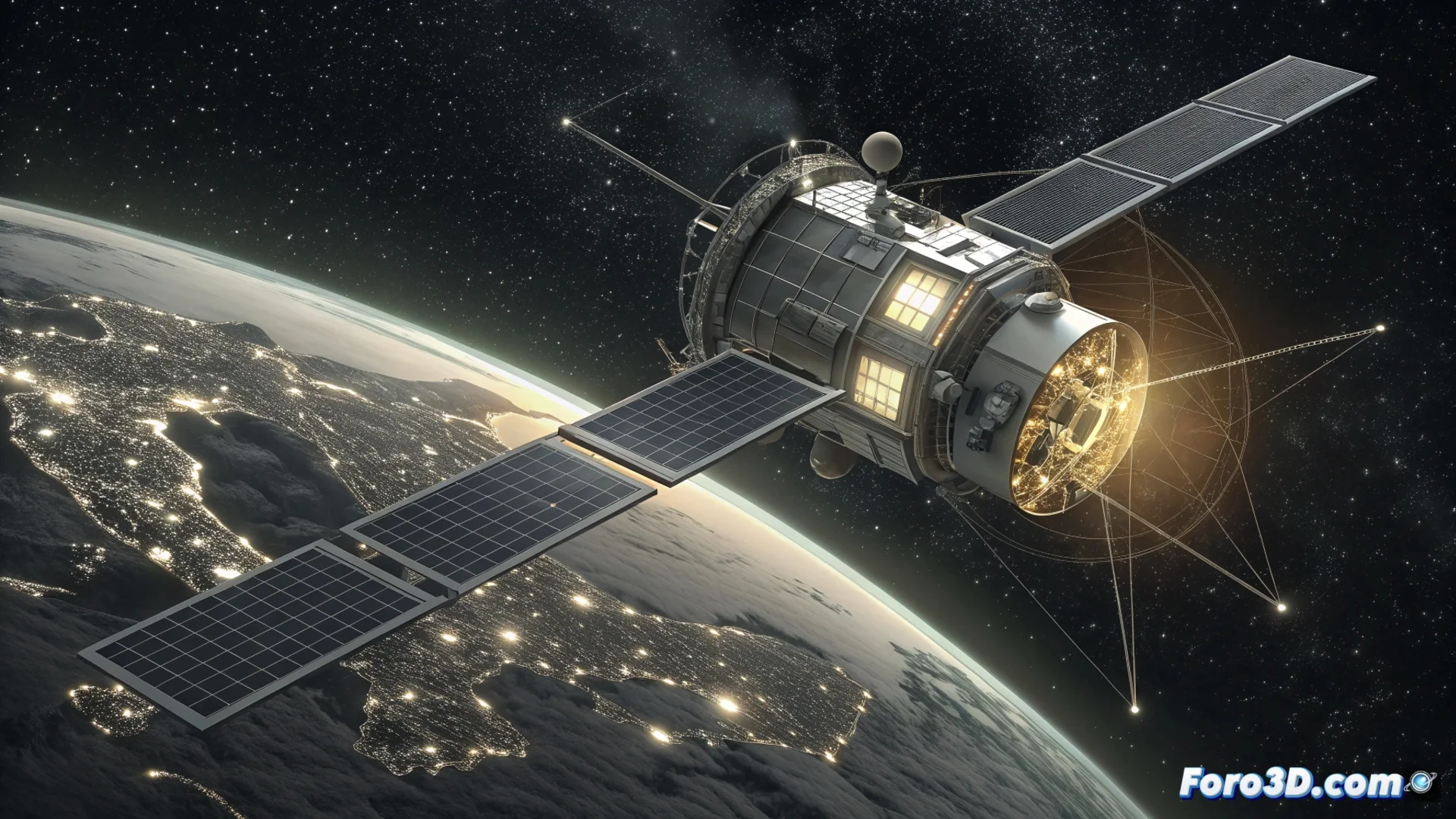
SpaceX Plans to Host AI Servers in Orbital Satellites
What if the systems that power artificial intelligence weren't on the surface, but orbiting around our planet? 🛰️ This vision, which seems taken from a novel, is a real plan that SpaceX is evaluating.
The Advantages of Operating from Space Vacuum
Moving computing infrastructure to space addresses several terrestrial challenges. Data centers consume enormous amounts of electricity and require large expanses of land. By placing them in orbit, that pressure on our resources is relieved. A key benefit is passive cooling: the extreme cold of space allows equipment to be cooled naturally, eliminating the need for costly and complex climate control systems. It would be like having a giant cosmic refrigerator for the most powerful computers.
Key Project Objectives:- Free up space and energy resources on Earth.
- Leverage the space environment to cool servers efficiently and economically.
- Create a computing infrastructure that can scale modularly in space.
The ultimate goal is for it to be more cost-effective to operate from space than from terrestrial facilities.
A Constellation of Supercomputers
The project's ambition is to deploy a massive network that could integrate up to a million satellites. Each unit would act as an independent processing node, contributing computing power for AI algorithms. Together, they would form a distributed supercomputer floating in Earth's orbit, with the ability to grow and update over time.
Features of the Proposal:- Architecture based on a satellite constellation, not a single large station.
- Each satellite would house a small computing center.
- The network's aggregated power would increase progressively.
A Step Further Toward an Interconnected Future
Although it sounds like science fiction, the company behind this idea is the same one aiming to establish a colony on Mars. It wouldn't be surprising if, in the not-too-distant future, when you interact with an AI assistant, part of its thinking process originates from a bright point crossing the night sky. 🌠