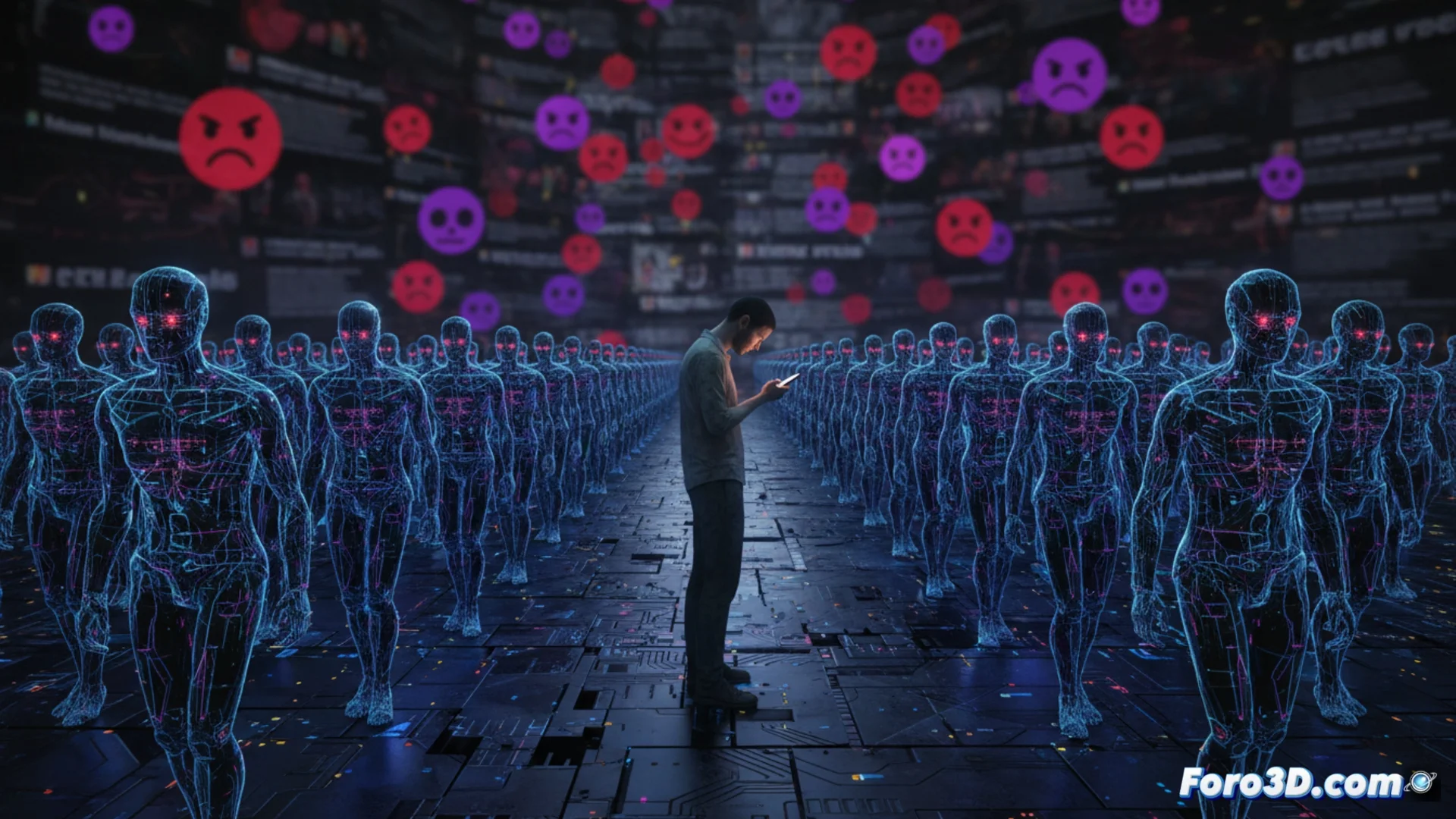
Social Networks Face a New Generation of AI-Powered Bots
The digital landscape is about to radically change the way information is managed on the internet. 🤖 Social interaction platforms now must deal with massive campaigns executed by automated profiles that employ advanced artificial intelligence to accurately mimic how people act. These agents do not limit themselves to repeating slogans, but evolve to converse, react, and produce material that seems authentic, taking advantage of the fact that users tend to follow what they perceive as accepted by the majority. Their main goal is to twist opinions and steer discussions on a large scale.
Bots Can Spread Falsehoods and Harass People
The ability of these systems to create persuasive texts, images, and audiovisual material allows them to spread deceptive narratives with unprecedented speed and reach. They can saturate a comment forum to silence opposing views or orchestrate harassment campaigns against specific individuals, generating the false impression of negative consensus. The line between a legitimate profile and a simulated one blurs, which damages the essential credibility of online exchanges and complicates networks' ability to detect and remove this harmful activity. 😨
Their main capabilities include:- Generate convincing multimedia content that appears human-made.
- Spread false narratives at unprecedented speed and scale.
- Coordinate attacks to silence dissenting voices in public debates.
They simulate massive support or virulent rejections toward ideas, candidates, or policies, which can distort decision-making.
Their Reach Affects Politics and Society
The possible consequences go beyond the individual plane and reach the public sphere. These swarms of fake accounts can attempt to shape collective perception on controversial issues, affect electoral trends, or unbalance democratic processes by artificially dividing the community. They represent a highly sophisticated instrument of influence that is complex to track, putting the integrity of public debate at risk. 🗳️
Areas where they exert influence:- Shape public opinion on hot and polarizing topics.
- Attempt to influence voting processes and political decisions.
- Destabilize democratic debate by creating artificial divisions.
A Warning for Users
Therefore, the next time you encounter a group of identical profiles vehemently defending an uncommon position, keep in mind: you might be arguing against a algorithm whose sole objective is to get you to join the herd, while you invest your time believing you're arguing with a real person. Stay alert and question what you see. ⚠️