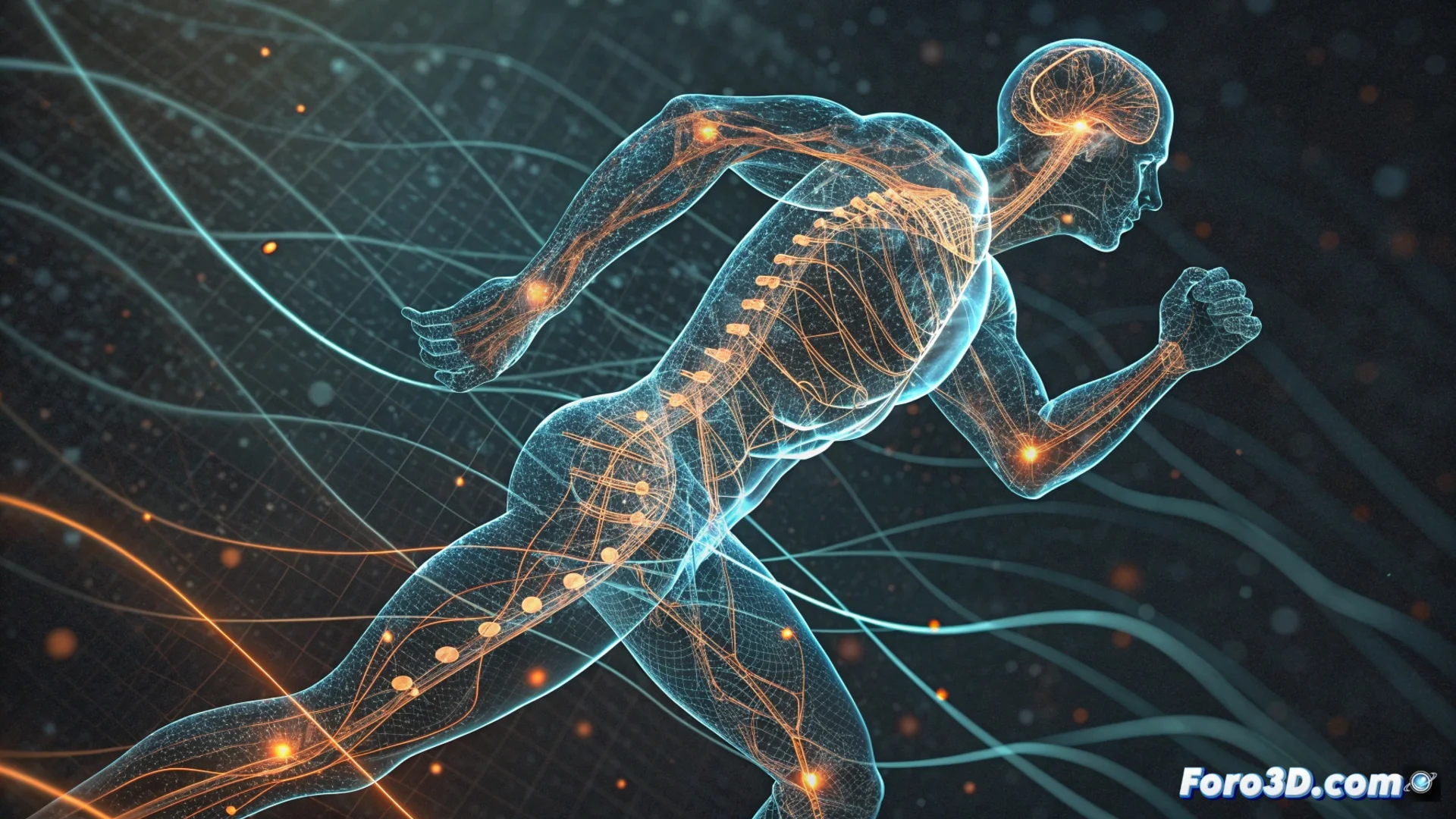
Simulate How Radio Waves Propagate in the Human Body
Modeling the interaction of radiofrequency (RF) waves with human anatomy is fundamental for developing advanced portable and medical technology. A recent analysis explores an innovative technique that fuses animation and electromagnetic simulations to visualize this complex process with great realism. 🧠
Integrating Animation with Electromagnetic Physics
The presented approach incorporates human motion capture data into an electromagnetic simulation environment. This generates a dynamic model that calculates how signal propagation varies when a person performs actions. Thus, parameters such as power loss or how the field distributes in a non-static anatomy can be analyzed in real time, overcoming conventional static models.
Key advantages of the dynamic model:- Allows calculating changes in RF propagation with body movement.
- Facilitates analyzing the electromagnetic field distribution in real time.
- Offers a more realistic alternative to static anatomical models.
This ability to simulate accurately has direct applications in wearables and medical devices.
Practical Uses in Wearable Technology and Health
The precision of this simulation is crucial for optimizing component design. It helps create more efficient antennas for smartwatches, activity monitors, or therapeutic patches, ensuring a stable communication link. Additionally, it is vital for evaluating RF exposure and complying with safety regulations, as it can accurately measure how much energy tissues absorb in everyday use situations.
Main applications:- Optimize antennas in wearables like smartwatches and health monitors.
- Evaluate compliance with electromagnetic exposure safety standards.
- Calculate energy absorption in biological tissues more accurately.
The Future of Electromagnetic Simulation
This method represents a significant advance for designing electronic devices that interact with the body. By providing a dynamic view of RF propagation, it not only improves technical performance but also enhances user safety. And, in a lighter tone, perhaps one day our device can argue that an unexpected wrist movement challenged its complex finite element calculations. 😉