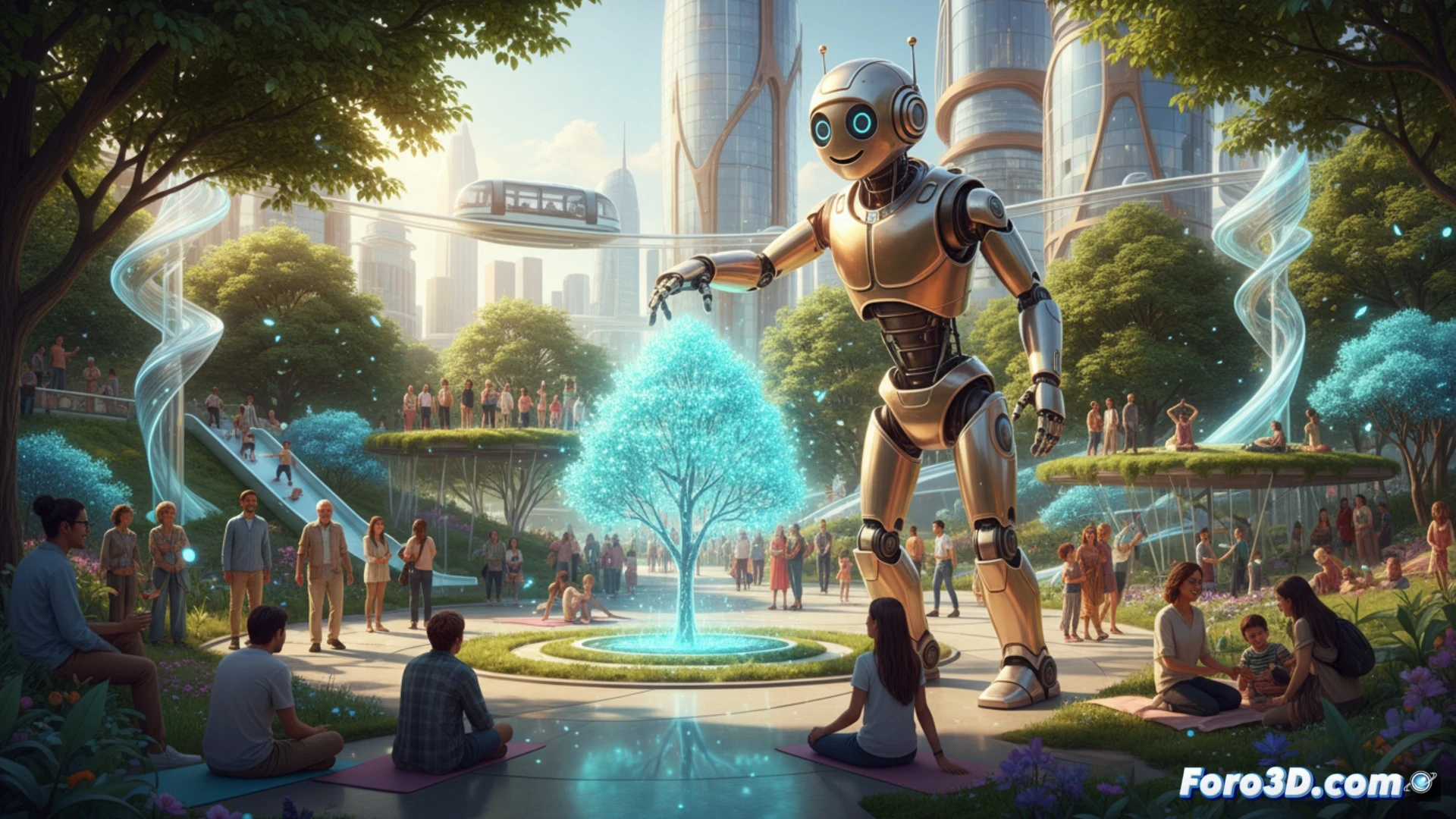
Should Machines Think with Ethical Principles?
The discussion on endowing artificial intelligence with a moral framework goes beyond its ability to calculate or suggest content. It focuses on a fundamental purpose: contributing to the advancement of society and the benefit of all. This is not a science fiction script, but a necessary and current conversation. 🤖
AI as a Responsible Digital Citizen
Instead of seeing it as an opaque tool, we can imagine AI as a full-fledged member of our global community. Its primary goal should not be limited to generating economic utilities, but also to address challenges that affect the collective. Think of systems that regulate traffic flow to reduce emissions, or that examine clinical information to anticipate disease outbreaks. It is the idea of coding with a social perspective.
Concrete examples of AI serving society:- Optimizing traffic in urban areas to reduce environmental pollution.
- Analyzing large volumes of medical data to identify epidemic patterns early.
- Preserving cultural heritage by helping to interpret ancient languages and scripts.
Technology is a mirror: it reflects the values of those who create it.
Real Cases That Make a Difference
There are already practical applications that demonstrate this potential. Some algorithms examine satellite images to map regions with extreme shortages, allowing aid resources to be directed more precisely. Others are used in laboratories to model protein structures that could lead to innovative drugs. When guided by an ethical compass, technology becomes an engine for positively transforming the world. 💡
Current applications with social impact:- Mapping poverty using artificial intelligence and satellites to optimize humanitarian aid.
- Designing protein molecules that facilitate the discovery of new treatments.
- Deciphering lost languages to safeguard history and cultural diversity.
Programming a Shared Future
This digital "commandment" invites us to reflect. The challenge is not only to build intelligent machines, but also wise and compassionate ones. The direction we choose today in developing these systems will define the reality we inhabit tomorrow. Let's build an AI that, at its core, has a good heart. 🌍