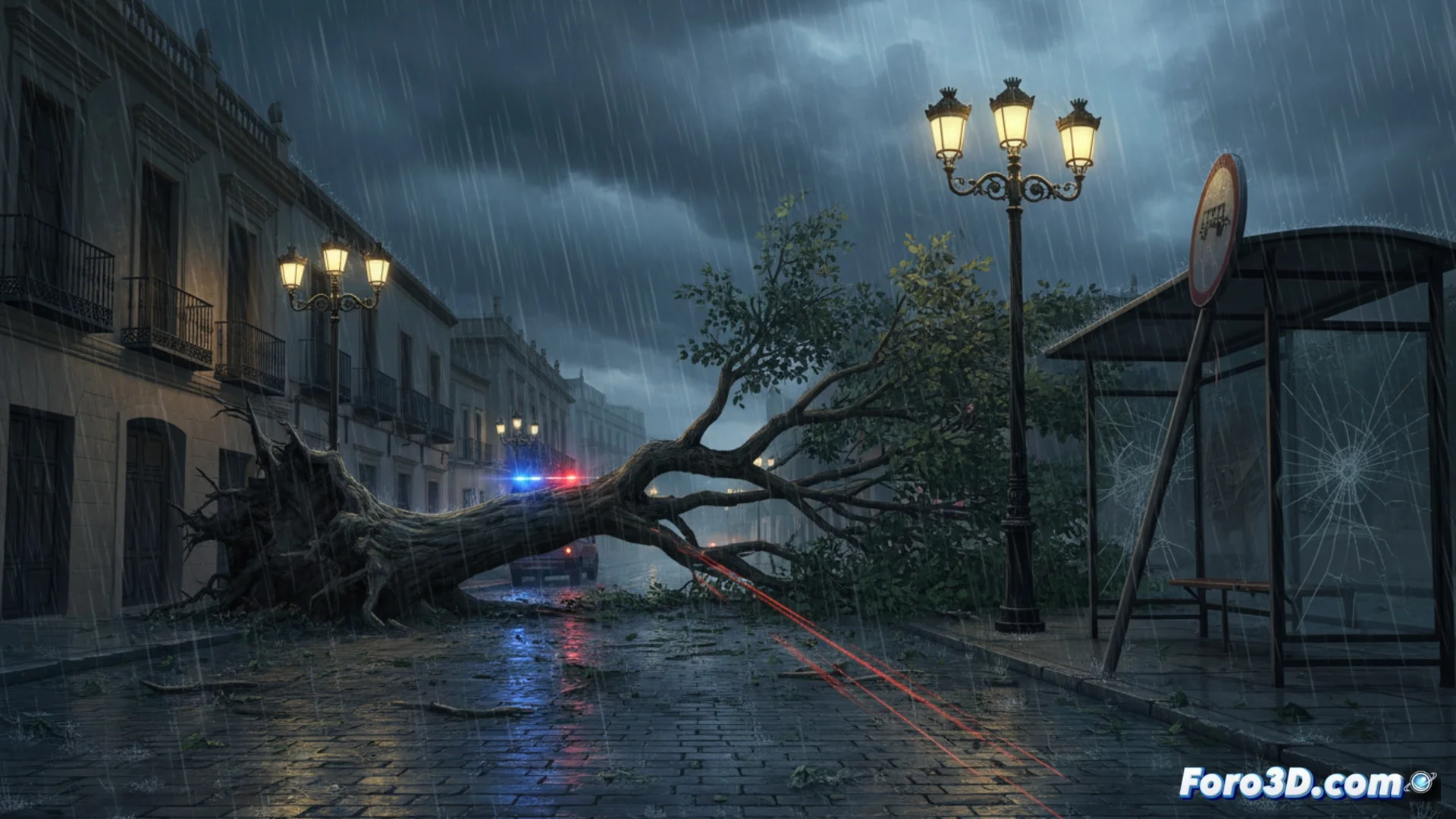
Sevilla Suffers the Effects of a Storm with Heavy Rain and Strong Winds
The province of Sevilla faced an adverse weather episode on February 3, 2026, characterized by heavy precipitation and strong gusts of wind. This phenomenon disrupted daily life and caused a high number of damages to infrastructure and public spaces, requiring a massive response from emergency services. 🌧️💨
Blocked Roads and Affected Urban Furniture
Road safety was compromised at several points in the province, where it was necessary to close traffic. The main cause was the fall of trees and large branches onto the roadway. Additionally, the city furniture could not withstand the wind's onslaught: benches, bus stop shelters, and advertising panels suffered breaks and damage, now requiring repairs.
Main consequences on public roads:- Road closures due to trees and branches obstructing passage.
- Damage to traffic signage and safety elements.
- Destruction of benches, fences, and waiting structures at stops.
It seems the storm took the expression it will rain on wet ground literally, making it clear that, as far as water is concerned, Sevilla does not need more visitors.
Coordinated Response from Emergency Teams
The Firefighters, Local Police, and Civil Protection coordinated their efforts for hours to manage the more than 740 distress calls received. Their work focused on removing dangers from the streets, securing structures that could collapse, and assisting in homes or garages that flooded. Fortunately, no people with serious injuries were reported.
Key intervention areas:- Remove obstacles and debris from roads to restore traffic.
- Assess and shore up damaged structures and facades.
- Pump water from basements, garages, and low-lying flooded areas.
Balance of a Severe Weather Episode
This event tested the emergency response capacity in the Sevilla metropolitan area. Although the human balance was positive, the material damages are substantial and will require time and resources to resolve. The episode underscores the importance of maintaining active protocols for extreme weather phenomena, which seem to occur more frequently. 🚨