Quantum computing advances, but not always with new ideas. The company SEEQC is recovering niobium superconducting circuit technology, a line of research that IBM abandoned in the 80s. Their approach is based on extreme control in manufacturing, a process that requires nanoscale precision. For 3D artists, this meticulous care may evoke the detail necessary in high-poly modeling or the creation of lossless quality textures.
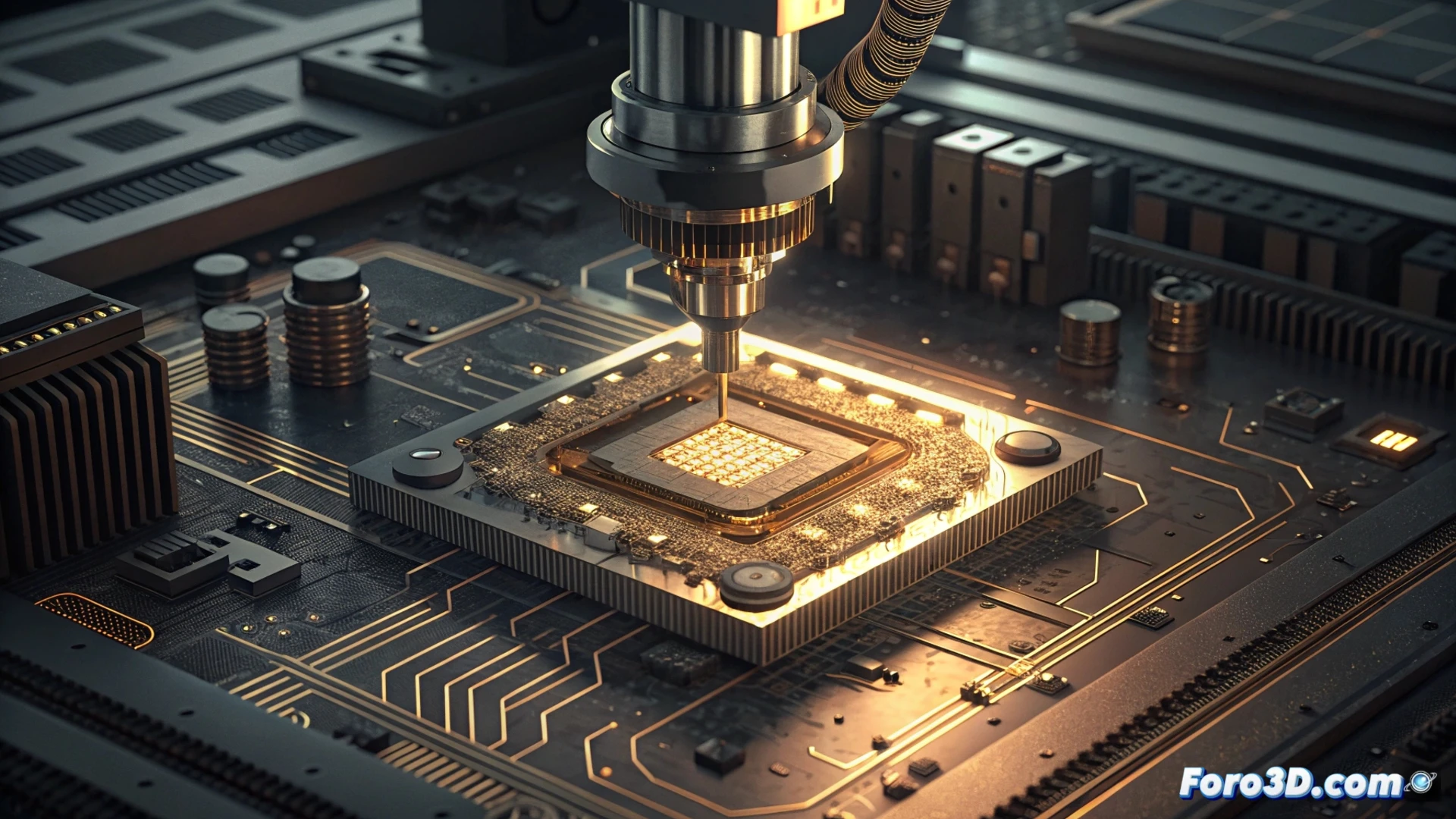
Cryogenic Fabrication: Lithography and Atomic Layer Deposition ❄️
In SEEQC's clean rooms, atomic layer deposition techniques and advanced lithography are used to structure niobium on silicon wafers. These circuits must operate at cryogenic temperatures, near absolute zero, where electrical resistance disappears. This principle of zero energy dissipation is what allows qubits to maintain their quantum state. It is a technical parallel to the search for rendering algorithms that do not waste CPU or GPU cycles.
Will Your Next Render Farm Run at -273°C? 🥶
Let's imagine for a moment that to reduce render times, instead of upgrading the graphics card, we had to immerse the PC in a liquid helium bath. Overclocking would no longer be a matter of voltage, but of not freezing your fingers when touching the tower. Meanwhile, on Foro3D, we would debate whether the thermal noise in the room affects ray tracing fidelity, and extreme cooling tutorials would gain a literal meaning.