An international team, with participation from ETH Zurich, has recovered a 228-meter sediment core from beneath the West Antarctic ice sheet. This unprecedented geological archive in length holds a record of millions of years showing how the ice mass has advanced and retreated during past warm periods. Its direct study is key to understanding the ice's response to warming.
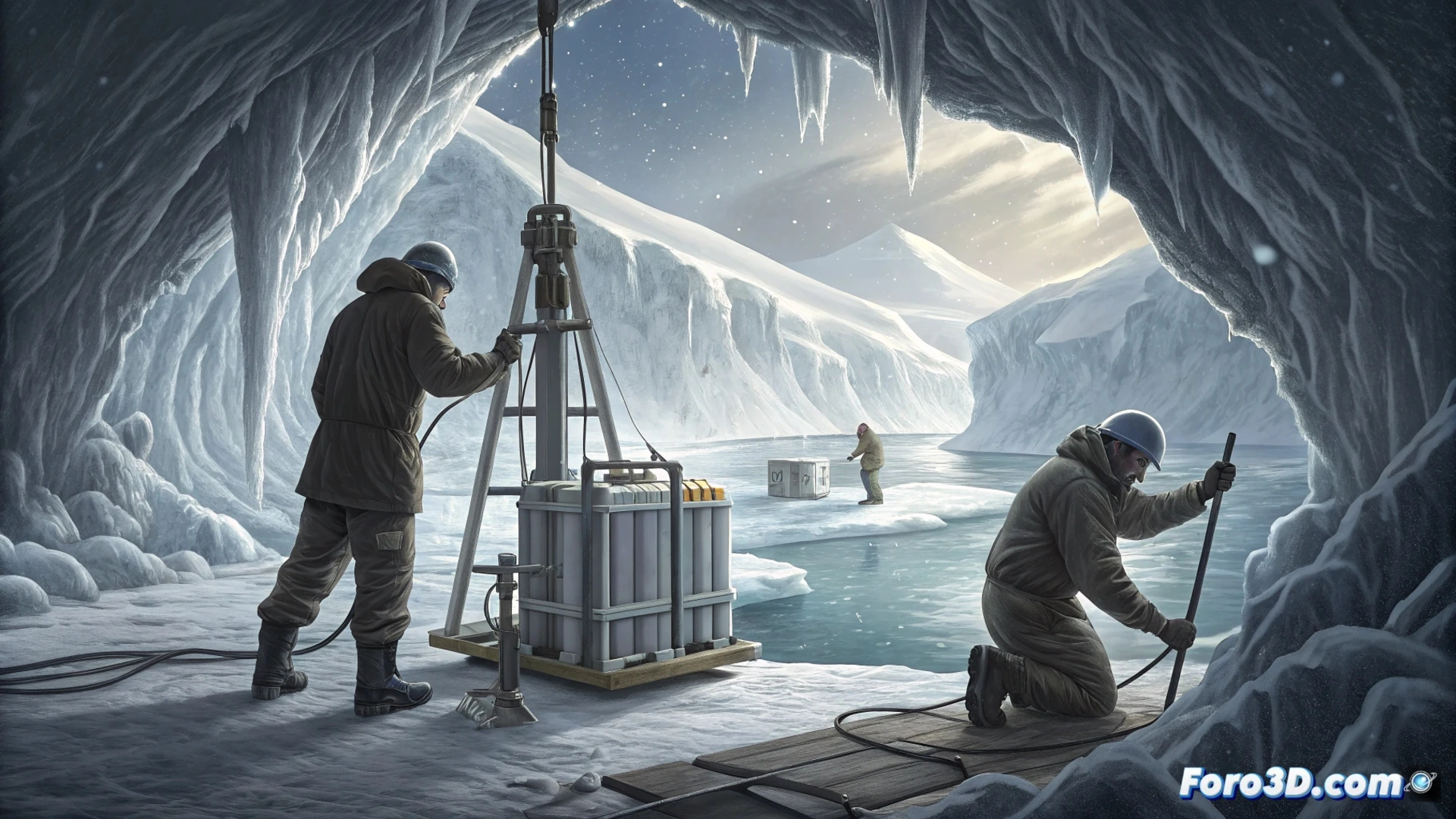
Drilling Technology at the Ice Limit to Capture the Sedimentary Record 🛠️
The extraction was carried out at the edge of the ice shelf, where the ice meets the rocky bed. A hot water drilling system was used to reach the seafloor under hundreds of meters of ice. The technique allowed obtaining intact sediment columns, layer by layer, containing materials dragged by the ice in its movements. This method avoids contamination and preserves the temporal sequence for laboratory analysis.
Antarctic Ice Already Had Its Periods of Diet and Binges Millions of Years Ago 📜
It seems that the Antarctic ice sheet has been cycling through thinnings and massive recoveries long before humans existed to worry about it. These sediments are like the logbook of a giant glacier with little consistency. Now, scientists are deciphering that logbook to know if, this time, our climatic push will make it lose weight forever, without the option of a new ice binge.