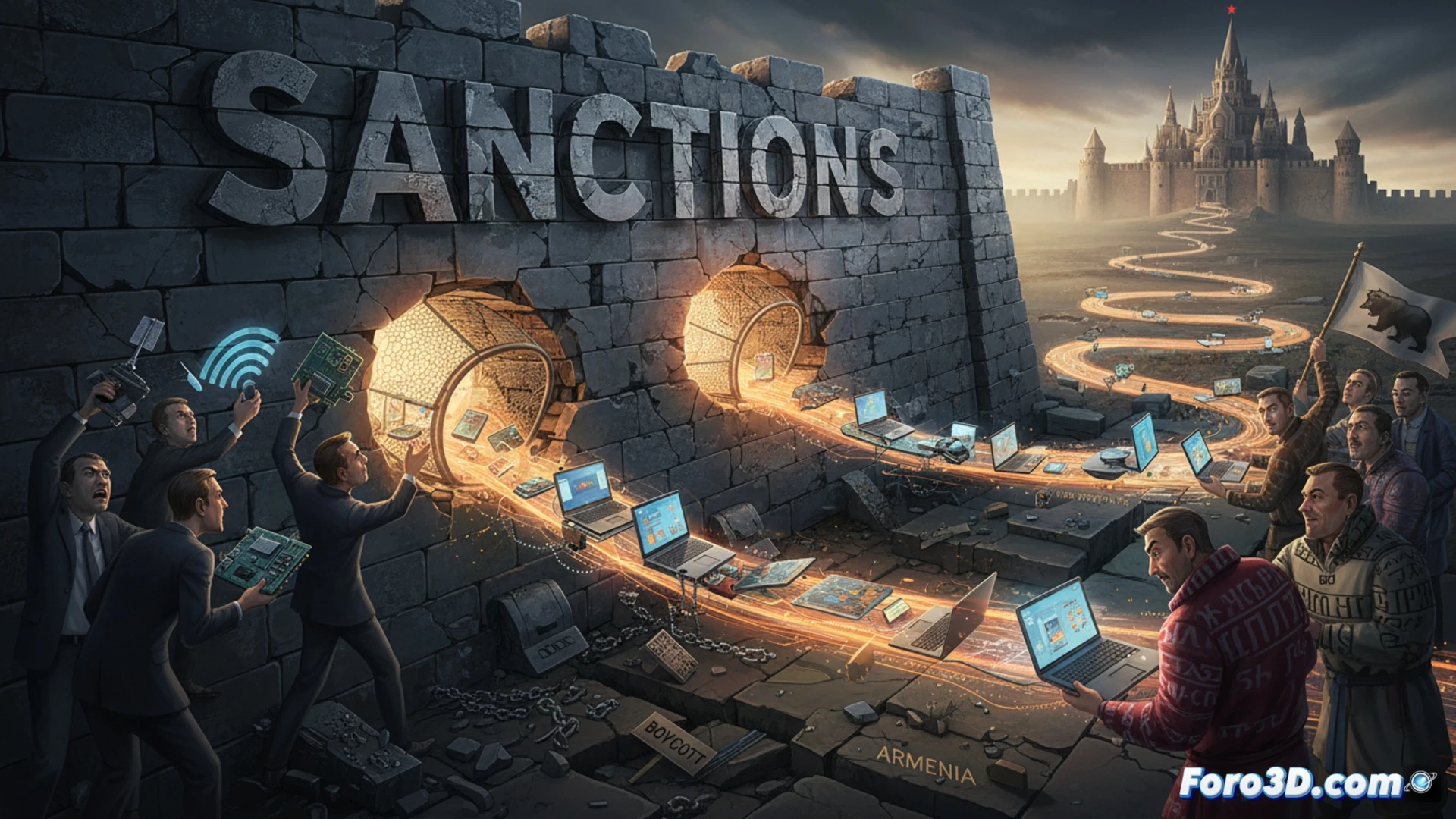
The European Union has implemented multiple packages of sanctions against Russia. However, international trade data reveals a paradox. While direct exports of critical technology are prohibited, sales to countries like Armenia, Kazakhstan, or Kyrgyzstan have skyrocketed. These states, in turn, increase their shipments to Russia, acting as intermediaries.
The technological diversion: circuits and components under another name 🔄
The mechanism is clear in the technology sector. European companies sell semiconductors, telecommunications equipment, or dual-use parts to third countries. These products, often unmodified or with minor assemblies, are re-exported to Russia. This undermines the goal of the sanctions: to prevent access to technology that supports its industrial and military apparatus. Traceability systems are insufficient to track the final destination of each shipment.
The "tourist effect" of chips and screws ✈️
It seems that European electronic components have a fondness for long-distance travel. First, they take a plane to Central Asia, where they get a stamp in the passport and new packaging. After a brief rest, they continue their journey north, now with a local disguise. It's a very popular tourist route, which shows that geopolitics sometimes resembles a travel agency with flexible rules more than an effective blockade.