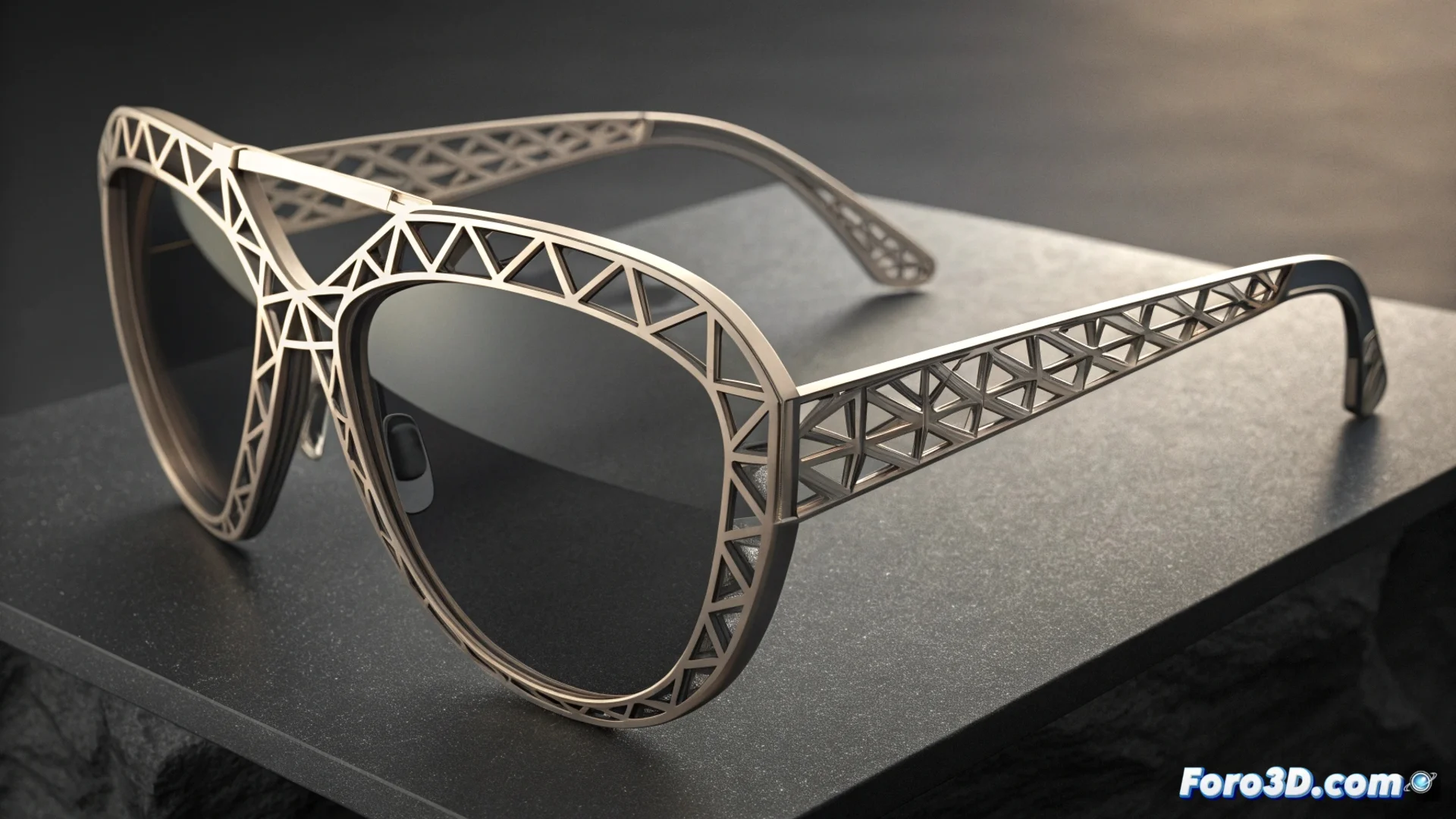
Rudy Project Celebrates 40 Years with 3D-Printed Titanium Glasses
Can you imagine fusing the iconic aesthetics of the eighties with the most advanced manufacturing methods of the present? 🕶️ That's the concept behind Rudy Project's commemorative launch for its four decades. The brand presents the Performance 40, an exclusive series of only one hundred pairs worldwide, paying homage to its visual legacy but built with future engineering.
Revolutionary Engineering in the Frame
The standout element of these glasses lies in their frame. It uses titanium, known for its lightness and durability, but processed in an unconventional way. 3D printing technology allows for the creation of an internal lattice structure. Visualize an intricate geometric network, like a metallic honeycomb optimized digitally. This design achieves an exceptional strength-to-weight ratio, something difficult to achieve with traditional manufacturing.
Key Manufacturing Features:- Main material: Premium-grade titanium.
- Production technology: Additive manufacturing (3D printing).
- Main advantage: Lattice structure that reduces weight without compromising strength.
The Performance 40 are more than just glasses; they are a statement about how far 3D printing technology can take luxury and high-performance objects.
A Bridge Between Two Eras
This model is a direct tribute to the pioneering design that Rudy Project introduced in 1985. It recovers the original aesthetic essence, that silhouette that defined the brand, but updates it with 21st-century resources. Priced at 950 euros, they position themselves as a collector's item and a technological demonstrator, akin to a concept car in the automotive industry: they showcase the maximum potential of what can be done.
Project Highlights:- Inspiration: Brand's classic design from 1985.
- Production: Extremely limited edition of 100 units worldwide.
- Positioning: Collectible object and symbol of innovation.
The Future Is Already Here
It's fascinating to see how 3D printing is moving from the realm of prototypes to creating final luxury and high-performance products. This case demonstrates that the future of sports and fashion accessories may be directly linked to a 3D printer. Although, given their price and exclusivity, one might expect them to include a built-in tracker so you don't lose them. 🚀