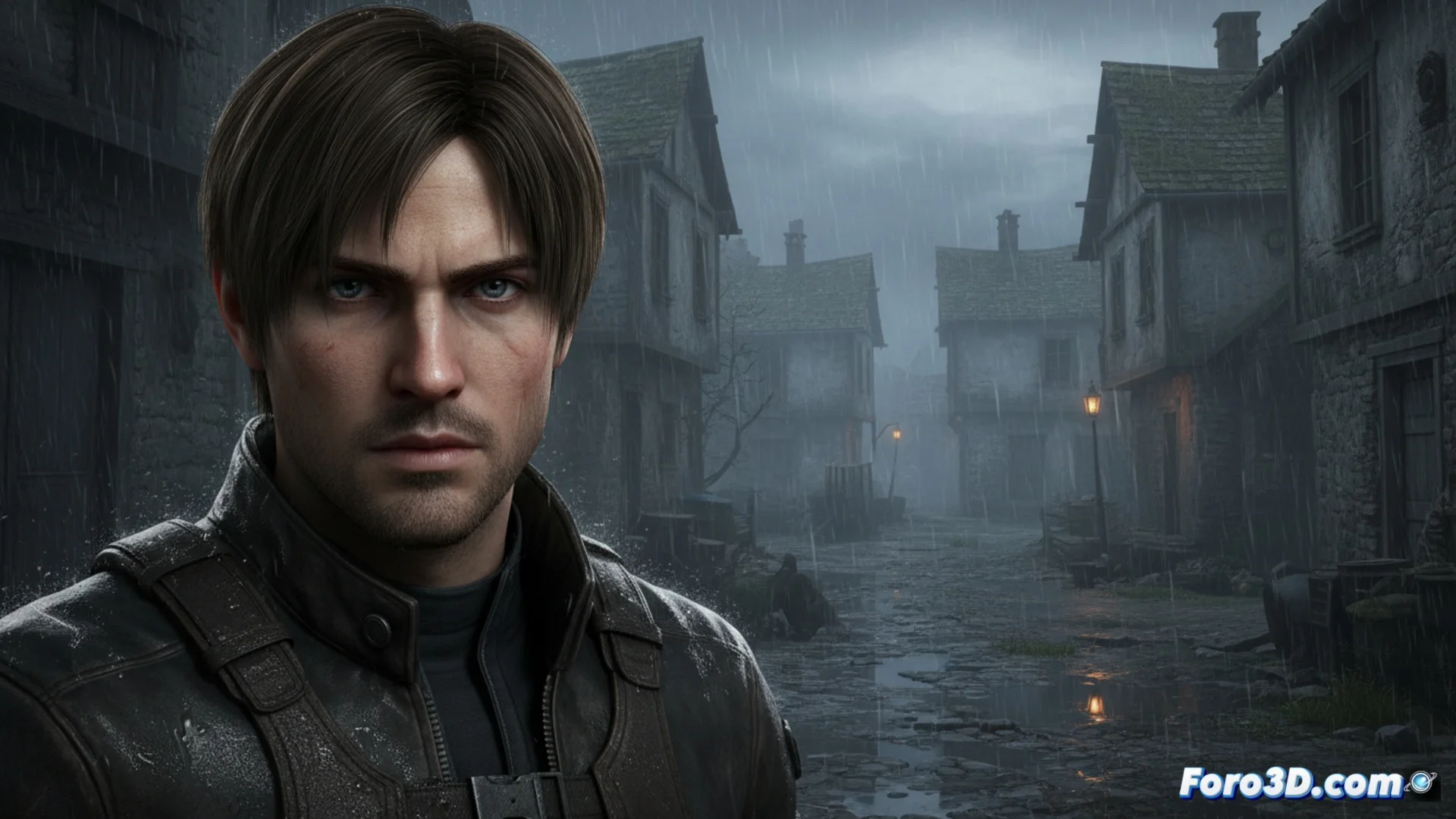
Resident Evil 4 Remake and Capcom's RE Engine
The new version of Resident Evil 4 leverages the RE Engine, an in-house technology developed by Capcom. This graphics core stands out for its efficiency and ability to achieve a highly realistic visual appearance. Its flexible architecture enables the title to run smoothly on various consoles and PCs without compromising high graphical fidelity. This solid technical foundation allows the integration of very advanced rendering methods. 🎮
Creating Immersive Worlds with Cutting-Edge Graphics Techniques
To build its scenarios, the development team uses photogrammetry, a process that digitizes real objects and actors. This method generates textures and three-dimensional models with exceptional detail levels. Subsequently, various effects are applied: subsurface scattering to simulate human skin, screen-space reflections for wet surfaces, and a highly complex particle system. The combination of all these elements produces a dense and believable atmosphere that immerses the player.
Key Rendering Elements:- Photogrammetry: Digital capture of real-world elements to obtain ultra-detailed assets.
- Subsurface Scattering (SSS): Technique that simulates how light scatters under the surface of materials like skin.
- Particle System: Manages effects like fog, rain, impacts, and dirt dynamically.
Leon's journey through the Spanish countryside demonstrates that, even with the most advanced technology, there's no way to avoid getting his jacket dirty.
Production Pipeline for High-Quality Assets
The workflow for creating game assets integrates several specialized tools. Data obtained through photogrammetry is processed with software like Agisoft Metashape. Then, artists refine the models in ZBrush to sculpt fine details and prepare them for animation in Autodesk Maya. This pipeline ensures that the final assets, from characters to environments, maintain the visual quality that defines both the engine and the game.
Main Tools in the Pipeline:- Agisoft Metashape: For processing photogrammetric scans and generating 3D meshes.
- ZBrush: Used for sculpting and adding microgeometric details to models.
- Autodesk Maya: Central environment for animating characters and objects in the game.
Technical Conclusion
The RE Engine proves to be a fundamental pillar for the remake, enabling not only optimal performance across multiple platforms but also the implementation of visually rich rendering. The combination of photogrammetry, a robust art pipeline, and complex lighting and material effects is what gives this title its distinctive and oppressive atmosphere. Technology advances, but some details, like the hero's muddied jacket, are inevitable in such an intense adventure. 💻