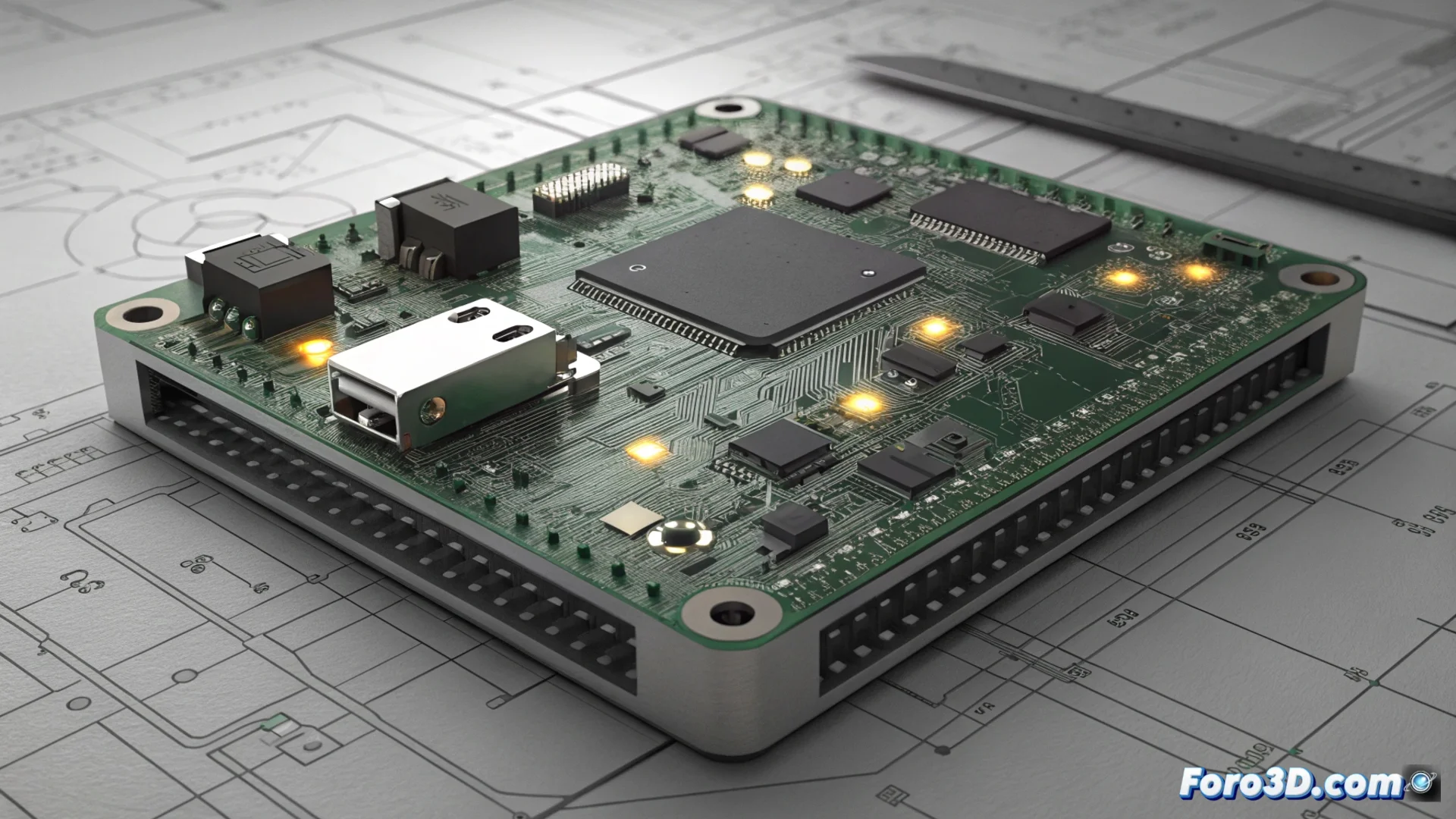
Radxa Presents the Cubie A7S, a Tiny and Powerful SBC
The company Radxa has just unveiled its new proposal in the single-board computer field: the Cubie A7S. This device stands out for its extremely compact format, measuring just 51 by 51 millimeters, making it a very interesting option for limited spaces. 🚀
A Silicon Heart with Hybrid Architecture
At the core of this little giant beats the Allwinner A733 chip. This processor combines an eight-core configuration: two high-performance cores based on Arm Cortex-A76 and six efficiency Cortex-A55 cores. Additionally, it integrates a dedicated RISC-V core for system management and a GPU compatible with the OpenGL ES and Vulkan graphics APIs. For those who need to run artificial intelligence algorithms, there is the option to add a neural accelerator that can reach up to 3 TOPS performance.
Memory and Storage Configuration:- It can be equipped with up to 16 GB of high-speed LPDDR5 memory.
- It includes internal eMMC storage up to 256 GB.
- It features a microSD card slot to expand capacity.
A single-board computer that promises a lot for a very competitive price, although its assembly will be a challenge for hobbyists.
Full Connectivity and Expansion Options
The Cubie A7S doesn't skimp on connections despite its size. It integrates the latest wireless technologies, such as Wi-Fi 6 and Bluetooth 5.4, along with a Gigabit Ethernet port for stable wired networking. In terms of ports, it offers USB-C (one with support for DisplayPort Alt mode to connect a monitor), USB-A ports, GPIO connectors, and a valuable PCIe 3.0 port that allows connecting specific accessories and expanding its functions.
Main Connectivity Features:- Latest-generation wireless communication with Wi-Fi 6 and BT 5.4.
- Gigabit network port for maximum speed and stability.
- PCIe port to add expansion cards and increase its capabilities.
A Versatile and Accessible Platform
With a starting price around 25 dollars, this SBC positions itself as an economical solution for developing embedded projects, creating multimedia applications, or handling light AI workloads. The user can choose between the Android 13 operating system or a Linux distribution like Debian, providing great flexibility. However, its very small size means assembling all its components will be a delicate task that will likely require tools like a magnifying glass and a lot of patience. ⚙️