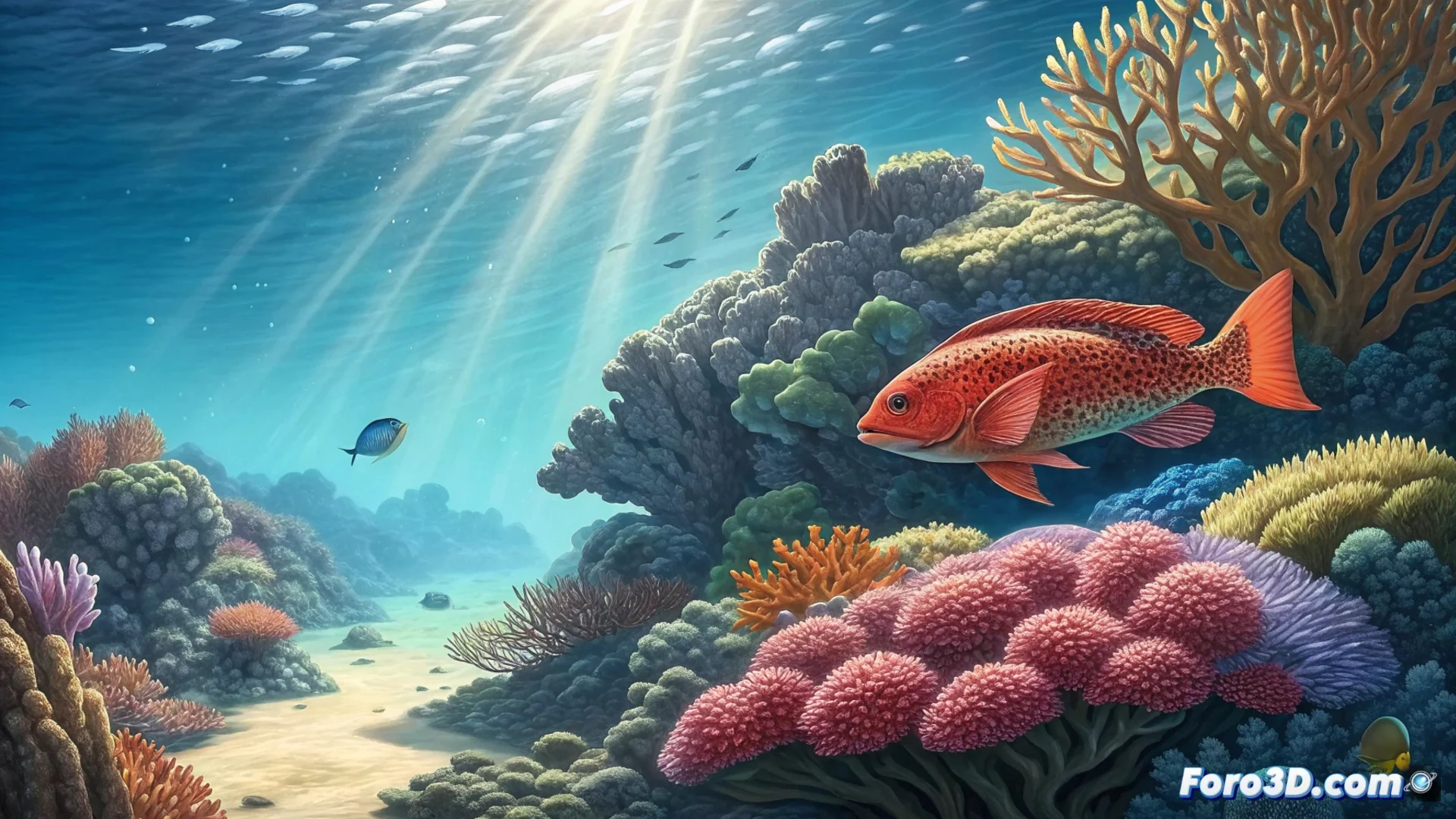
Protecting Fish Strengthens Coral Reef Health
Think of a coral reef as a bustling underwater city. A ten-year study has demonstrated something fascinating: by designating more areas where fishing is prohibited, not only do key species recover, but the entire marine environment revitalizes. It's like pedestrianizing a square and watching it flourish again. 🌊
The engine of change: large fish
The main factor lies in adult specimens, especially the larger ones. In these protected areas, fish grow larger and, crucially, produce a much higher amount of offspring. This creates a spillover effect or contagion, where a healthy and abundant population gradually recolonizes adjacent areas, even those where fishing activity is still permitted.
Key recovery mechanisms:- Greater reproductive success: Larger fish produce exponentially more eggs and offspring.
- Natural dispersal: Larvae and juveniles travel with currents, repopulating other sectors.
- Restoration of ecological functions: A complete fish community helps control algae and maintains reef balance.
Establishing marine sanctuaries is like investing in natural capital that pays dividends to the entire ecosystem.
An unexpected collateral benefit
The most revealing finding goes beyond population biology. By reducing fishing pressure, the amount of lost or abandoned fishing gear, such as lines and hooks, also decreases dramatically; these often tangle and cause serious physical damage to fragile coral structures. Therefore, protecting fish provides an indirect respite to the entire habitat.
Positive chain impacts:- Less physical damage: Friction and breakage of corals by fishing gear is minimized.
- Less stress: Corals can devote energy to growing rather than repairing damage.
- Virtuous circle: Healthier reefs provide more shelter and food, supporting more fish.
The wisdom of giving space
This study underscores a powerful conservation strategy: sometimes, the most effective action to restore an ecosystem is to create quiet spaces where nature can operate without serious interference. The results show that, when given a chance, marine life can demonstrate a remarkable capacity to recover and thrive, benefiting a much wider area than expected. 🐠