The story of Percy Lavon Julian is a chapter of science written against wind and tide. This African American chemist achieved, in an era of fierce segregation, feats such as synthesizing medications for glaucoma and, crucially, human hormones from soybean sterols. His work enabled the large-scale production of cortisone, relieving millions of people with arthritis. His life was a battle on two fronts: against prejudices and against nature.
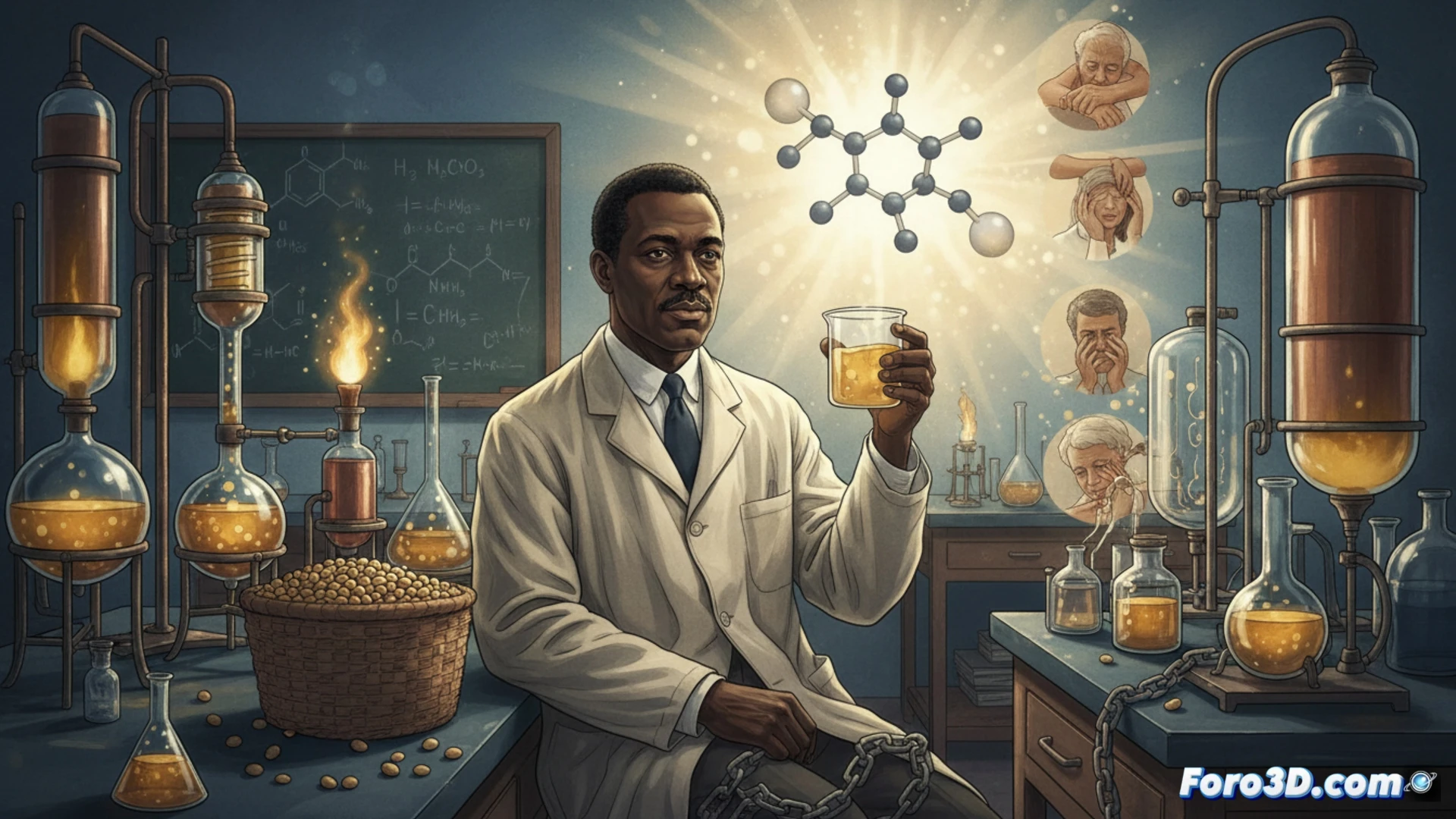
From Plant to Drug: The Synthesis that Changed Medicine 💊
The core of his contribution was the industrial conversion of plant sterols, specifically stigmasterol from soybeans, into progesterone and testosterone. This process laid the foundations for the large-scale synthesis of cortisone. Before, this hormone was obtained in minuscule quantities from animal bile acids, at a prohibitive cost. Julian's route opened the door to massive and economical production, democratizing a key anti-inflammatory treatment.
When the Barn Became the Best Pharmacy 🌱
It's curious to think that one of the 20th century's medical advances depended on a chemist looking at a soybean field and not seeing fodder, but a potential hormone factory. While industry sought complex solutions, he found the answer in a legume. He demonstrated that sometimes the raw material to revolutionize medicine is not in a secret laboratory, but growing quietly in the Midwest, waiting for someone with his ingenuity to come along.