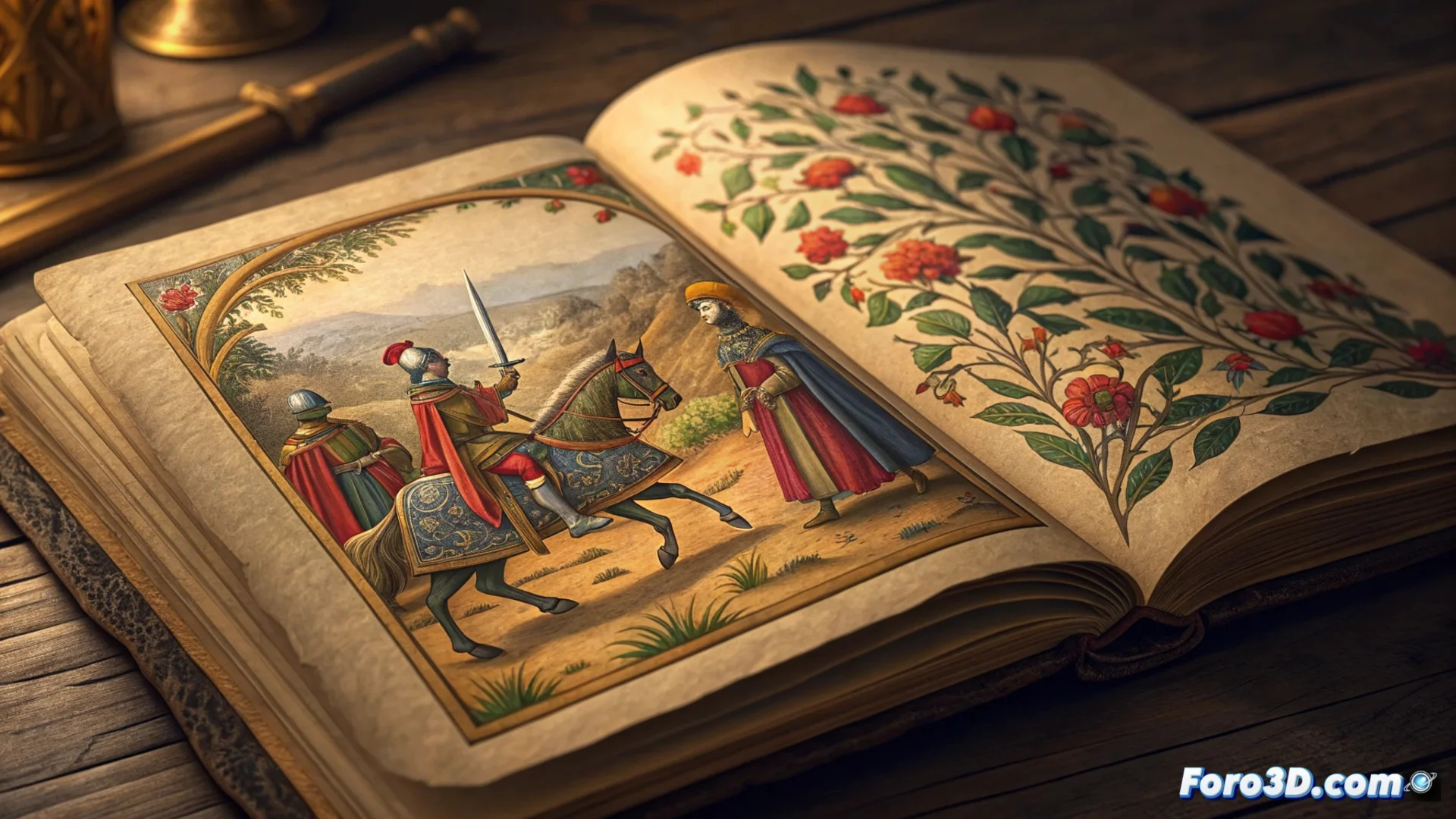
Pentiment: an interactive manuscript created with Unity
The video game Pentiment uses the Unity engine to build a distinctive visual experience. Its goal is not to recreate a realistic 3D environment, but to imitate the aesthetic of a 16th-century illuminated manuscript. It is presented as a piece of two-dimensional art with which the user can interact, valuing historical authenticity and artisanal detail over contemporary graphical fidelity. 📜
The graphics system emulates an ancient codex
The most relevant technical aspect is its ability to visually simulate a historical document. The illustrations, which were probably made with software like Photoshop or Procreate, replicate the stroke and chromatic palette of medieval miniatures. The animation reproduces the turning of pages in a physical book, intensifying the sensation of reading an artifact from the past. Each visual component is designed to blend into this coherent illusion.
Key features of its aesthetic:- Imitation of hand-drawn stroke: The graphics emulate hand drawing and inks from the era.
- Page animation: Includes the effect of turning leaves, like in a real book.
- Total visual integration: All elements contribute to the manuscript appearance.
Pentiment brings the fantasy of dialoguing with a historical book, without the risks of another era.
Variable typography defines the characters
A technical and narrative pillar is its dynamic typography system. Dialogues and texts do not use a single font; it changes automatically to reflect each character's trade and academic background. This detail, integrated within Unity, adds a layer of narrative depth and helps define the inhabitants without requiring extensive explanations.
Functions of dynamic typography:- Reflect education: The font changes according to the character's level of culture.
- Indicate profession: A scribe and a peasant use different letter styles.
- Narrative depth: Adds context and characterization visually and immediately.
A unique experience in video games
Pentiment demonstrates that the power of an engine like Unity can be directed toward very specific artistic purposes, prioritizing atmosphere and historical authenticity. It is proof of how one can innovate in interactive narrative through carefully chosen graphical and typographic resources. If you ever imagined that an ancient book could respond to your actions, this project is the most vivid approximation to that idea. 🎨