The medical prescription of artistic activities is gaining ground. After a stroke, Russell found in painting a key tool for his rehabilitation. His case illustrates how the creative process activates brain circuits, improves fine motor skills, and regulates emotional state. This connection between art and health has a clear parallel with our immersion in digital projects, where deep concentration also provides cognitive benefits and reduces stress.
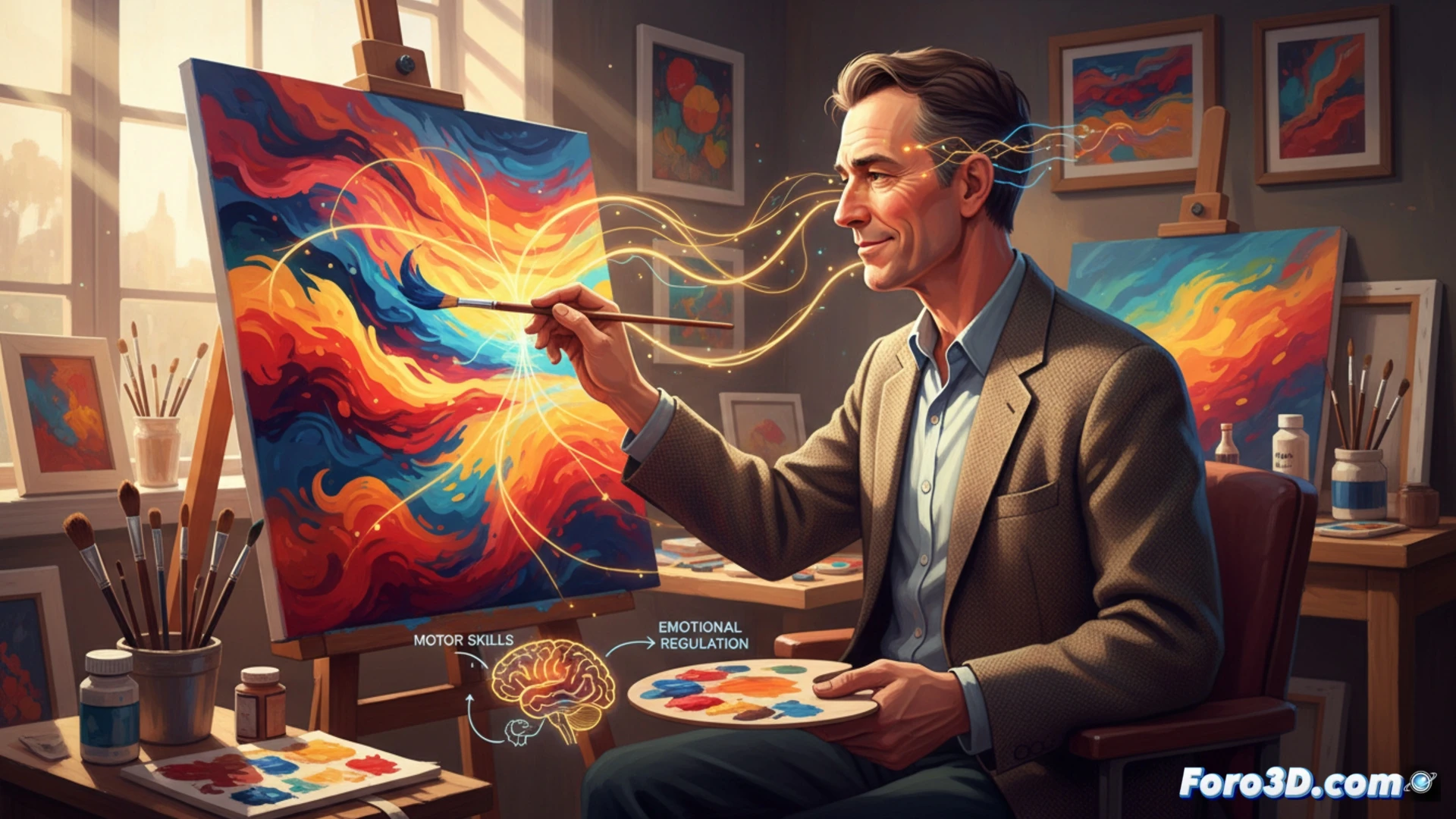
Neuroplasticity and Workflow: The Brain's Internal Rendering 🧠
When painting or modeling in 3D, the brain activates a process similar to neuroplasticity. Neuronal connections are strengthened, just like when we optimize a workflow to be more efficient. The concentration required in texturing or lighting reduces cortisol levels, the stress hormone. This state of flow, so common in our work sessions, promotes the release of dopamine, a neurotransmitter linked to reward and motivation.
Medical Prescription to Buy a New GPU? 😉
Imagine the consultation: Doctor, I have anxiety. And the response: I prescribe 8 hours a week of sculpting in ZBrush and an RTX 4070. Take this invoice and go straight to the store. Although it sounds like a forum dream, the principle is solid. We may not get social security to cover our latest hardware, but we can argue that the time invested in our project is, technically, an advanced occupational therapy session. At least, it's a useful argument to explain so many hours in front of the monitor.