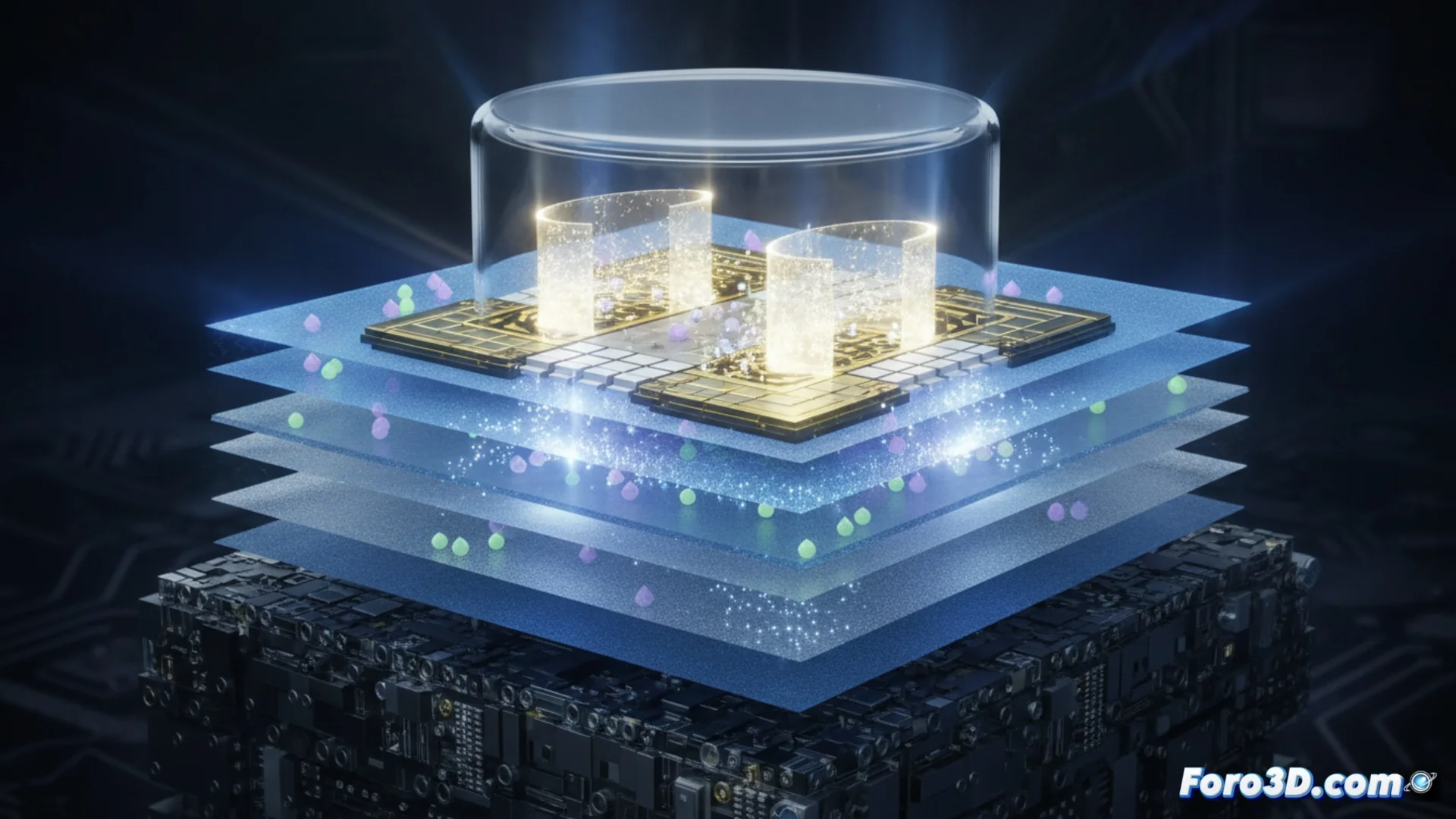
Optimizing Efficiency in Nitride Devices such as LEDs and Lasers
Although nitride devices have advanced notably, their performance is still hindered by efficiency issues. This analysis focuses on how to overcome two key obstacles that limit their potential: poor electrical conductivity in the p-type region and energy barriers at the contacts. Addressing these points is crucial for current to flow unobstructed and the device to operate at its maximum capacity. ⚡
The Challenge of the p-Type Region
The main bottleneck lies in the p-type region. The process to activate magnesium, used as a dopant, is inefficient. This results in low hole density and high electrical resistance, which ultimately impairs the overall functioning of the component. For an LED to shine brighter or a laser to operate with greater power, it is first necessary to ensure that electricity does not encounter resistance in its path.
Consequences of Low Conductivity:- Reduced charge carrier density (holes).
- Significant increase in internal electrical resistance.
- Difficulty in efficiently injecting current.
For a device to shine brighter, sometimes you have to solve how to make electricity flow without conflicts with the material, like negotiating a peace treaty at the atomic scale.
Solution: Polarization Doping
To address the first problem, an innovative technique is proposed: polarization doping. Instead of relying solely on magnesium, this method leverages the material's natural properties to generate hole-rich channels. This achieves an increase in carrier density and a reduction in resistance in this critical layer more effectively and directly. 🧪
Advantages of Polarization Doping:- Generates conductive regions without needing to activate more magnesium impurities.
- Intrinsically increases hole density.
- Drastically reduces electrical resistance in the p-type layer.
Redesigning Electrical Contacts
The second area of improvement focuses on p-type electrical contacts. Traditional Schottky barriers act as a wall that impedes optimal current flow. The explored strategy involves designing contacts with a multilayer architecture that incorporates deep acceptors. This complex structure helps minimize energy barriers.
By implementing these multilayer contacts, charge carriers can be injected more efficiently from the conductive metal into the semiconductor. This translates into a tangible improvement in the device's overall electrical performance, allowing it to operate with lower losses and greater stability. 🔌
Characteristics of Multilayer Contacts:- Overcome the high energy barriers of conventional contacts.
- Facilitate efficient carrier injection from the metal.
- Improve the overall electrical performance of the nitride device.
Towards a More Efficient Future
In summary, optimizing nitride devices such as LEDs and laser diodes requires a dual approach. On one hand, employ polarization doping to improve conductivity in the problematic p-type region. On the other, innovate in contact design through multilayer structures. Together, these strategies pave the way for current to flow unimpeded, unleashing all the optical and electrical potential that these materials promise. The path to brighter and more powerful devices lies in resolving the fundamental physics of their electrical connection. 💡