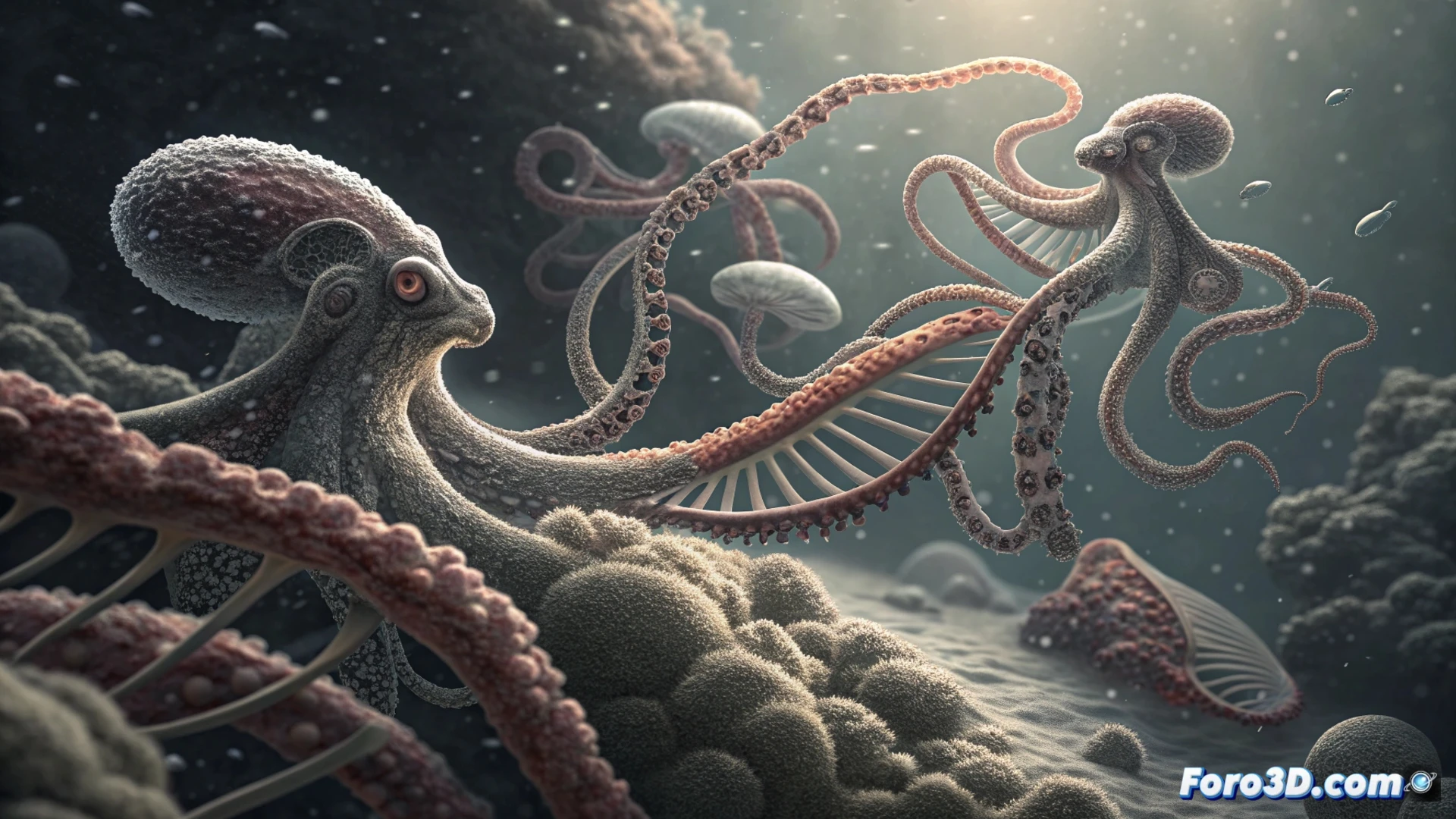
A recent study reveals that octopuses possess a unique ability: they can rewrite their RNA to adjust their nervous system to low temperatures. This process, known as RNA editing, allows them to adapt quickly to seasonal changes in the ocean. Unlike evolution through mutations in DNA, this mechanism provides an immediate response without altering their base genetic code.
RNA Editing: A Model for Adaptive Systems? 🔄
RNA editing in octopuses operates as a post-transcriptional fine-tuning system. Specific enzymes alter nucleotides in messenger RNA, changing the proteins synthesized in neurons, mainly ion channels. This modifies the speed of nerve signals, compensating for the slowdown caused by the cold. From a technological perspective, this principle of runtime reprogramming inspires ideas for artificial intelligence systems or neural networks that can self-optimize their code in response to new conditions.
Frozen Humans Envy Octopuses: Our Operating System Has No Winter Updates ❄️
While octopuses run a simple sudo apt-get update on their brain for winter, humans have to deal with layers of clothing, heaters, and mugs of hot chocolate. Our DNA, a rather rigid operating system, does not include the option for a thermal patch. Perhaps that's why, on a cold day, our greatest neuronal adaptation achievement is remembering where we left our gloves. Nature gave us opposable thumbs, but kept the cold tolerance update to itself.