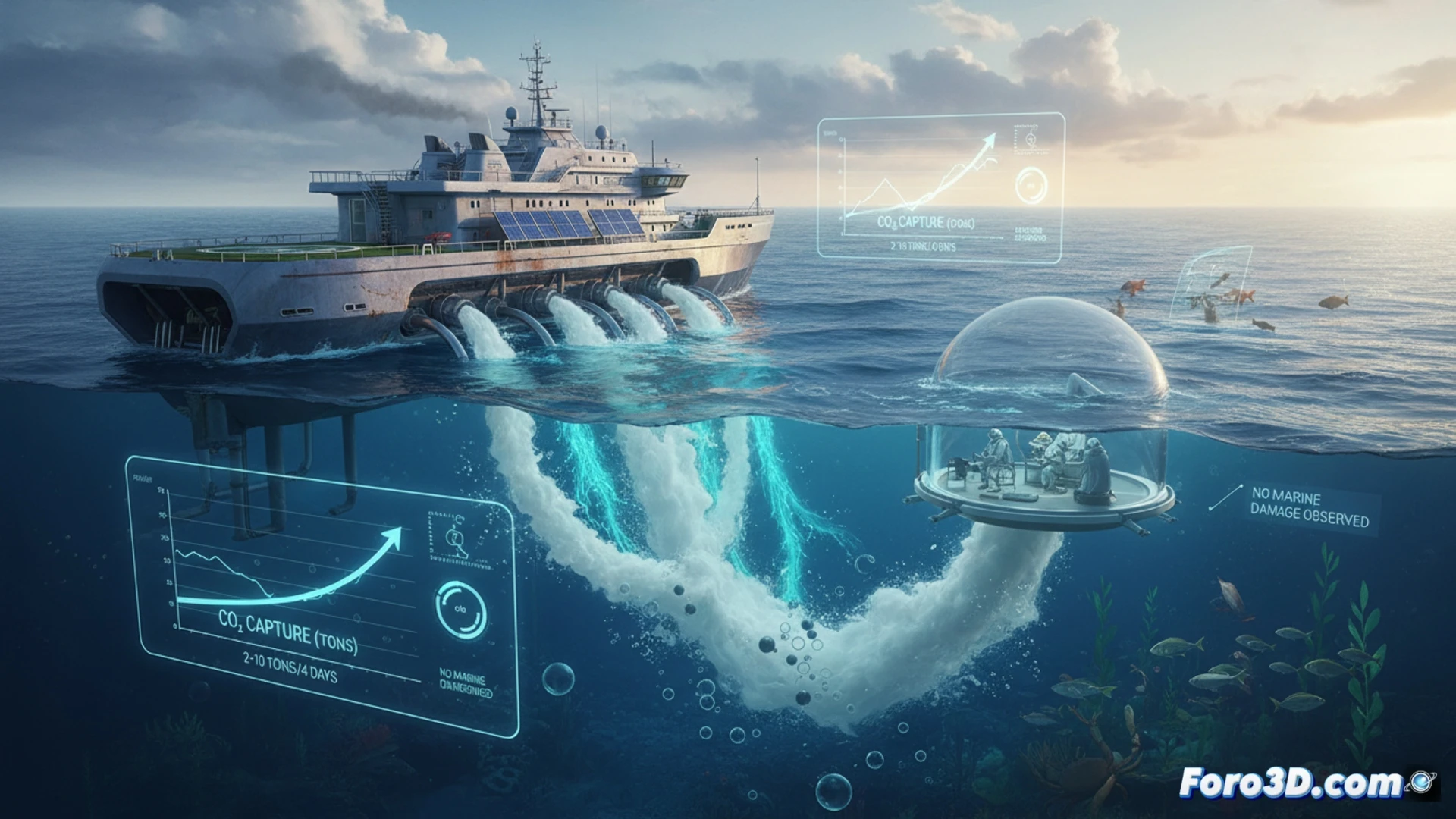
An experiment in the Gulf of Maine poured 65,000 liters of sodium hydroxide to alkalize the water and enhance its capacity to absorb atmospheric CO₂. Initial data indicate an extra capture of between 2 and 10 tons in four days, with no observable damage to marine life. For the Foro3D community, these tests provide valuable references for creating realistic scientific visualizations about the interaction between the ocean and the climate.
Data for Simulation and the Pending Debate on Total Footprint 📊
The process, called ocean alkalization, seeks to accelerate the natural chemical reaction that converts CO₂ into stable bicarbonates. The measured parameters, such as scale, response time, and lack of immediate visual impact, are useful for modeling scenarios in infographics or VFX sequences. However, the study has not quantified the carbon footprint of manufacturing, transporting, and pouring the alkali, a key factor that rendering and environmental analysis specialists will discuss to evaluate its net effectiveness.
Rendering Salvation, One CO₂ Pixel at a Time 💻
It's reassuring to know that, while we debate in the forum the energy balance of a render, there are scientists busy calculating the carbon balance of pouring a tanker truck of caustic soda into the sea. Perhaps soon we can add a new parameter to our renders: Compensated CO₂ Footprint with a click, simulating an ocean that solves our problems while we adjust global lighting. That said, let's hope the farm server doesn't consume more energy than the experiment saves.