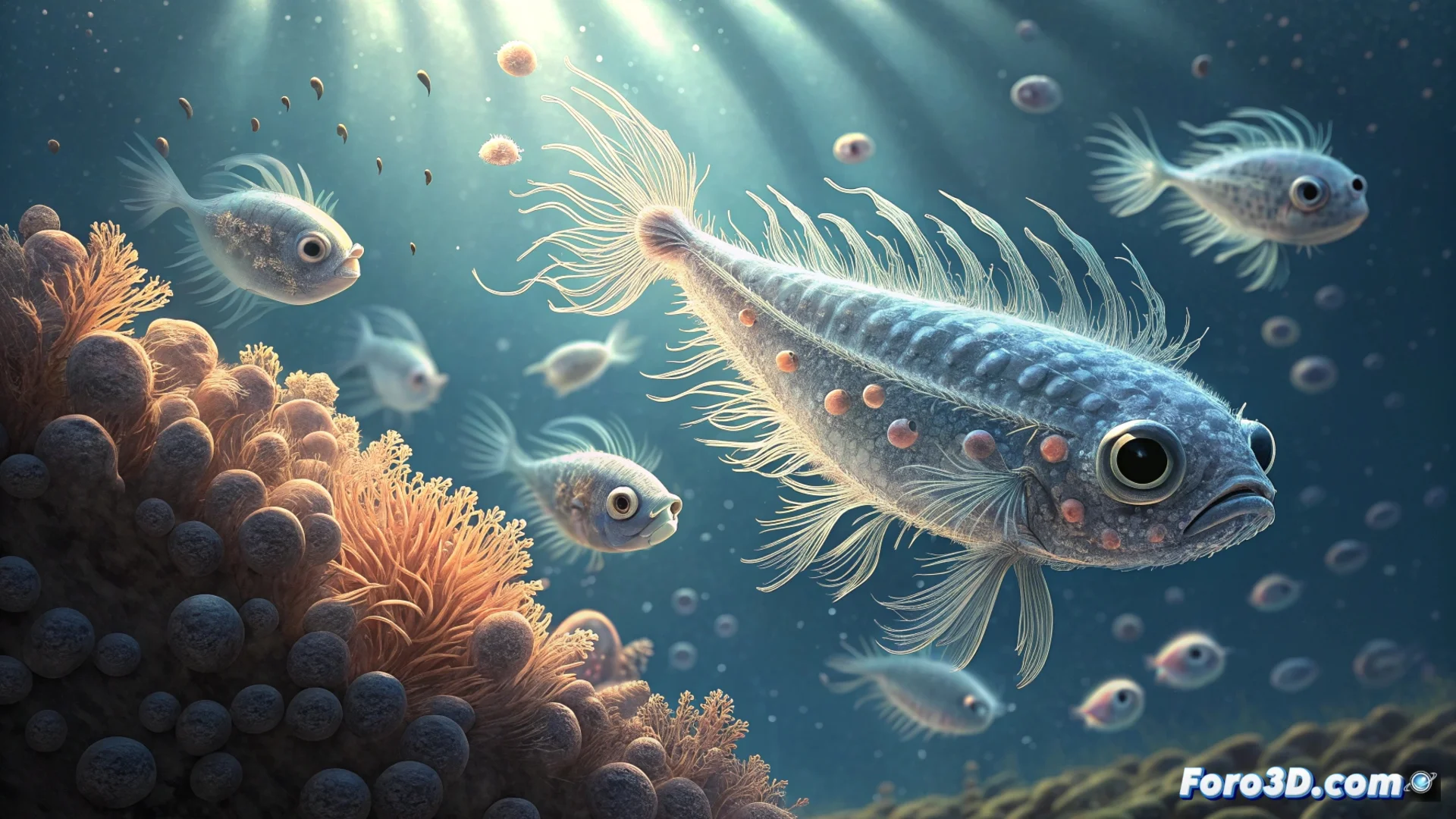
Newly Born Fish: Tiny Oceanic Navigators
Have you ever imagined how fish larvae manage to survive in the vastness of the sea? Far from being helplessly carried away, these tiny beings prove to be explorers with innate skills for orientation. 🐠
Natural Tools for Orientation
Think of a newly hatched reef fish. Contrary to what was believed, it can actively move against the current flow. Its method? It integrates the sun's position as a compass and perceives chemical signals in the water with its keen sense of smell. This internal guidance system allows it to chart the route back to the safety of the coral.
Key skills they possess:- They swim directionally, opposing dominant currents.
- They interpret the sun's trajectory to maintain a steady course.
- They detect specific water odors that lead them to their habitat.
The ocean has its own walkers, and the youngest ones come with an integrated sensory map.
Dialogues in the Depths
The surprise doesn't end there. Species like juvenile snappers just a few weeks old produce sounds. They generate grunts and dry noises. Researchers propose that these acoustic emissions serve to locate their congeners when there is no light, facilitating grouping. It's similar to them shouting "I'm in this place!" in the underwater gloom. 🌑
Outstanding social behaviors:- They produce vocalizations to communicate their position.
- They use sound to gather and form protective schools.
- This behavior emerges at an early stage of their development.
A Vital Instinct from the Start
These findings reveal that the juvenile marine world is far from silent and passive. Baby fish have complex mechanisms to not get lost and to interact, demonstrating a survival instinct that begins with their first underwater breath. Who would have thought that such small creatures could teach us so much about resilience!