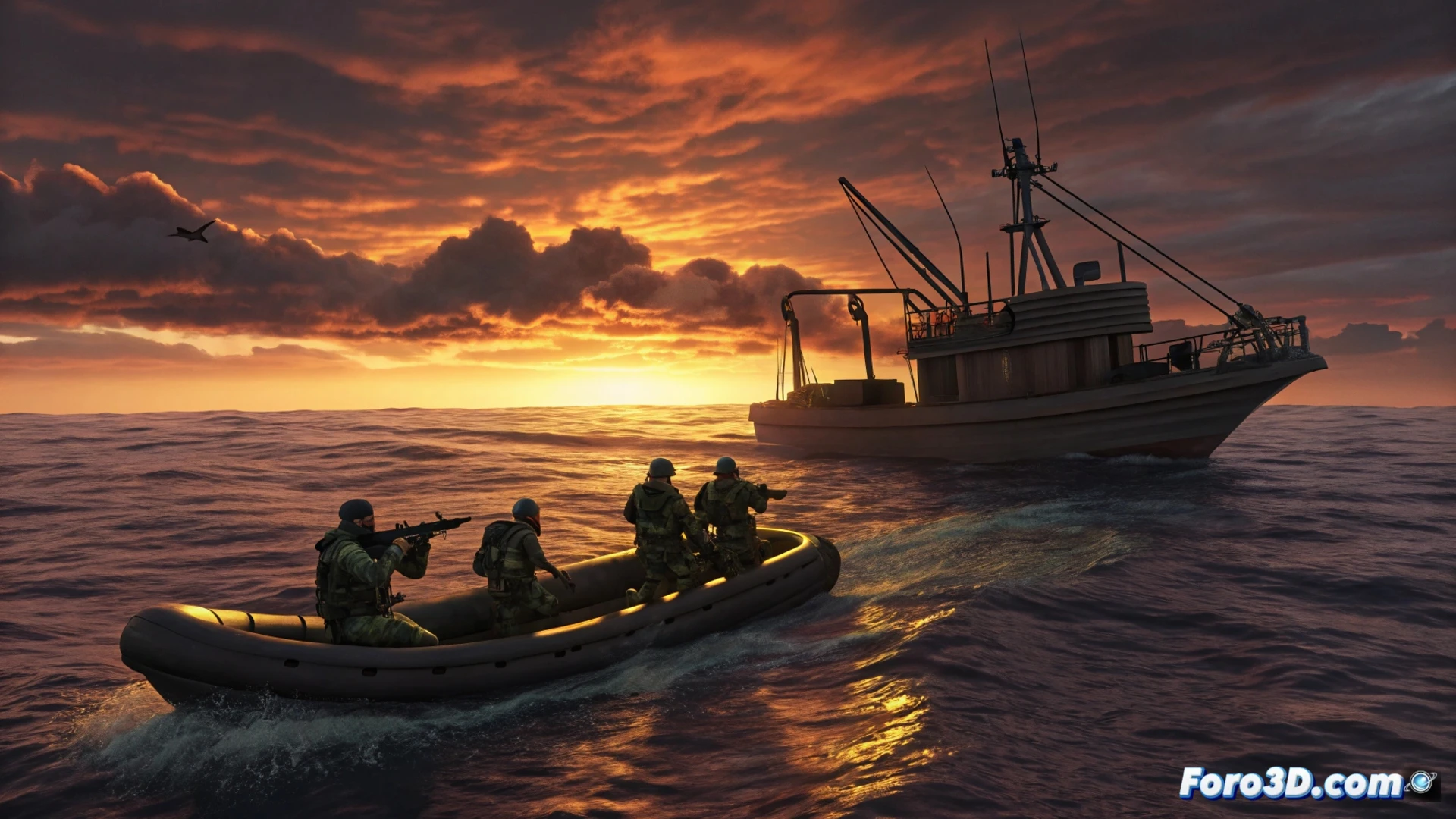
Naval Operation Against Drug Trafficking in the Pacific: A Deadly Confrontation
Can you imagine how drug traffickers are pursued in the middle of the open sea? 🚤 A recent incident reported by the U.S. armed forces reveals a tragic episode: two people lost their lives in the Eastern Pacific after a confrontation on a boat linked to drug trafficking, leaving only one survivor. These actions, which seem taken from a movie script, occur far from the coast, in areas where enforcing regulations is extremely complex.
The Difficult Mission of Monitoring the Ocean
The vast territory of the Eastern Pacific serves as a huge and poorly supervised maritime route. For security teams, locating a specific vessel there is like searching for something tiny in a water desert. These missions are usually activated with prior intelligence data or after detecting something irregular. Upon identifying a target, the established procedure is to attempt to stop it and inspect it. However, if the vessel refuses to comply, the scenario becomes critical and can lead to an exchange of fire, like the one that unfortunately ended two lives.
Key Details of the Maritime Interdiction:- International maritime space presents enormous logistical and legal challenges for interception.
- Intelligence and continuous surveillance are the basis for initiating any operation.
- Boarding protocols prioritize safety, but the risk of violence is inherent.
The open ocean remains the main ally of smuggling, constantly challenging control systems.
The Camouflage of Illegal Vessels
A fact that many are unaware of is that many vessels used by drug traffickers are actually fishing boats or fast launches adapted for the purpose. They are called Clandestine Maritime Transport Vehicles. Their main tactic is to blend in with ordinary maritime traffic, which makes it extremely difficult to distinguish them. Technological tools like satellites and drones are essential for tracking their movements, but the immensity of the sea still favors those seeking to evade the law.
Characteristics of Clandestine Sea Transport:- They use common vessels modified to avoid suspicion.
- Their strategy is based on confusion and anonymity among thousands of boats.
- Although technology helps, the geographical scale plays in their favor.
A Silent Conflict at Sea
This event serves as a striking reminder that, while everyday life unfolds on land, hidden conflicts with very concrete outcomes take place in the depths of the ocean. It is a parallel universe defined by fast boats, radar systems, and decisions that must be made in fractions of a second, far from the public eye. 🌊