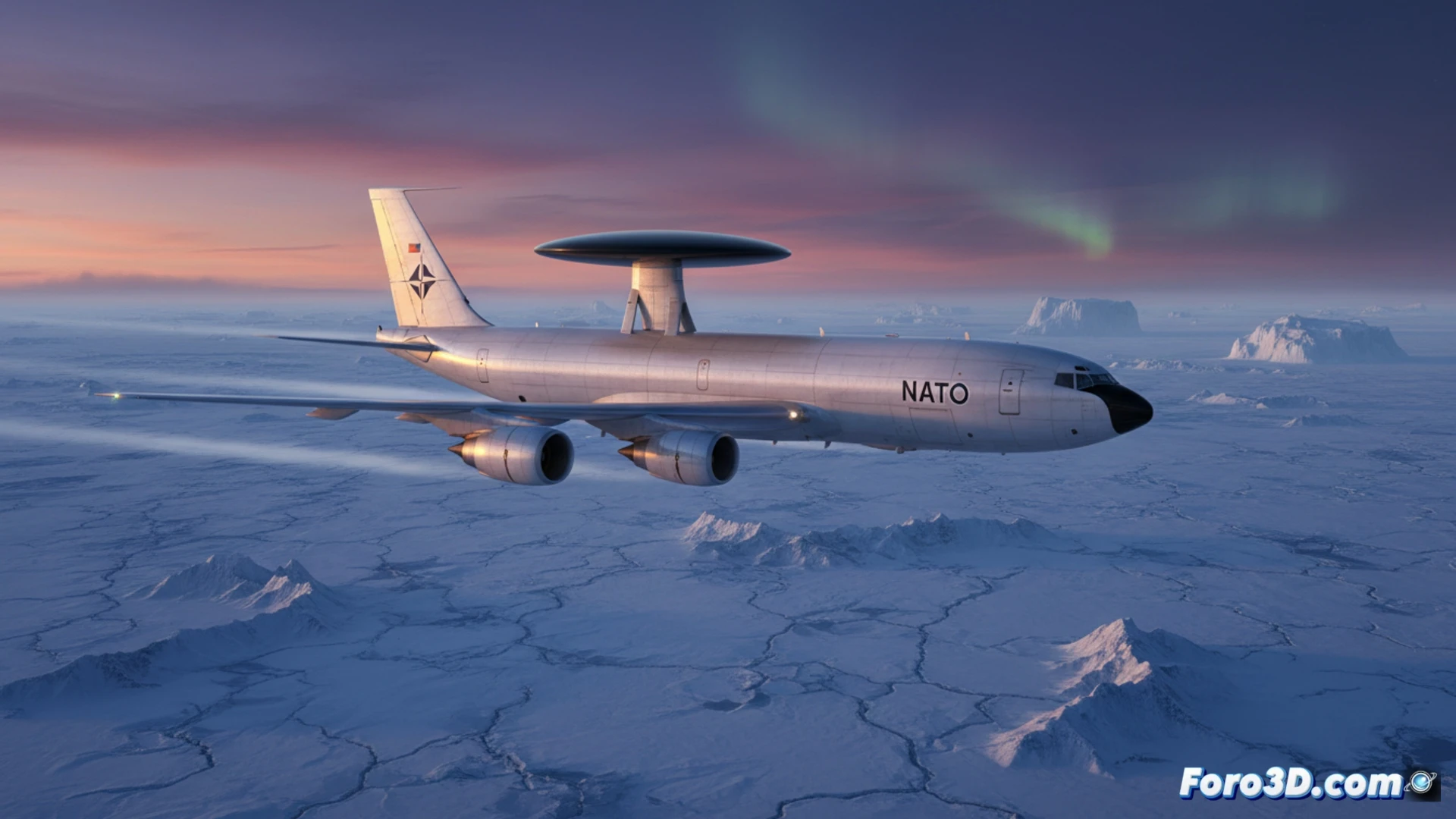
NATO Deploys AWACS Aircraft in the Arctic for Surveillance
The Atlantic Alliance has begun deploying its early warning AWACS aircraft in northern Europe, with the main objective of monitoring Arctic airspace. This operation, named Arctic Sentry, focuses on protecting the organization's northern flank and preventing potential risks. The powerful radars of these aircraft can detect aerial targets at enormous distances, providing a crucial advantage in early identification. 🛩️
A Response to the Growing Russian Presence in the Region
Military analysts indicate that NATO's move is a direct reaction to the increase in Russian exercises and deployments in the Arctic. Russia has been modernizing old Soviet-era bases and increasing its activity in the area. Accelerated thawing opens new maritime routes and access to natural resources, heightening geostrategic rivalry. The alliance seeks to ensure it can monitor and, if necessary, defend this vital area of interest.
Key Features of the Arctic Sentry Mission:- The flights operate mainly near the airspace borders of NATO member countries.
- The AWACS radar allows detection of aircraft hundreds of kilometers away, anticipating movements.
- The stated objective is to deter and maintain stability in the polar region.
The polar cold is not the only element intensifying in the Arctic; diplomacy also seems to operate at sub-zero temperatures.
A Joint Effort by Multiple Allied Nations
The execution of Arctic Sentry is a coordinated effort. The AWACS aircraft take off from a base in Germany and conduct their patrols over Norwegian territory and international waters. The mission does not operate alone; it receives logistical support from tanker aircraft for in-flight refueling and is escorted by combat fighters provided by various allies.
Elements Demonstrating Allied Cooperation:- Participation of in-flight refueling aircraft to extend patrol endurance.
- Escort provided by fighters from different member countries, showing operational unity.
- The operations base in Germany serves as the nerve center for coordinating deployments.
Surveillance and Deterrence as Strategic Pillars
This operation underscores NATO's ability to organize and conduct complex aerial surveillance operations cohesively. Beyond just observing, the permanent deployment of these high-tech assets sends a clear message of presence and determination. The ultimate goal is to preserve security in the Arctic, a region gaining strategic importance every day, and prevent any act of aggression through a demonstration of force and continuous surveillance. ❄️