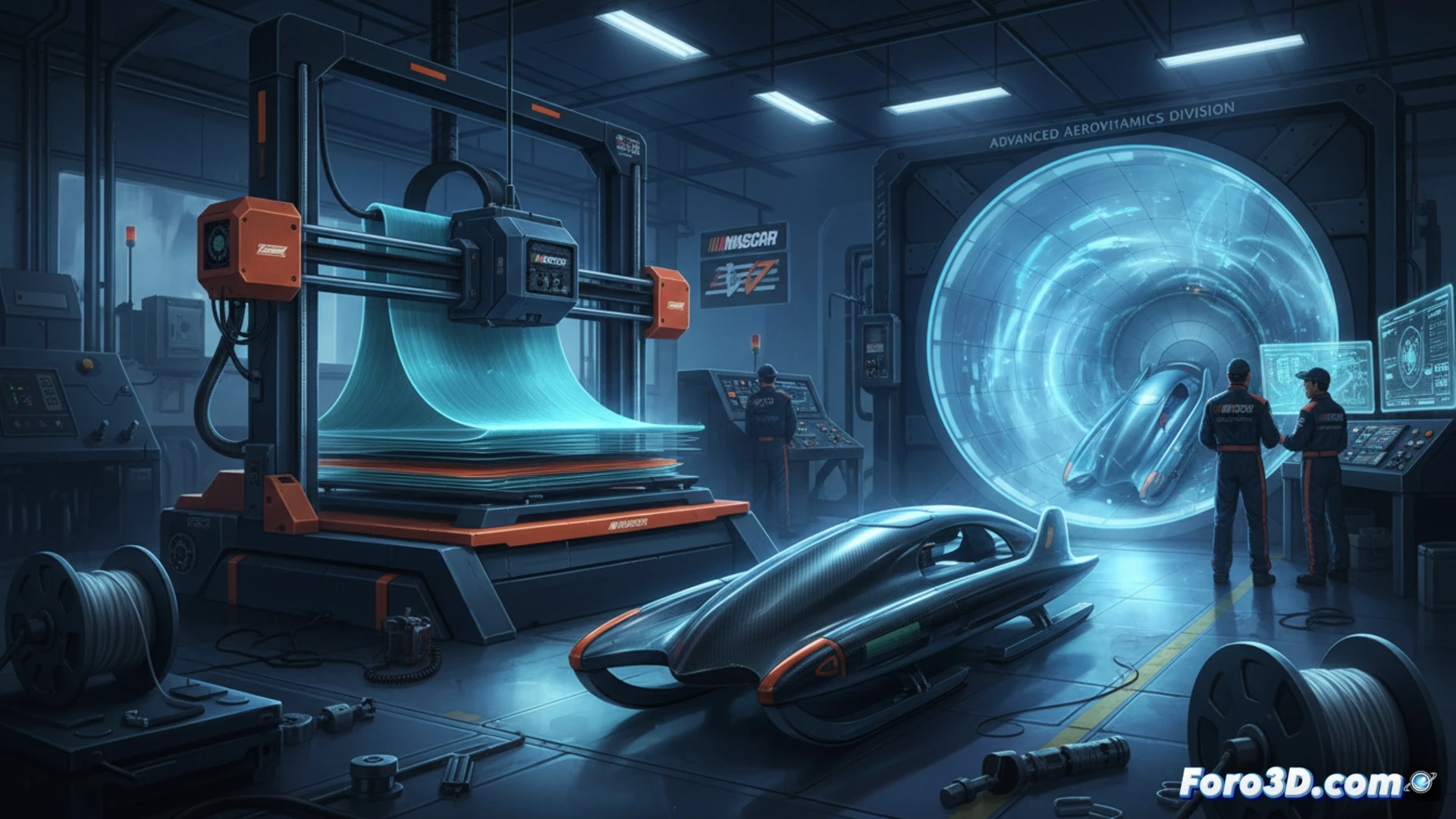
The NASCAR organization has brought its aerodynamics expertise to the Olympic sport. They are using full-scale 3D printing to manufacture complete luge sled prototypes. The goal is to conduct physical tests in wind tunnels, seeking shape adjustments that reduce air resistance. This process allows for more precise validations than standalone computer simulations.
From CFD Models to Physical Validation with Printed Prototypes 🌀
The workflow begins with designs optimized using computational fluid dynamics (CFD) software. Then, full-scale models are 3D printed, capable of withstanding wind tunnel conditions. This allows measuring aerodynamic forces and visualizing airflow over tangible geometries. Additive manufacturing speeds up iteration: a design is tested, digital files are modified, and a new version is printed for data comparison.
When Your Sled Has More Aerodynamic Development Than Your Street Car 😄
It's a peculiar moment when a sport that basically consists of lying on a board benefits from NASCAR technology. While we debate layer tolerance or bridge quality, they print an entire sled to gain hundredths of a second. Maybe the next step will be offering us an optional aerodynamic package for the commuter bike, previously tested in the wind tunnel. At least, it confirms that 3D printing is useful for something more than pen holders and keychains.