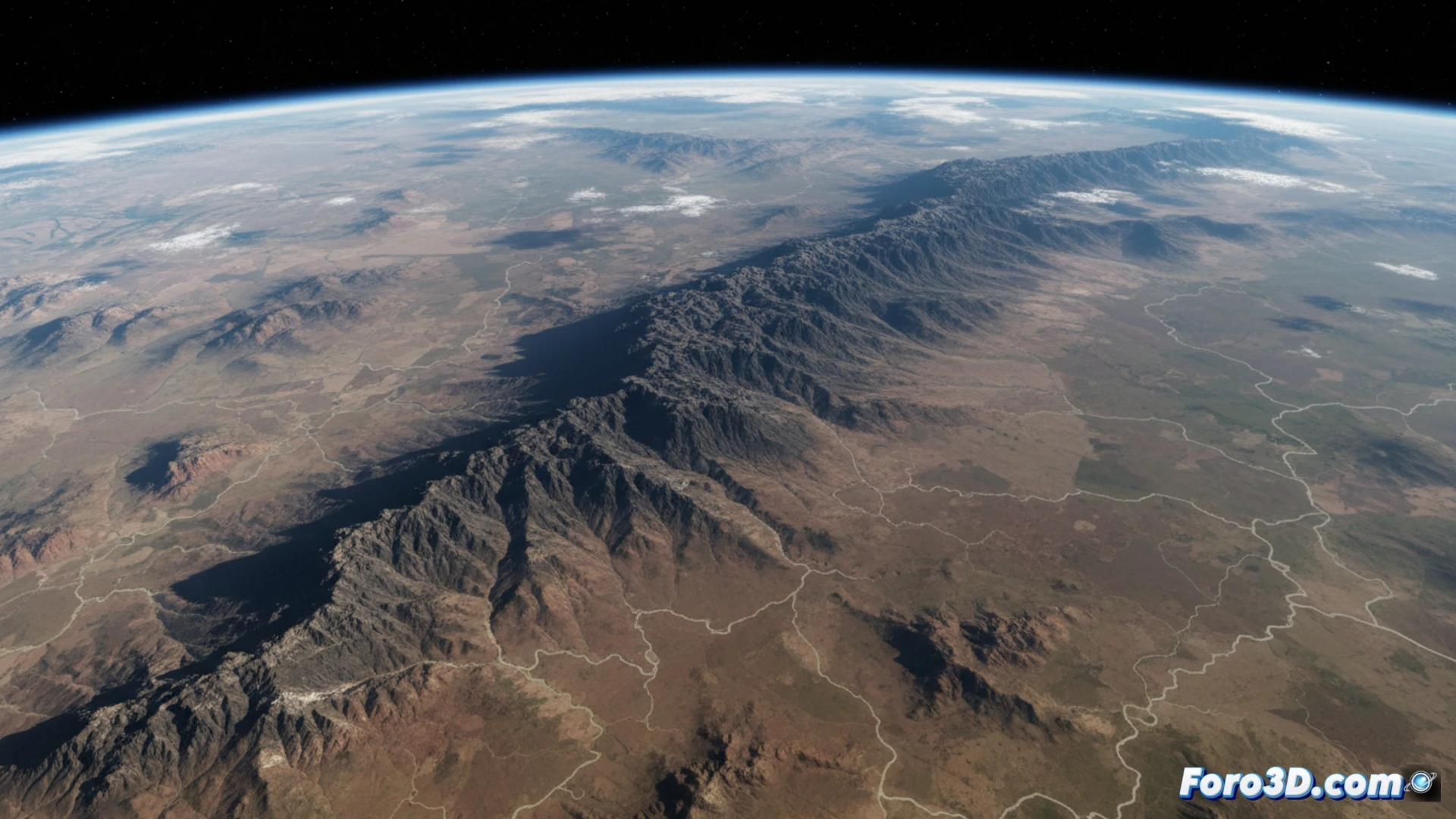
A recent NASA image clearly shows the Great Dyke of Zimbabwe, a 2.5 billion-year-old geological formation. Stretching 550 kilometers in length, this rocky intrusion is the longest on the planet. It originated when magma from the mantle rose and cooled within the Earth's crust. Its state of preservation, favored by the region's stability, makes it a valuable record of ancient geology.
Space Technology that Unveils Earth's Geological History 📡
The ability to identify and study this structure from orbit relies on high-resolution spectral and radar sensors. These instruments detect variations in mineral composition and topography, allowing the mapping of formations spanning hundreds of kilometers. The contrast between the resistant rock of the dyke and the surrounding materials generates a distinctive signature from space. This remote analysis complements field studies, offering a contextual perspective impossible to obtain from the ground.
A Geological Neighbor that Won't Move for Several Million Years 🗿
It must be acknowledged that this dyke has enviable tenacity. While we worry about cracks in the plaster, this formation has been enduring for 2.5 billion years without batting an eye. It is the most permanent tenant of the Earth's crust: it doesn't pay rent, doesn't make renovations, and has guaranteed visibility from space for the next geological eras. A true example of job and residential stability.