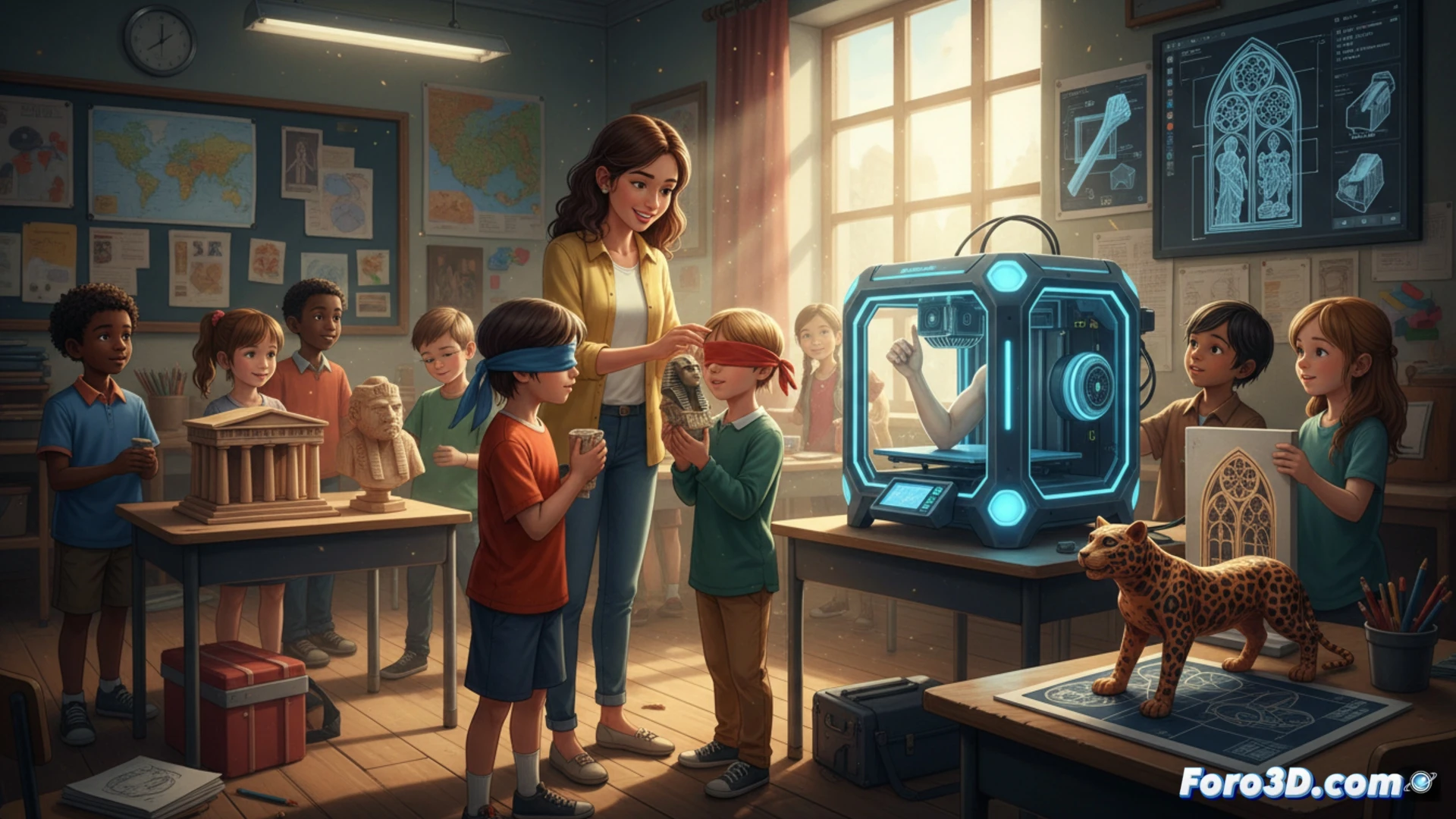
The Musearte 3D initiative uses 3D printing to tear down walls, not those of museums, but those separating students from cultural heritage. Its goal is to bring faithful replicas of artworks and historical objects to educational centers, focusing on environments with fewer resources. These tactile reproductions allow direct interaction, transforming history or art lessons into sensory experiences. The project seeks to democratize access and offer a practical tool for learning.
From Scanning to the Classroom Desk: Technical Workflow 🛠️
The process begins with the digitization of original pieces using high-resolution 3D scanners, capturing geometry and texture. The resulting files are optimized for printing, ensuring that key details are reproducible. Materials like PLA or resins are selected to balance durability, feel, and cost. Layer-by-layer printing allows for the creation of complex volumes. Post-processing includes sanding and manual painting to achieve a finish that evokes the original, prioritizing safety and handling in a classroom.
Finally, You Can Touch What Was Always Forbidden 👋
Imagine the scene: after centuries of No Touching signs in all museums, now an army of 3D-printed Venus de Milo and Roman busts circulates through high school hallways. Students can finally check firsthand if a pharaoh's nose was as perfect as it appears in books, or if a medieval warrior's helmet was as uncomfortable as suspected. It's the tactile revolution; where there were once sidelong glances, now there are curious hands. That said, don't let them try scratching these replicas with a stylus.