In the Heian court of 11th-century Japan, a lady-in-waiting named Murasaki Shikibu created something that would endure. Her work, *The Tale of Genji*, is recognized as one of the first novels in history. With keen observation and psychological depth, she portrayed the world of the aristocracy, its rituals, its loves, and its sorrows. Her legacy is a window into a distant era and proof of the power of writing to transcend time.
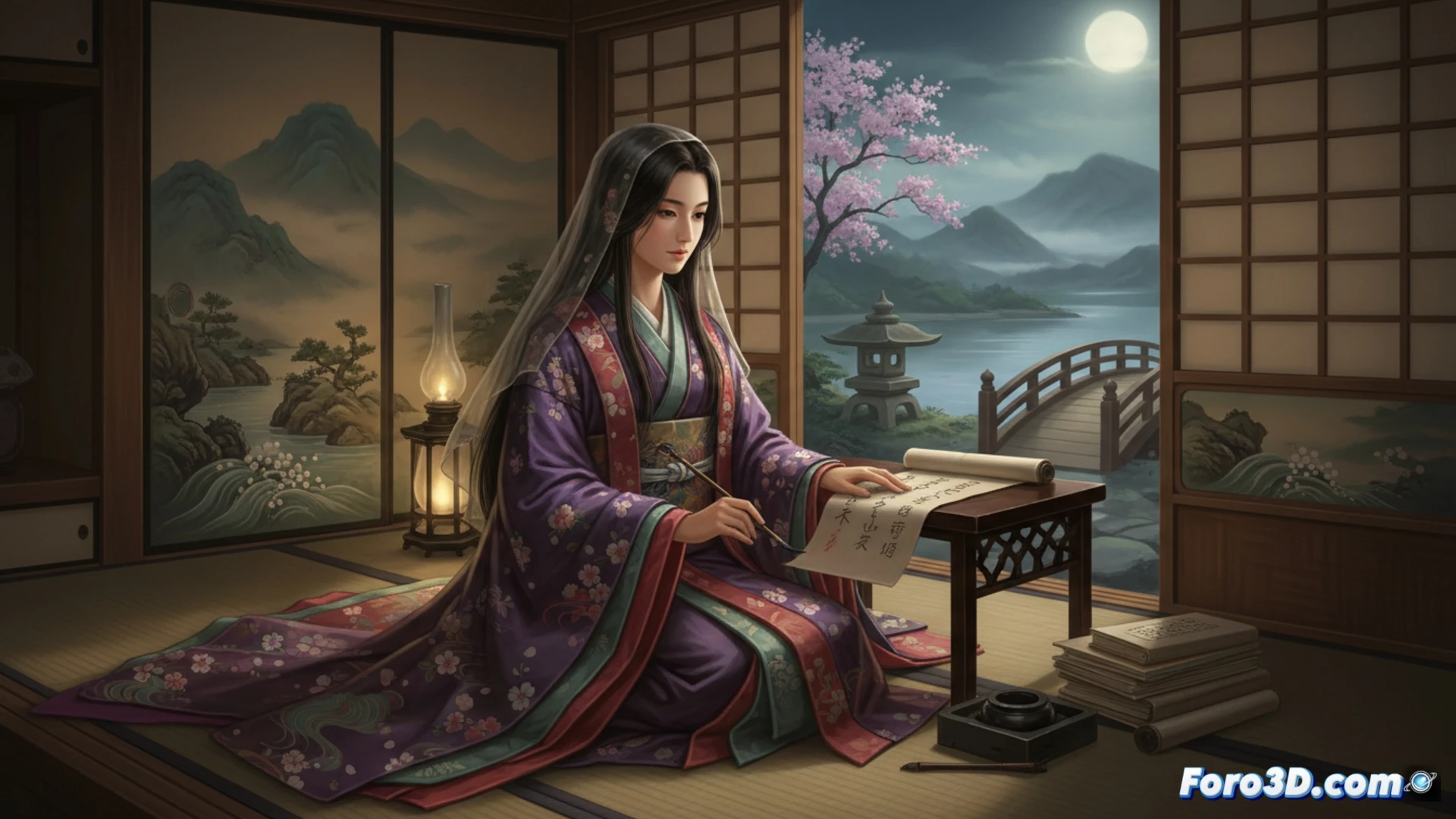
Rendering the Heian World: Techniques for a Scroll Animation 🎨
An animated adaptation of her life would require a distinctive visual technical approach. The inspiration would come from *emaki* (illustrated scrolls) and classical Japanese painting. Washi paper textures and digital brushstrokes could be used to simulate that art. The fusion between her reality and her fiction poses a challenge: the use of transparency layers and dissolve effects so that Genji's characters emerge as shadows and silhouettes over the palace backgrounds, blurring the line between the written and the lived.
The Historical Spoiler and Why the Court Wouldn't Find It Funny 😅
Imagine the panic in the Imperial Palace protocol department if Murasaki had used a blog instead of scrolls. Uploading chapter by chapter the romantic entanglements of Prince Genji, clearly inspired by her superiors, would have been a bigger drama than any palace intrigue. The comments from the other ladies would be like: Wow, the description of this drunken courtier sounds familiar! Do you sign with a pseudonym or get exiled directly?. At least the scroll was easy to hide under the kimono.