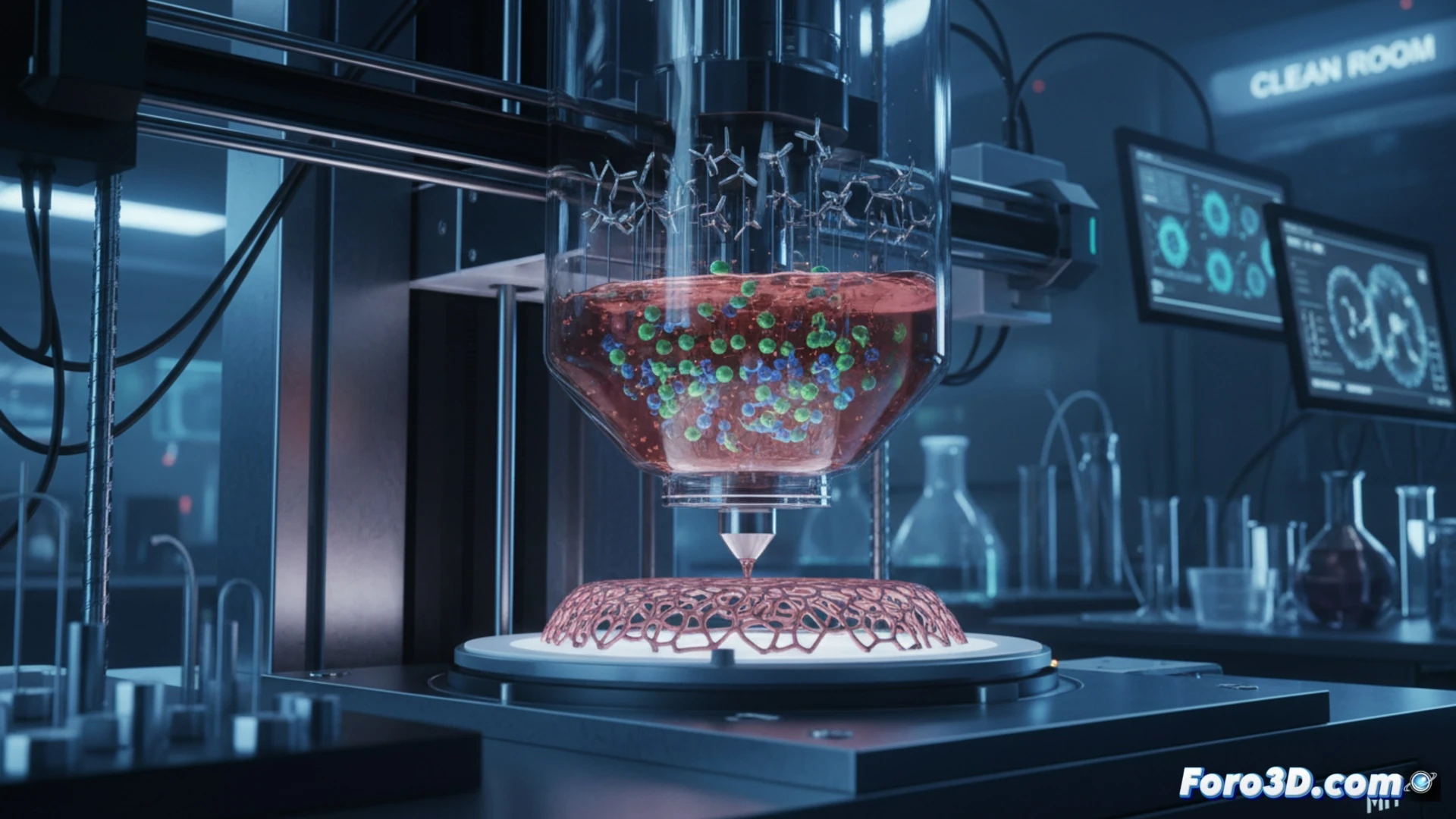
A team from MIT has presented a method to address a persistent problem in 3D bioprinting: the sedimentation of cells within the bio-ink during the printing process. This uneven separation compromises the final structure and function of the tissue. Their solution integrates magnetic stirrers into the print head, keeping the cells in constant suspension as the material is deposited.
How the Integrated Magnetic Mixing System Works ⚙️
The system incorporates small magnetic stirrers, similar to those in a laboratory but miniaturized, directly into the bio-ink cartridge or near the print nozzle. An externally controlled magnetic field sets these stirrers in motion, generating a gentle but continuous mixing. This flow prevents the cells, which are denser than the hydrogel, from settling at the bottom, ensuring homogeneous distribution layer by layer and improving cell viability in the final structure.
Goodbye to rebel clumps: cells no longer escape their duties 😄
It seems that the cells had found a way to evade their responsibilities in the bioprinted organ: settling at the bottom and leaving the hard work to others. A clear case of microscopic-scale labor absenteeism. Now, with these magnets acting as foremen, they are forced to stay in place and mix with the team. Magnetic discipline promises an end to cellular strikes and the formation of those protest groups that ruined the tissue architecture.