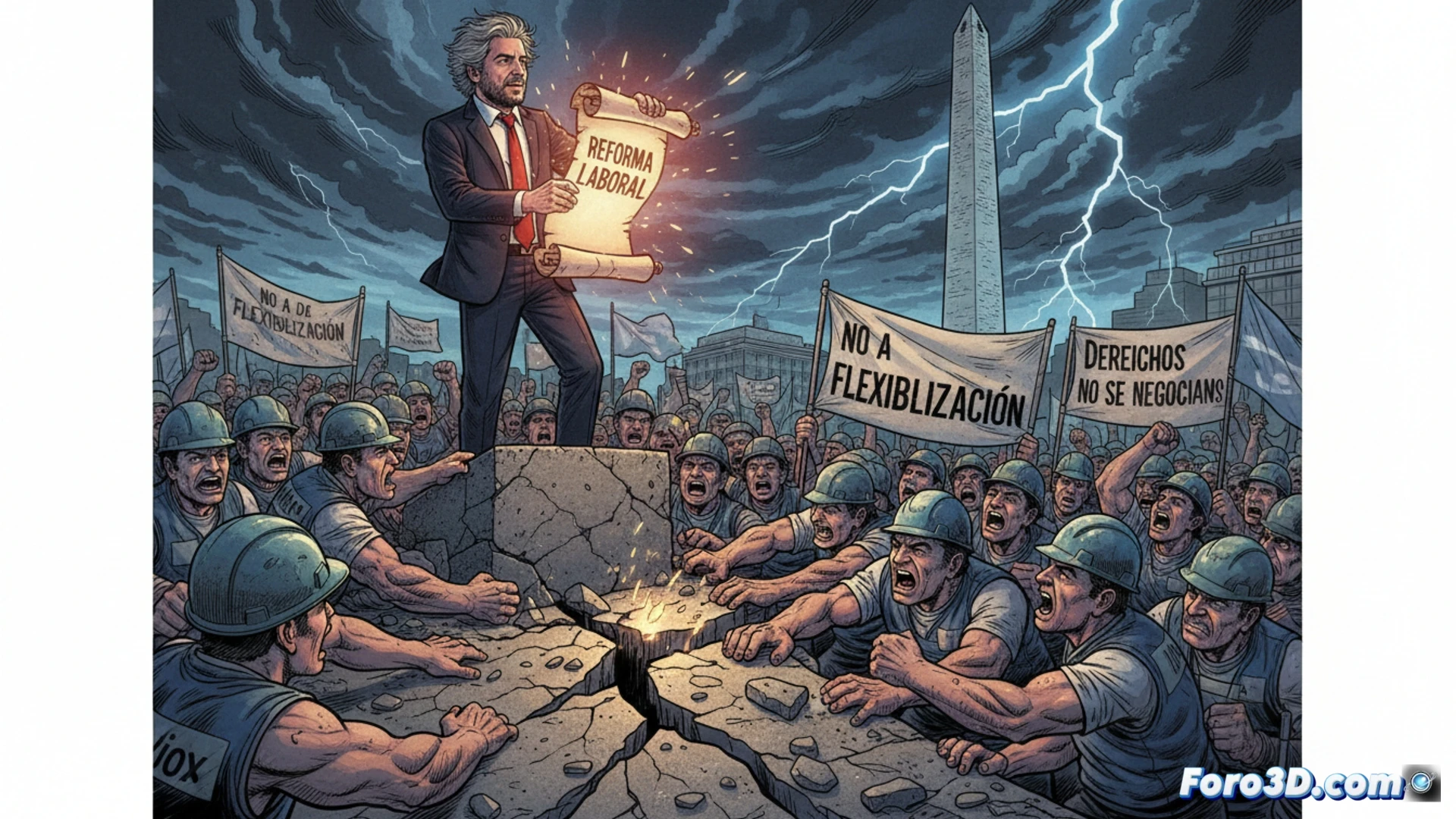
President Javier Milei presented his labor reform project, a pillar of his adjustment agenda. The initiative proposes to flexibilize regulations, modify severance pay, and review collective bargaining agreements. The Government argues that this will dynamize the market and attract investments. However, the main unions reject the plan, warn about loss of rights, and have already called for mobilizations and strikes, escalating political confrontation.
Automation and New Work Models as Background Context 🤖
This debate takes place in a global scenario where automation and digital platforms are redefining labor relations. Technical discussions revolve around how to legislate for remote work, project-based work, or in the gig economy, without leaving employees unprotected. A modern reform should consider these formats, balancing flexibility with legal certainty. The current project, however, focuses more on adjusting traditional law than on creating a framework for these new technological realities.
Software Update: Now with Fewer 'User Rights' 💻
It seems the Government launched the beta version of its Labor Law 2.0, with performance patches that, according to the logs, remove some features considered obsolete, such as stability. Veteran users report serious errors in the severance module. While the developers insist it's to optimize the system, a large group of unionized beta-testers threatens to uninstall the update through sheer strikes. The changelog promises greater efficiency, but many fear the app will become incompatible with a dignified life.