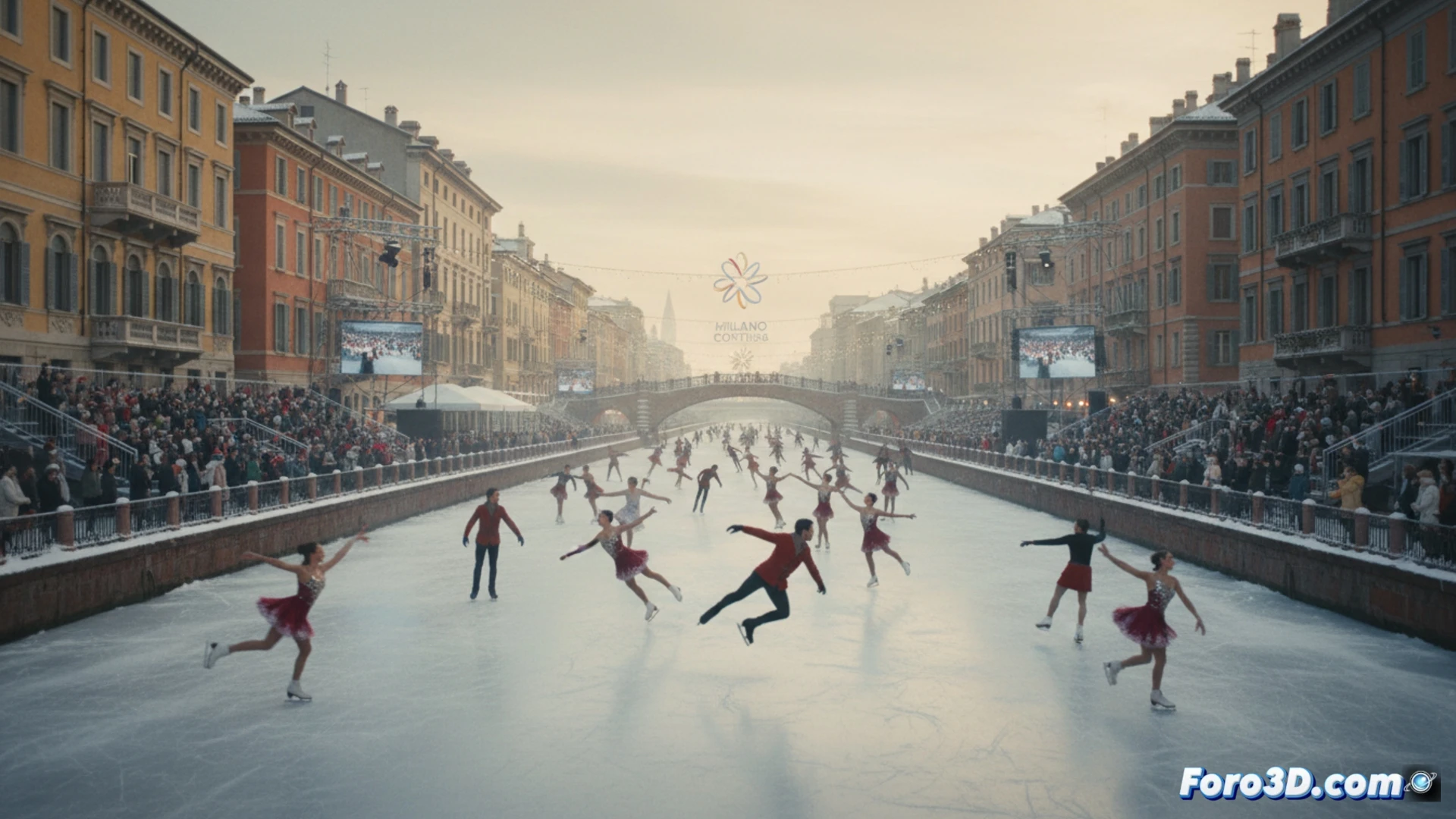
Milan Reinvents the Olympic Games: The City as a Living Stadium
What if your urban environment turned into a gigantic arena for competition? That's what Milan is preparing for the 2026 sports event. The strategy discards building isolated complexes and instead integrates the events into the heart of the metropolis, using emblematic squares and even the historic canals. It's like activating a special game mode on the city map. 🏙️⛸️
The Urban Plan Becomes a Sports Circuit
The central concept inverts traditional logic: it's not the public traveling to the stadium, but the competition coming to the neighborhoods. Imagine seeing speed skating in front of the Duomo or cross-country skiing along the Navigli. This model avoids creating facilities that later go unused, leveraging existing infrastructure. It's like redecorating your house for a big celebration, but on a monumental scale.
Key Scenarios That Will Transform:- Duomo Square: Will host skating events, with stands in front of the cathedral.
- Navigli Canals: Their banks will be adapted for Nordic skiing and biathlon tracks.
- Rooftops and Secondary Squares: Spaces like the Central Station will host ceremonies or fan zones.
The greatest sport may not be what's seen on the track, but coordinating this urban transformation in record time.
The Race Against Time to Set Up and Dismantle
The most challenging aspect is the timetable. The window to transform the city is extremely tight. Activities will begin right after Carnival, leaving only a few days to install artificial ice rinks, generate snow, place ramps and stands. Everything must be executed without disrupting the city's normal rhythm, in a choreography of millimeter precision.
Main Logistical Challenges:- Preparing the Ground: Conditioning urban surfaces to safely support ice and snow.
- Traffic and Pedestrian Management: Maintaining basic mobility while building temporary venues.
- Supply and Removal: Bringing in and removing thousands of tons of specialized material in a very short time.
An Experiment on How to Inhabit a City in Festival Mode
Beyond a sports event, this project is a large-scale urban assay. The key question is whether a metropolis can function as a living stadium for two weeks without ceasing to be a place where people live and work. Success will measure the capacity to organize a massive ephemeral event integrated into the urban fabric, setting a precedent for future mega-events. The true medal will go to planning and urban flexibility. 🏅